A dark bedroom doesn't have to feel like a cave. With the right bedroom color ideas for dark rooms, you can completely transform how a space looks and feels — without knocking down a single wall. Whether your room faces north, sits below street level, or simply lacks natural light, the colors you choose and the way you layer your lighting can work small miracles. This guide walks you through every tool in the stylist's kit: smart layouts, storage that doubles as decor, lighting that mimics sunshine, and finishing touches that make a dim room feel genuinely warm and inviting.
Smart Layout Strategies for Dark Bedrooms
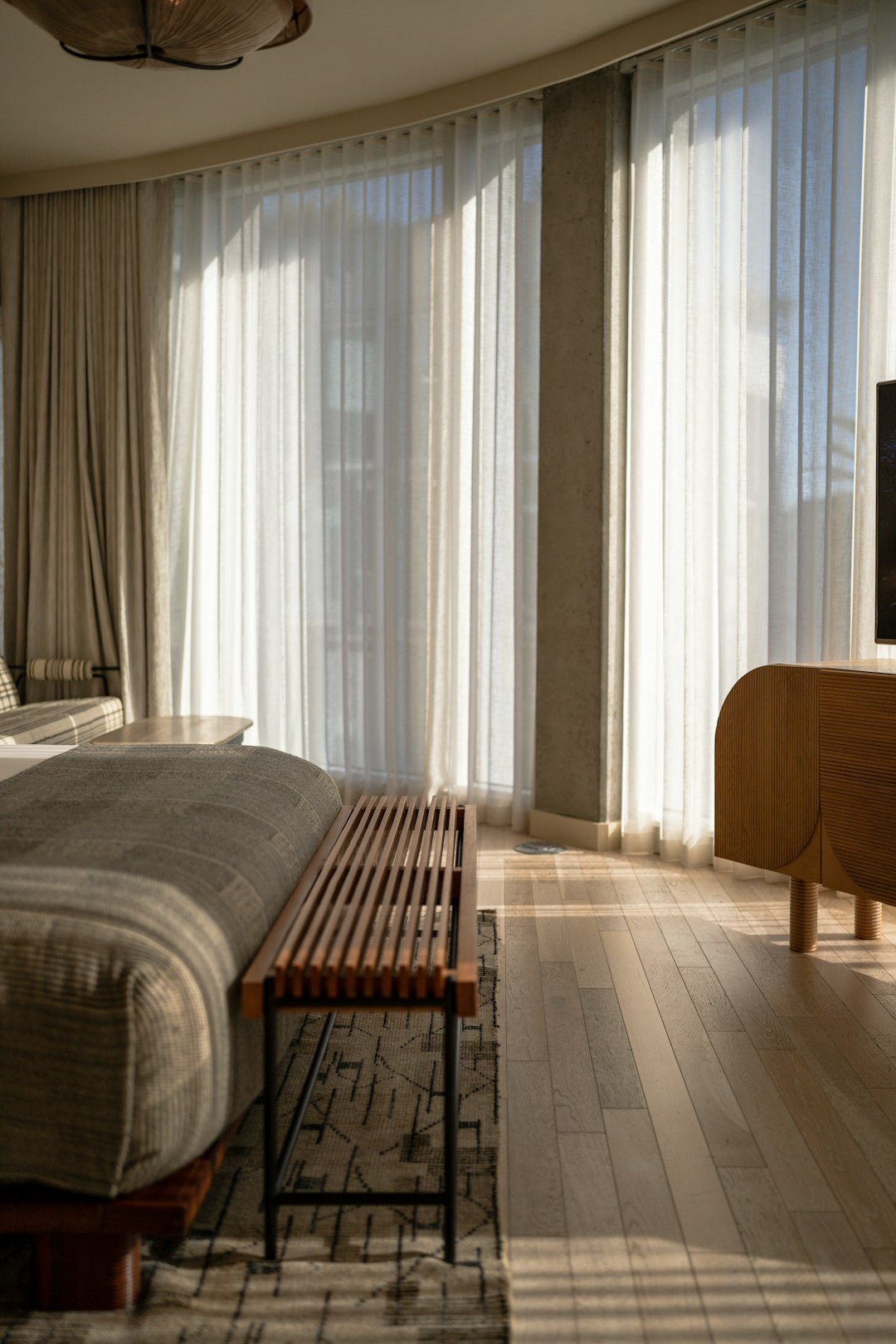
Before you even open a paint tin, take a hard look at your layout. Furniture placement has a surprisingly powerful effect on how light — or how heavy — a room feels. In dark bedrooms, the goal is to keep pathways clear and allow whatever natural light exists to travel as far as possible across the room.
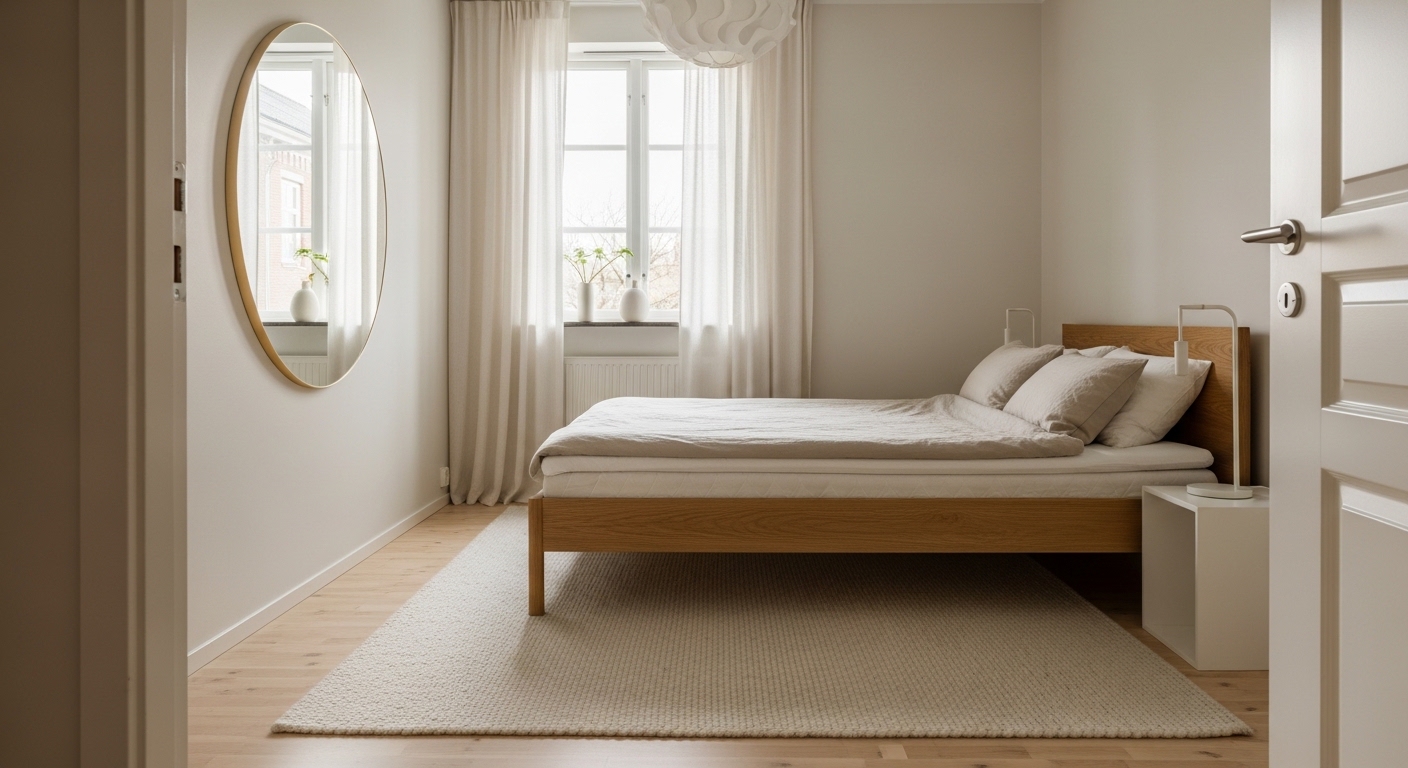
Start by pulling your bed away from the window wall. This single move stops the largest piece of furniture from blocking incoming light. Low-profile bed frames — think platform beds or frames under 90cm tall — keep the visual horizon low and make ceilings feel higher. Avoid tall, dark wardrobes directly opposite windows; they absorb light before it has a chance to bounce around the room.
- Position mirrors on walls adjacent to windows to reflect and amplify natural light.
- Choose furniture with legs rather than floor-to-ceiling pieces to create visual breathing room.
- Keep the area directly in front of the window completely clear.
- Use a single large rug in a light tone to anchor the space without darkening the floor.
"Light travels in straight lines — your job is to give it somewhere to go. Clear sightlines and reflective surfaces are worth more than any paint color alone."
Storage That Looks Stylish in a Dark Room
Storage is where dark rooms often go wrong. Bulky, dark wardrobes and overstuffed shelving units absorb light and make walls feel like they're closing in. The fix isn't less storage — it's smarter, lighter storage.
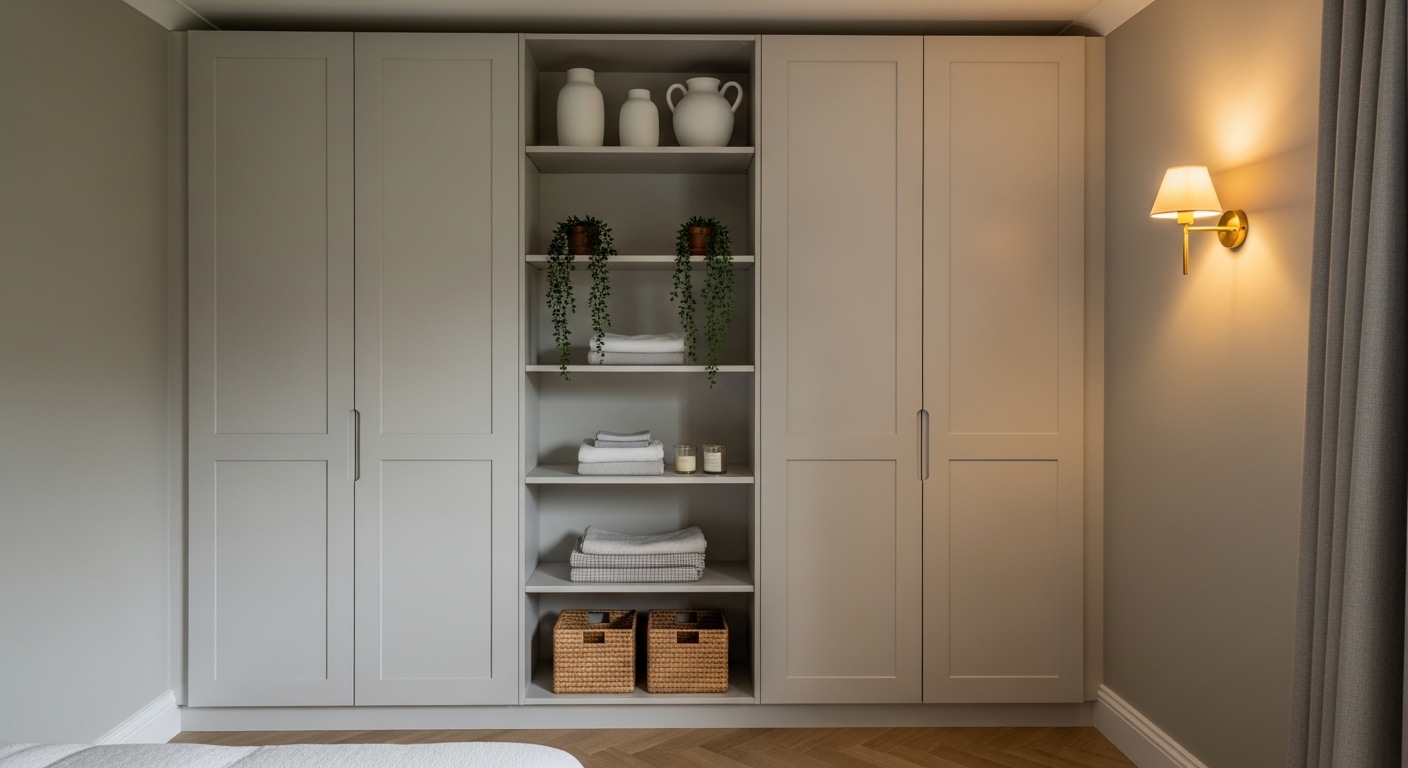
Opt for built-in or fitted wardrobes in white, soft greige, or pale wood finishes. Handleless doors with a matte finish reflect light gently without creating harsh glare. Open shelving in light-toned wood keeps things feeling airy, especially when styled with a mix of white objects, natural materials, and a few plants.
- Under-bed storage drawers in a matching frame finish keep the floor clear and clutter hidden.
- Floating shelves in pale oak or white MDF draw the eye upward, emphasizing ceiling height.
- Wicker or rattan baskets on lower shelves add warm texture without visual weight.
- Glass-fronted cabinet inserts on upper sections bounce light back into the room.
The overall palette of your storage should feel like an extension of the wall — not a contrast to it. When storage disappears into the background, the room instantly feels larger.
Lighting Tricks to Make a Dark Bedroom Feel Brighter
Lighting is the single most transformative tool you have in a dark bedroom. One overhead bulb is never enough — layered lighting is what separates a flat, dim room from one that feels warm and intentionally styled.
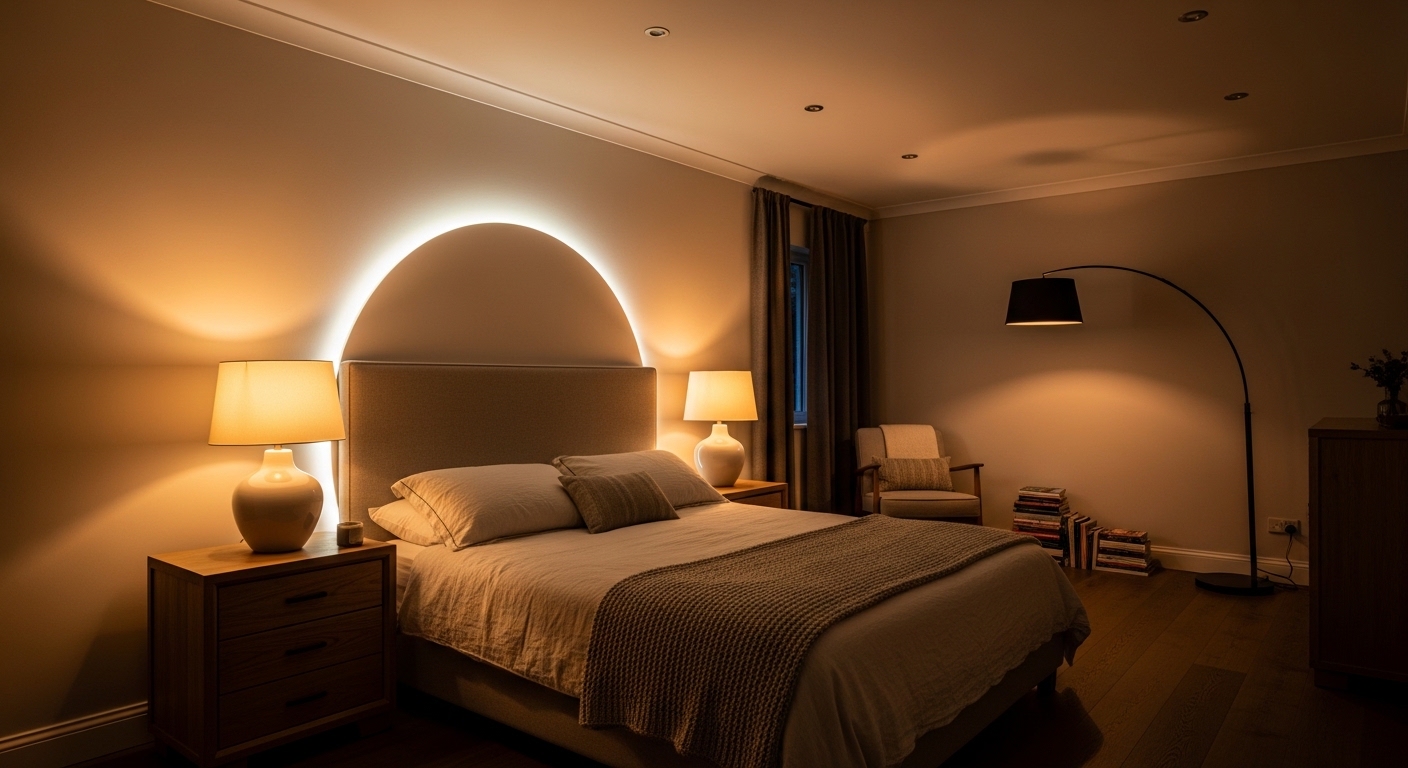
Think in three layers: ambient (general room light), task (reading, getting dressed), and accent (mood and atmosphere). In a room with limited natural light, warm-white bulbs in the 2700K–3000K range mimic the golden quality of sunlight far better than cool daylight bulbs, which can make a dark room feel clinical.
- Recessed ceiling lights on a dimmer switch provide flexible ambient brightness without visual clutter.
- Bedside table lamps with warm-toned shades create intimate pools of light at eye level.
- LED strip lighting behind a headboard or beneath a floating shelf adds a soft glow that expands perceived depth.
- A floor lamp in a dark corner eliminates the heavy shadows that make rooms feel smaller.
- Candles or flameless alternatives on a dresser add flickering warmth for evening ambience.
For electrical installations such as recessed lighting or new circuit work, always consult a licensed electrician.
Color Palette Recommendations for Dark Bedrooms
This is where the magic really happens. The best bedroom colors for dark rooms aren't always the ones you'd expect. Yes, white works — but it's not the only answer, and it's not always the best one.
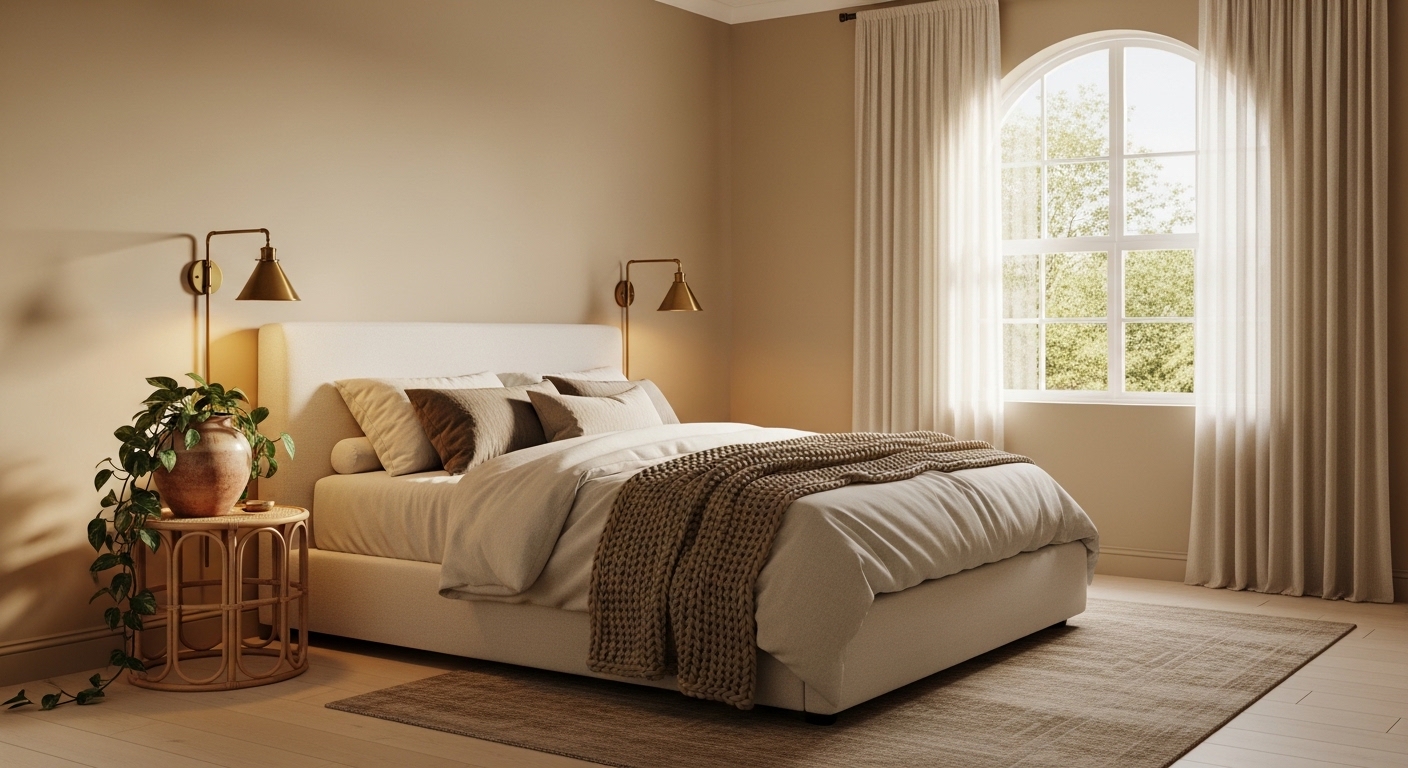
In rooms with very little natural light, a stark bright white can actually look grey and cold. Instead, reach for warm whites and off-whites with yellow or pink undertones: think Farrow & Ball's All White, Benjamin Moore's White Dove, or Dulux Timeless. These tones absorb warmth from artificial light and glow beautifully in the evening.
If you want something with more personality, consider these approaches:
- Warm greige (grey-beige): grounds the room without darkening it, pairs beautifully with brass and natural wood.
- Soft sage green: brings a sense of the outdoors in, reflects warmly under incandescent light.
- Blush or dusty rose: surprisingly effective in north-facing rooms, adds warmth without heaviness.
- Pale terracotta or peach: earthy and warm, works especially well with rattan and linen textures.
- Limewash white: textured finish that catches light differently across the day, adding depth without darkness.
Avoid cool greys, deep navy, and stark brilliant white in rooms that already lack light — they tend to amplify the dimness rather than fight it.
Cozy Finishing Touches for a Brighter Feel
Once your layout, storage, lighting, and color are in place, it's the finishing touches that pull everything together. In dark rooms, texture and reflectivity become your best friends — they catch and scatter light in ways that flat surfaces simply can't.
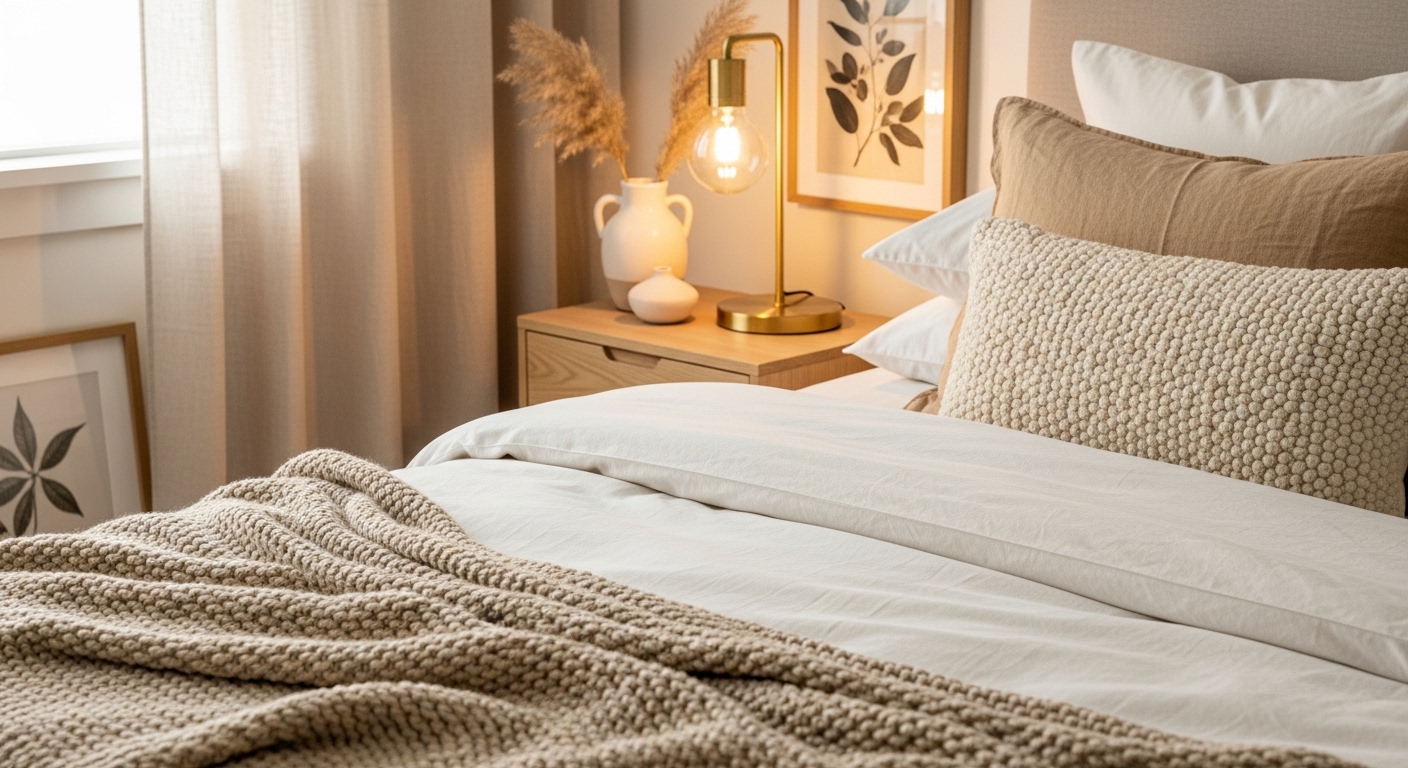
Layer your bedding with a mix of materials: smooth cotton, nubby bouclé, and a loosely woven throw. Each texture catches light at a slightly different angle, creating visual richness without adding color. Choose cushion covers in ivory, warm white, and soft natural tones rather than dark or heavily patterned fabrics.
- A large round or arched mirror above the bed or dresser doubles perceived light in the room.
- Metallic accents in brass, gold, or warm bronze on lamps, handles, and frames reflect light beautifully.
- Sheer curtains instead of blackout panels during the day allow every bit of natural light to filter through.
- A trailing plant on a high shelf or hanging planter adds life and draws the eye upward.
- Artwork in light, airy tones — think botanical prints, soft watercolors, or abstract neutrals — keeps walls feeling open.
Budget-Friendly Upgrades for Dark Bedrooms
Brightening a dark bedroom doesn't require a full renovation budget. Some of the most impactful changes cost very little — it's about knowing where to spend and where to save.
Start with paint — it's approximately the most cost-effective transformation available. A single tin of the right warm-white paint (prices vary, typically starting around $30–$50 per litre for quality brands as of writing) can completely change the energy of a room. Pair it with new bulbs in warm-white tones, which cost very little and make an immediate difference.
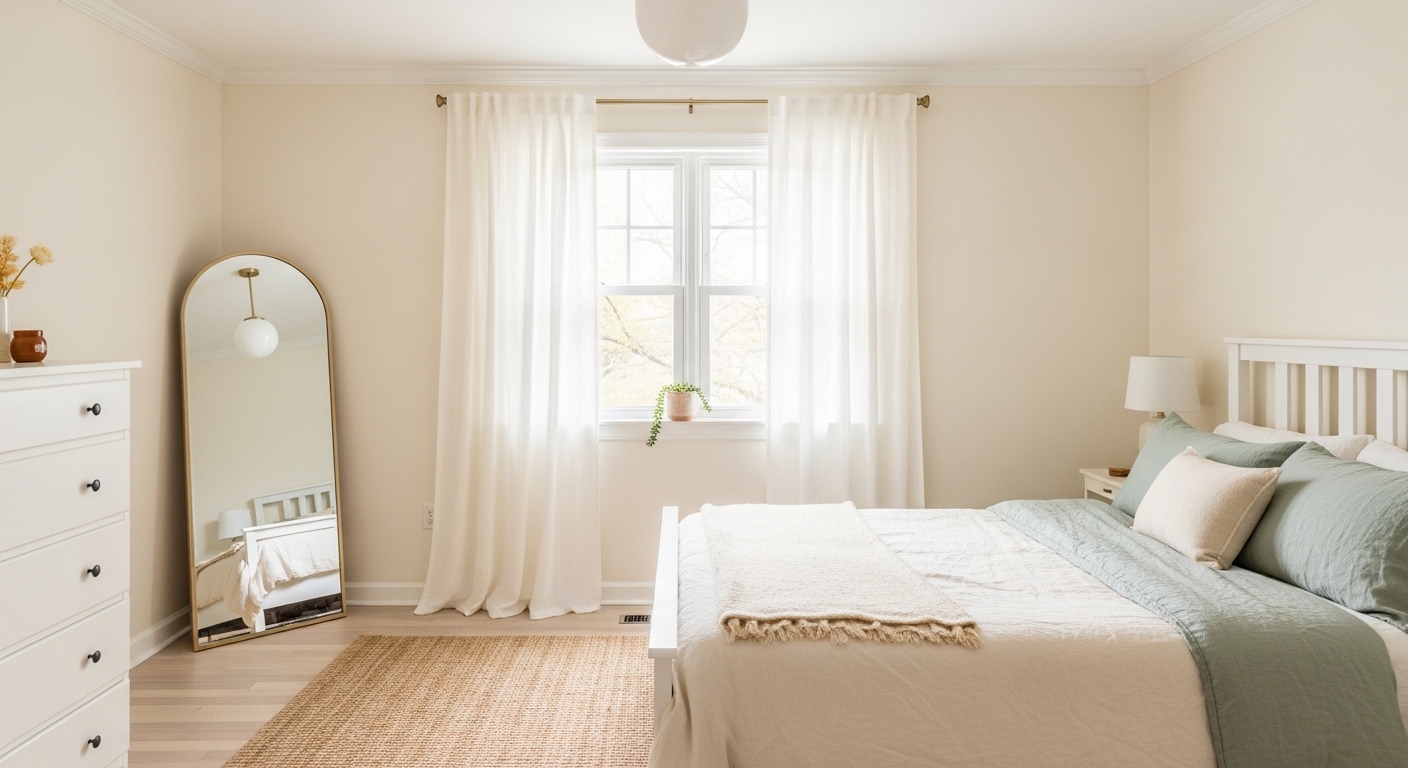
- Swap curtains for sheers: lightweight linen or voile panels in white or cream are widely available at accessible price points and immediately brighten a room.
- Add a large mirror: secondhand or thrifted mirrors with light-toned frames can be found for a fraction of retail prices.
- Rearrange before you renovate: repositioning furniture costs nothing and can dramatically improve light flow.
- Replace dark hardware: swapping drawer pulls and handles to brass or matte gold finishes is an inexpensive update with a high visual impact.
- Layer rugs: a light-toned jute or wool rug over existing dark flooring instantly lifts the room's brightness.
Prioritize changes that affect the largest surfaces first — walls, floors, and window treatments — before investing in smaller accessories.
Your Dark Bedroom, Transformed
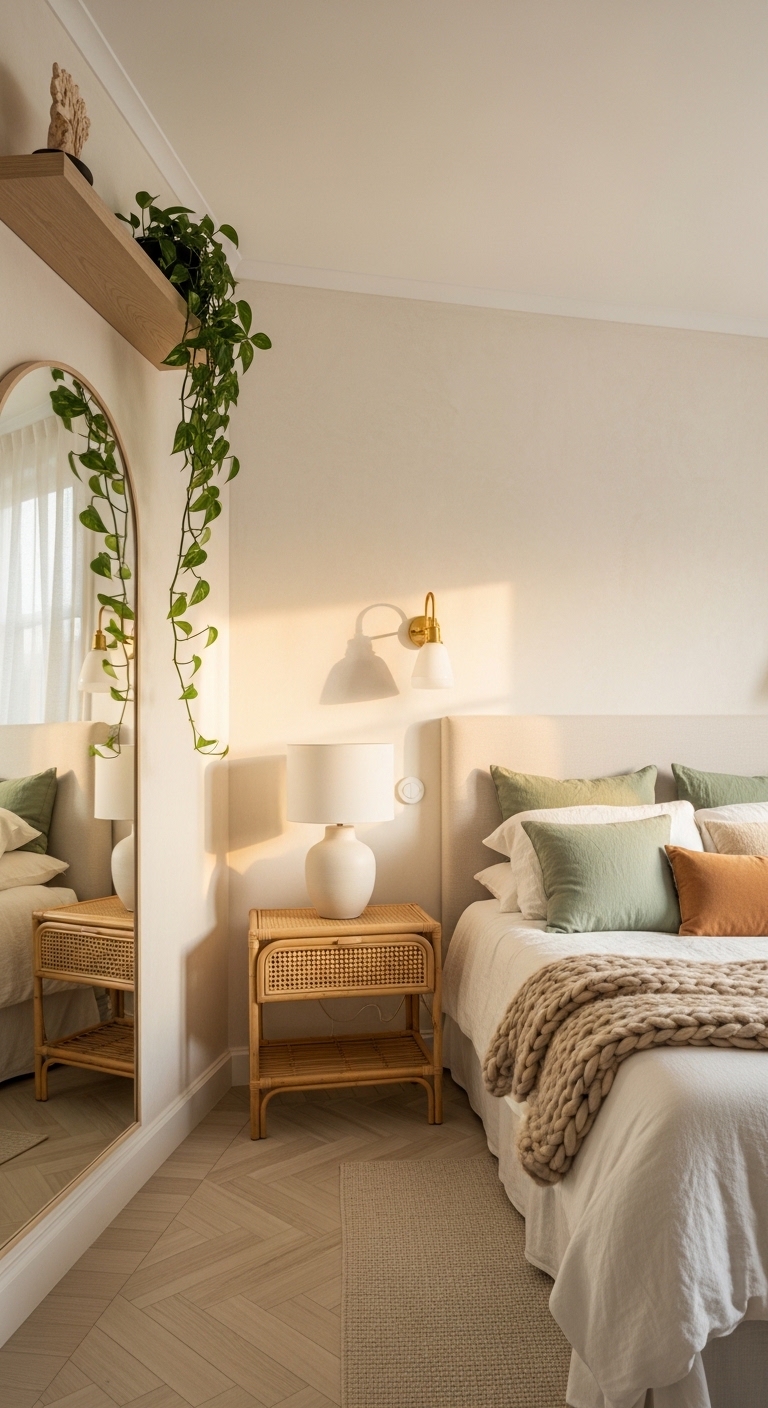
A room without much natural light isn't a design problem — it's a design opportunity. With warm, light-reflective paint colors, layered lighting, thoughtful furniture placement, and carefully chosen textures, even the darkest bedroom can feel open, calm, and genuinely beautiful. Start with one change — a fresh coat of warm white paint, a new lamp, a sheer curtain — and watch how quickly the atmosphere shifts. Small, intentional choices stack up fast, and before long, your once-dim room will be the coziest, most inviting space in your home.
Comments
Post a Comment