A bedroom with a sloped ceiling attic layout is one of those spaces that feels equal parts challenging and magical. The angled walls, the low eaves, the unexpected nooks — they can either frustrate you or become the most charming features in your entire home. With the right approach to layout, lighting, and decor, an attic bedroom transforms into a cozy, editorial retreat that feels intentional rather than awkward. Whether you're working with a full conversion or a partial loft, these ideas will help you make every inch feel purposeful and beautiful.
Smart Layout Strategies for Angled Walls
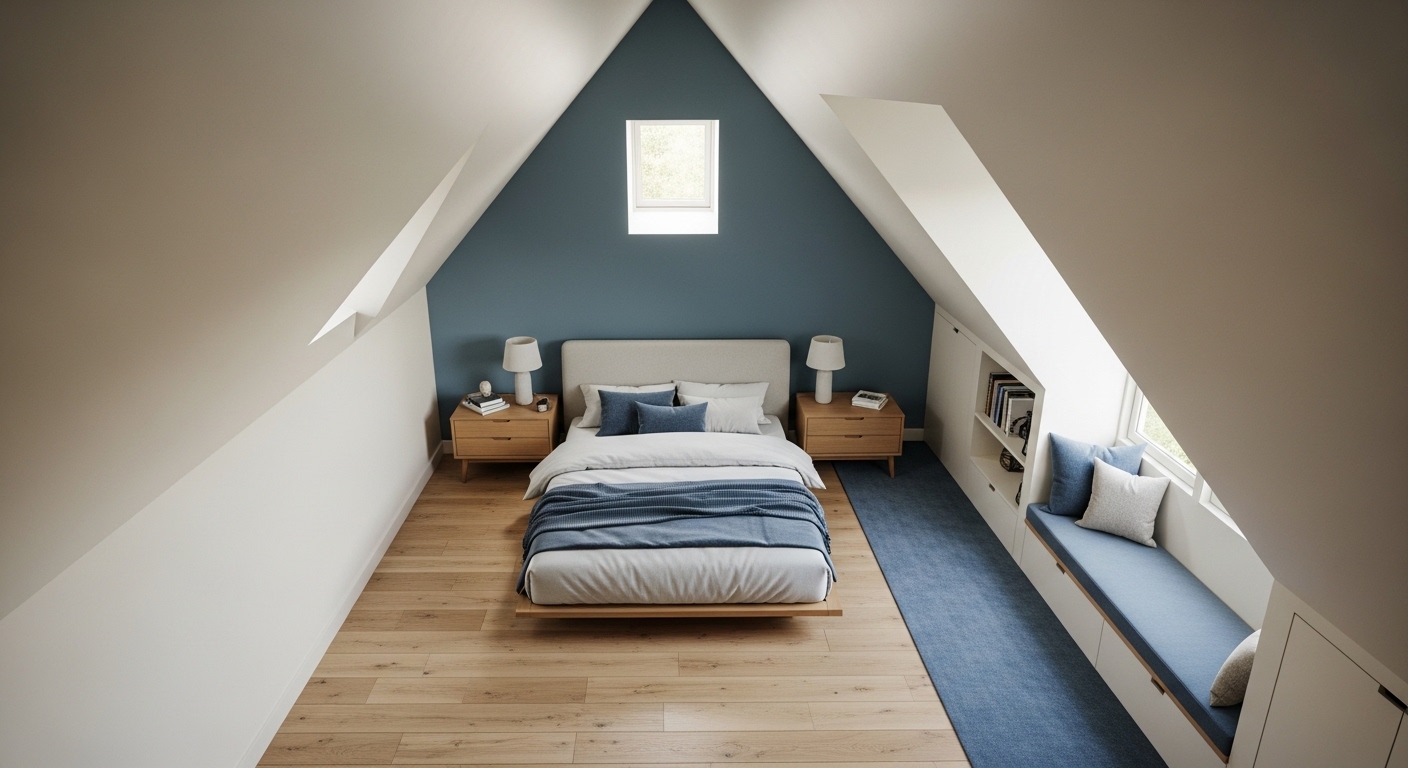
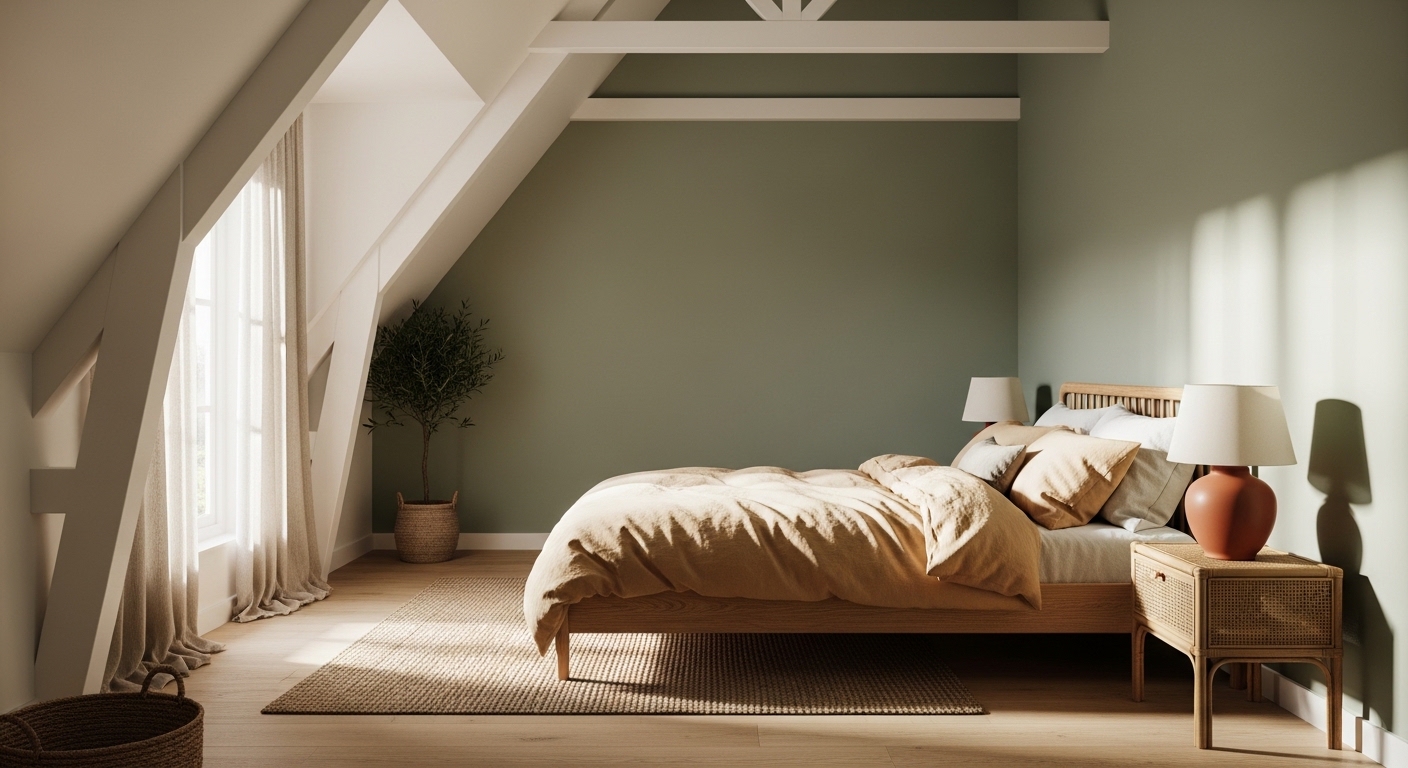
The golden rule of furnishing a sloped ceiling bedroom is simple: let the architecture guide the furniture. The lowest points of the room — where the ceiling meets the floor — are not dead zones. They are opportunities. Tuck your bed under the peak of the slope so the tallest piece of furniture sits where you have the most vertical clearance. Reserve the low-eave sides for furniture that doesn't need height: a low dresser, a window bench, or a row of built-in drawers.
Think about traffic flow before placing anything. In a standard bedroom, you walk around the bed freely. In an attic room, you may only have one or two clear pathways — and that's perfectly fine. Design around that reality rather than fighting it. A bed pushed against the sloped wall with a clear walkway down the center can feel intentional and even boutique-hotel luxurious.
- Place the bed under the highest point of the ceiling for maximum comfort and visual balance.
- Use low-profile furniture (under 36 inches tall) along sloped wall sections.
- Float a rug to define the sleeping zone and anchor the layout visually.
- Keep one wall entirely clear to avoid a cluttered, cramped feeling.
- Consider a platform bed or floor-level mattress for ultra-low eave areas.
Storage That Looks Stylish Under the Eaves
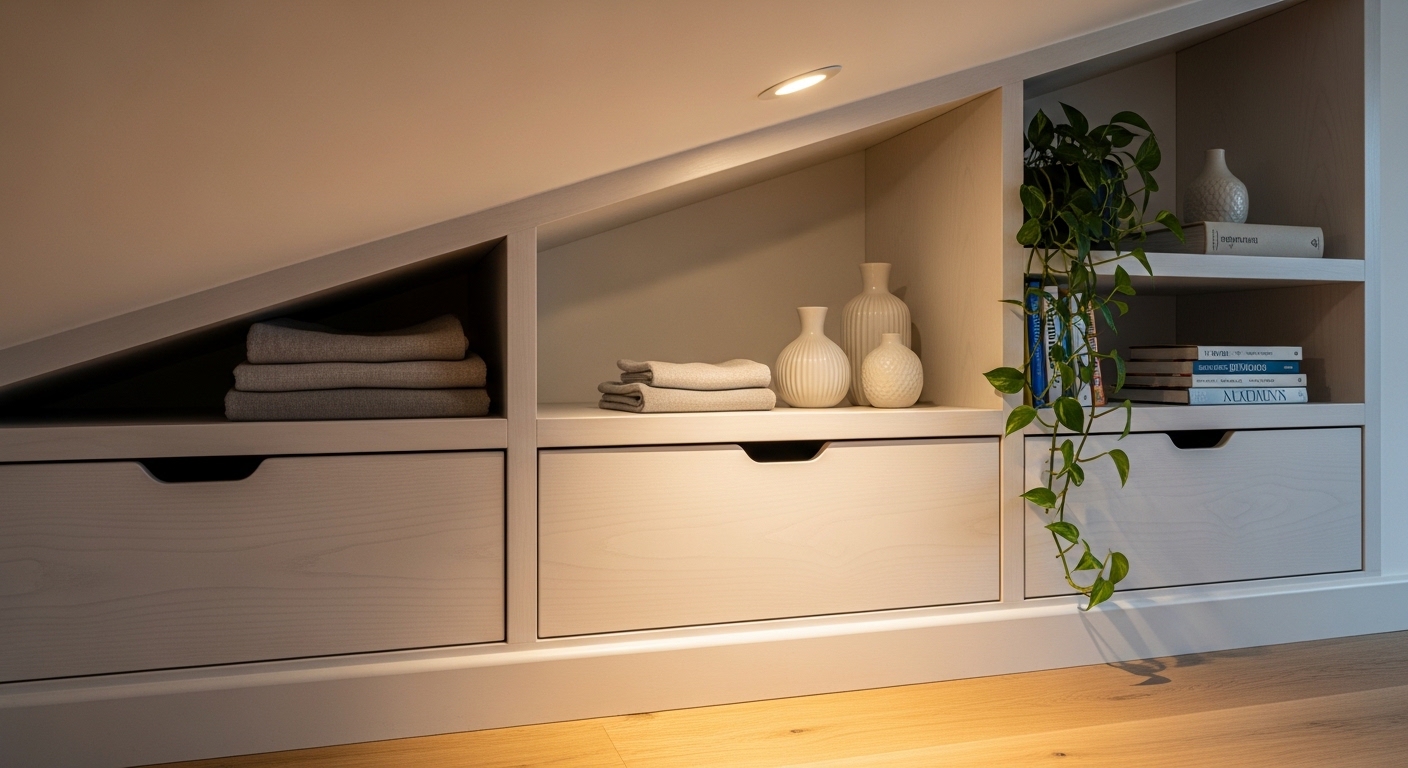
Storage in a sloped ceiling bedroom is where smart design really earns its keep. The triangular dead space along the lowest eave walls is actually prime real estate for custom or semi-custom built-ins. Think shallow drawers, pull-out shelving, or even a row of cabinet doors that blend seamlessly with the wall color — making the storage disappear into the architecture.
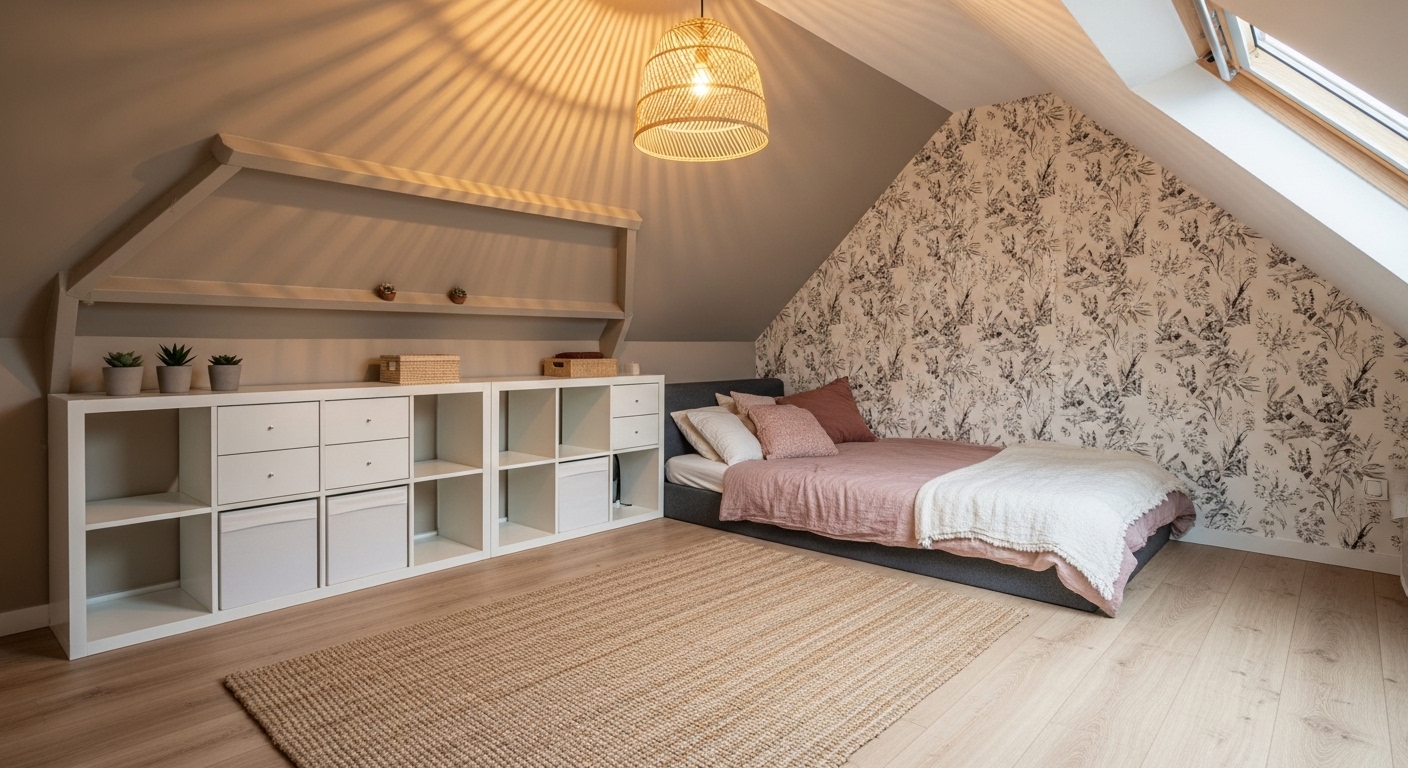
If built-ins aren't in the budget right now, don't worry. Flat-pack modular units from retailers like IKEA can be configured to fit under sloped sections with a little creative cutting or stacking. Paint them the same color as the wall and they'll look custom at a fraction of the cost.
"The best storage in an attic bedroom is the kind you don't notice — it becomes part of the room's architecture rather than an afterthought."
- Built-in drawers flush with the eave wall for a seamless, architectural look.
- Open shelving painted to match the wall color for a tonal, editorial effect.
- Wicker baskets and linen bins tucked into low alcoves for soft texture.
- A wardrobe positioned where ceiling height allows at least 72 inches of clearance.
- Pegboards or wall-mounted hooks near the entry for bags and accessories.
Lighting Tricks That Make the Space Feel Bigger
Lighting is everything in an attic bedroom — and it requires a completely different approach than a standard room. Overhead pendant lights and tall floor lamps are often impractical near the slopes, so the key is layering light sources at multiple heights and angles.
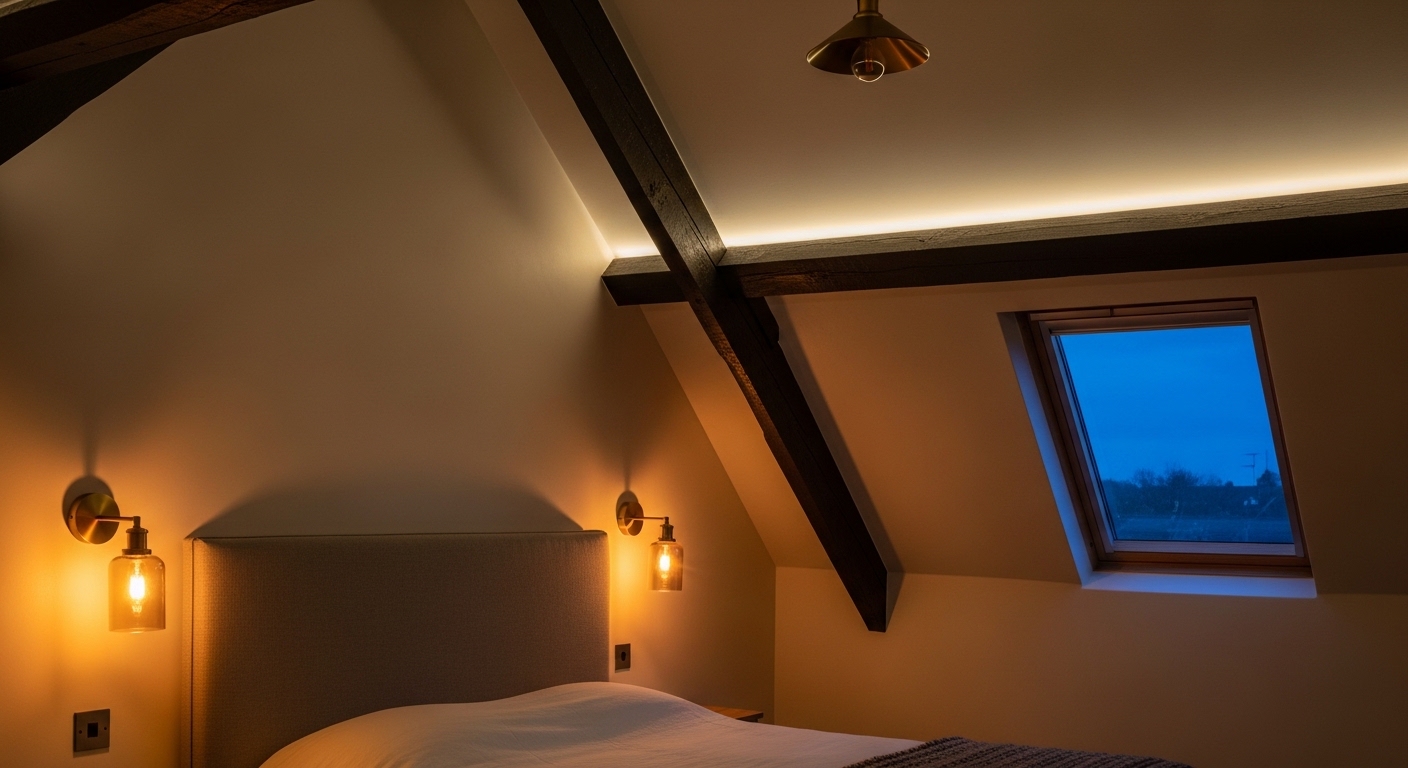
Skylights are the ultimate luxury if you have them or can add them (consult a licensed professional for any structural or roofing modifications). They flood the room with natural light and make the ceiling feel like an asset rather than a limitation. For artificial lighting, think wall sconces mounted at mid-height, LED strip lighting tucked along the beam lines, and small table lamps on low nightstands.
- Wall-mounted swing-arm sconces on either side of the bed free up nightstand space and add warm task lighting.
- LED strip lights along exposed beams create a soft, ambient glow without competing with the ceiling height.
- A small statement pendant hung at the room's peak draws the eye upward and adds personality.
- Skylights or dormer windows maximize natural light — always prioritize these if possible.
- Warm-toned bulbs (approximately 2700K) keep the atmosphere cozy rather than clinical.
Color Palette Recommendations for Sloped Ceilings
Color is one of the most powerful tools you have in an attic bedroom. The right palette can visually lift a low ceiling, expand a narrow room, and make the whole space feel cohesive and intentional.
For a light and airy feel, keep the ceiling and walls in the same pale tone — soft white, warm cream, or a barely-there greige. This monochromatic approach blurs the boundary between wall and ceiling, making the angles feel less abrupt. If you want more drama, try painting the ceiling a shade or two darker than the walls. This actually draws the eye upward and makes the sloped ceiling feel like a design choice rather than a constraint.
- Warm whites and creams: Brighten the space and complement natural wood tones beautifully.
- Soft sage green: Brings the outdoors in and pairs perfectly with linen and rattan textures.
- Dusty blue or slate: Creates a moody, cocoon-like atmosphere — ideal for a reading or sleeping retreat.
- Warm terracotta accents: Add earthiness and warmth without overwhelming a small space.
- Tonal greige walls with a darker ceiling: A sophisticated trick that makes the room feel intentionally designed.
Cozy Finishing Touches That Celebrate the Architecture
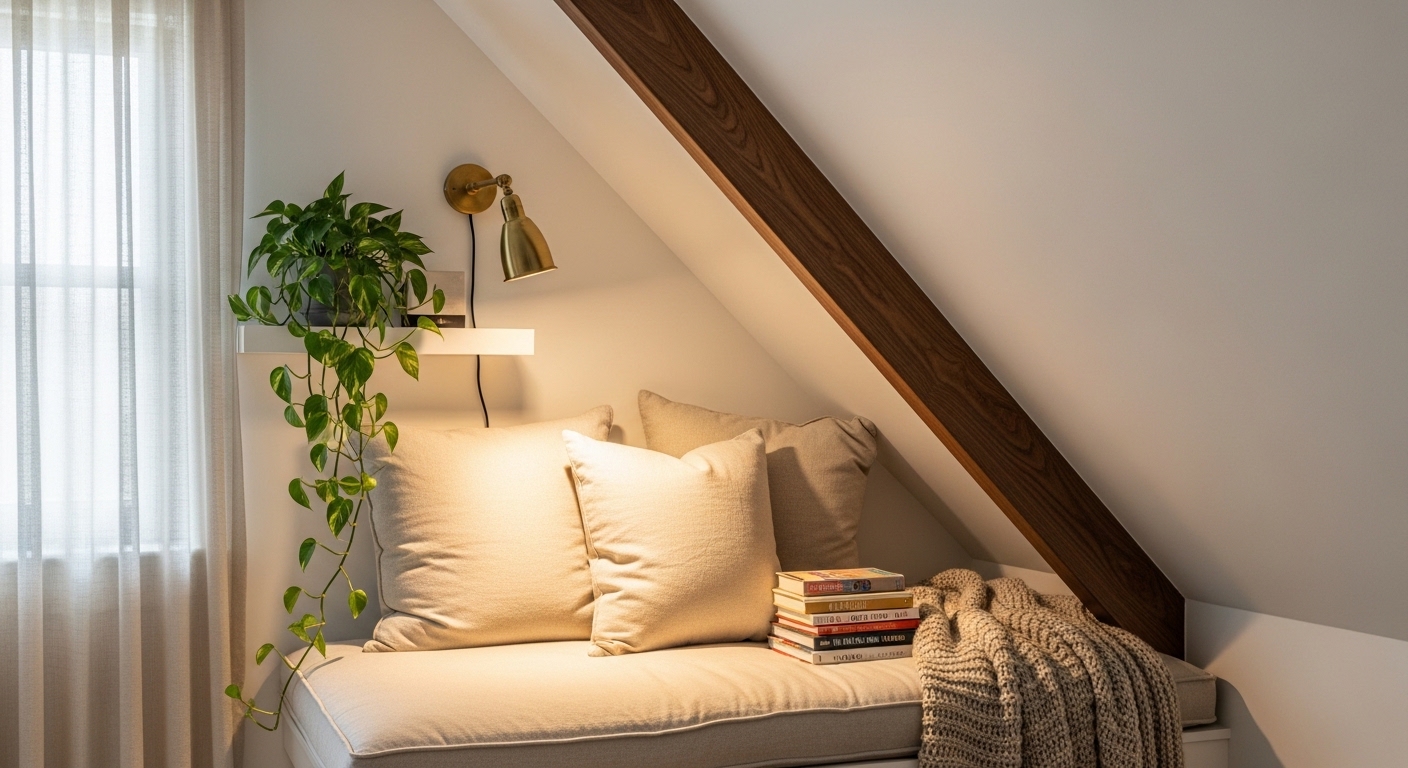
The best attic bedrooms don't fight their quirks — they lean into them. Those exposed beams? Highlight them with a contrasting stain or paint color. That awkward low corner? Turn it into a reading nook with a cushioned bench and a wall-mounted light. The sloped ceiling itself? Hang a small gallery of prints along it at an angle that follows the slope — it looks intentional and surprisingly chic.
Texture is your best friend in a space like this. Layer chunky knit throws over linen bedding, mix rattan and wood furniture, add a sheepskin rug near the bed. These tactile elements create warmth and depth that makes a small attic room feel rich and lived-in rather than sparse.
- A built-in window seat in the dormer with storage underneath and plump cushions on top.
- Macrame wall hangings or woven tapestries that add softness to hard plaster walls.
- A small gallery wall of botanical prints or black-and-white photography following the ceiling angle.
- Trailing plants like pothos or string-of-pearls on shelves for organic, living texture.
- A chunky knit blanket draped over the foot of the bed for instant coziness.
Budget-Friendly Upgrades for Attic Bedrooms
You don't need a full renovation budget to make an attic bedroom feel polished and intentional. Some of the most impactful changes cost very little and can be done over a weekend.
Paint is always the highest-return investment — a fresh coat in a carefully chosen color (approximately $30–$80 per gallon, prices vary by brand and region) can completely transform the feel of the room. After that, focus on textiles and lighting, which are the two fastest ways to elevate any space without touching the structure.
- Paint the ceiling and walls the same color: Instantly makes the room feel more cohesive and larger — cost of paint only.
- Swap builder-grade light fixtures for wall sconces: Approximately $40–$150 each at most home retailers; consult a licensed electrician for installation.
- Add a large area rug: Grounds the space and adds warmth — look for options approximately $80–$250 depending on size and material.
- Use peel-and-stick wallpaper on one sloped wall: Creates a dramatic accent without permanent commitment, approximately $30–$60 per roll.
- Hang sheer curtains floor to ceiling: Even on small dormer windows, long curtains make the ceiling feel taller — approximately $20–$60 per panel.
- Repurpose low furniture from other rooms: A low dresser or bench that felt too small elsewhere may be perfect under a sloped eave.
An attic bedroom with sloped ceilings is not a compromise — it is a canvas. Every angle, every beam, every low-eave nook is an invitation to design something that feels uniquely yours. The spaces that seem the most difficult to decorate often become the most memorable rooms in a home. Start with the layout, layer in the light, and let the architecture do the talking. Your sloped ceiling bedroom might just become the room everyone wishes they had.
Comments
Post a Comment