A dedicated workspace at home used to feel like a luxury. Now it feels like a necessity — and the pressure to make it look good while keeping costs low is real. The good news: IKEA's home office lineup is genuinely one of the best starting points for budget-conscious setups. With the right furniture combinations, a few clever hacks, and some intentional styling choices, you can build a space that feels professional, calm, and completely yours — without spending a fortune.
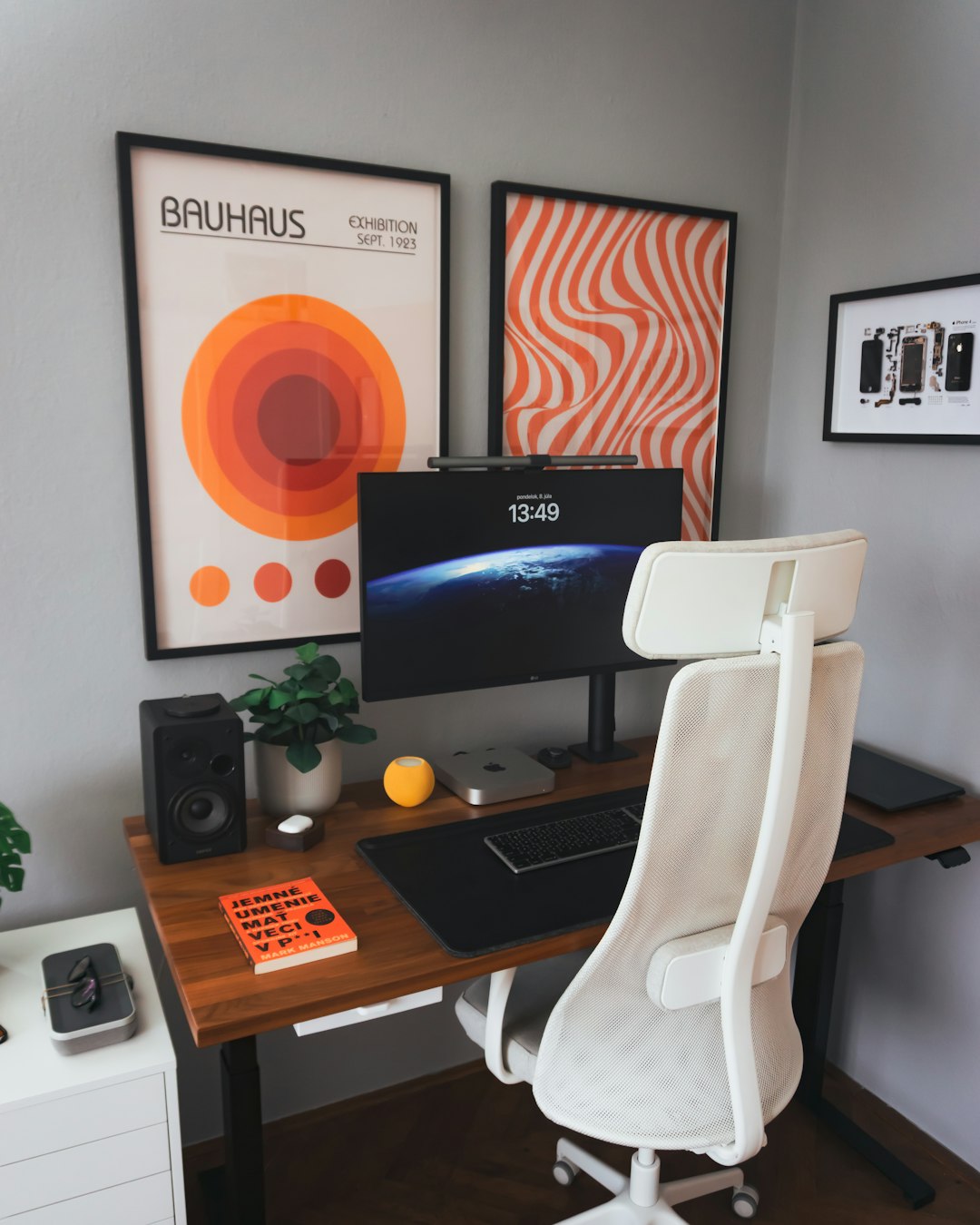
Before You Start Planning
Before buying anything, spend a few minutes mapping out your actual needs. It sounds obvious, but most home office frustrations come from skipping this step. Do you need dual monitors or just a laptop stand? Do you take video calls? Do you need physical filing space or is everything digital?
Measure your wall and floor space carefully. A lot of IKEA desks come in multiple widths — the difference between a 100cm and 140cm KALLAX-based desk setup can completely change how a small room feels. Knowing your constraints upfront saves you from returns and rearranging.
Also consider the room's natural light. If your only wall space faces away from windows, you'll need to plan your lighting more intentionally from the start.
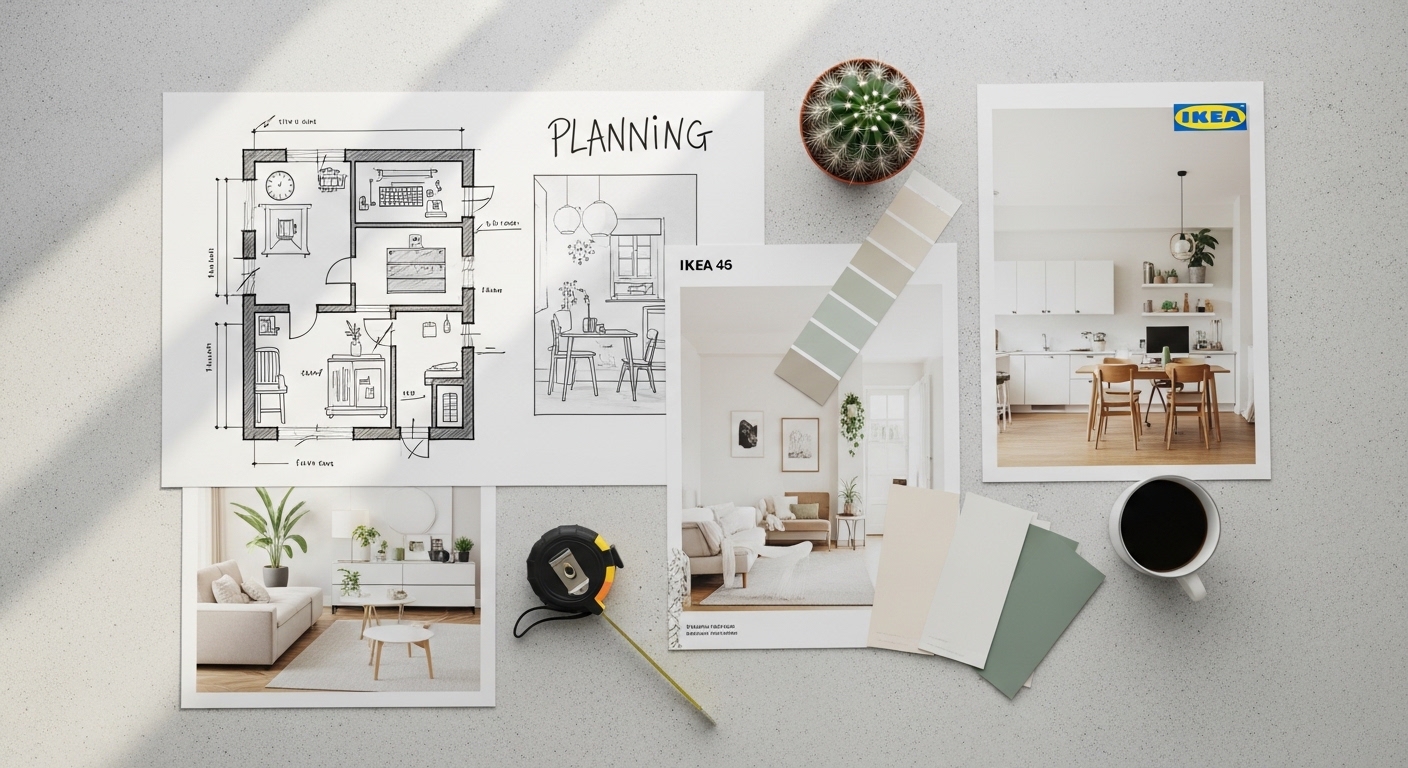
Affordable Furniture Picks
IKEA's home office range is wide, but a few pieces consistently punch above their price point. Here are the standouts worth building around:
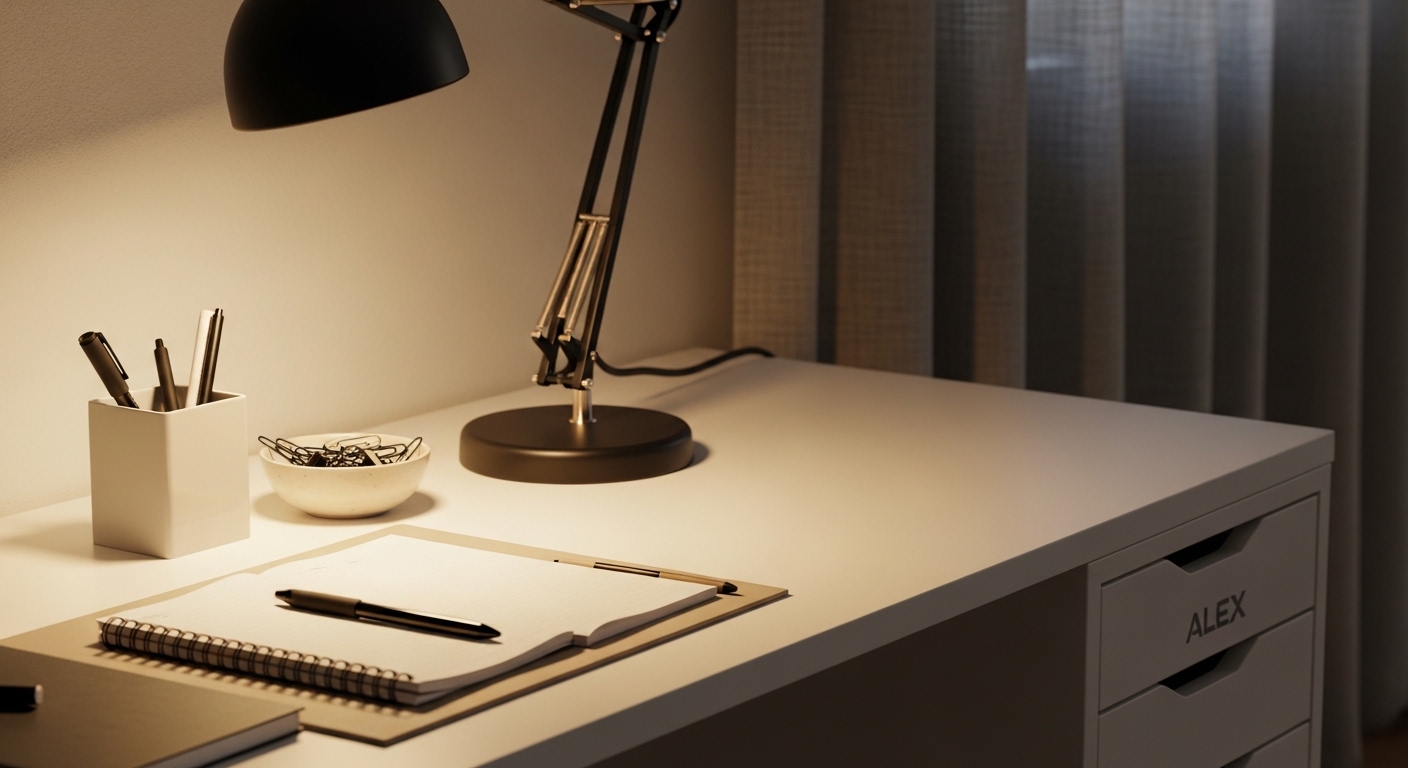
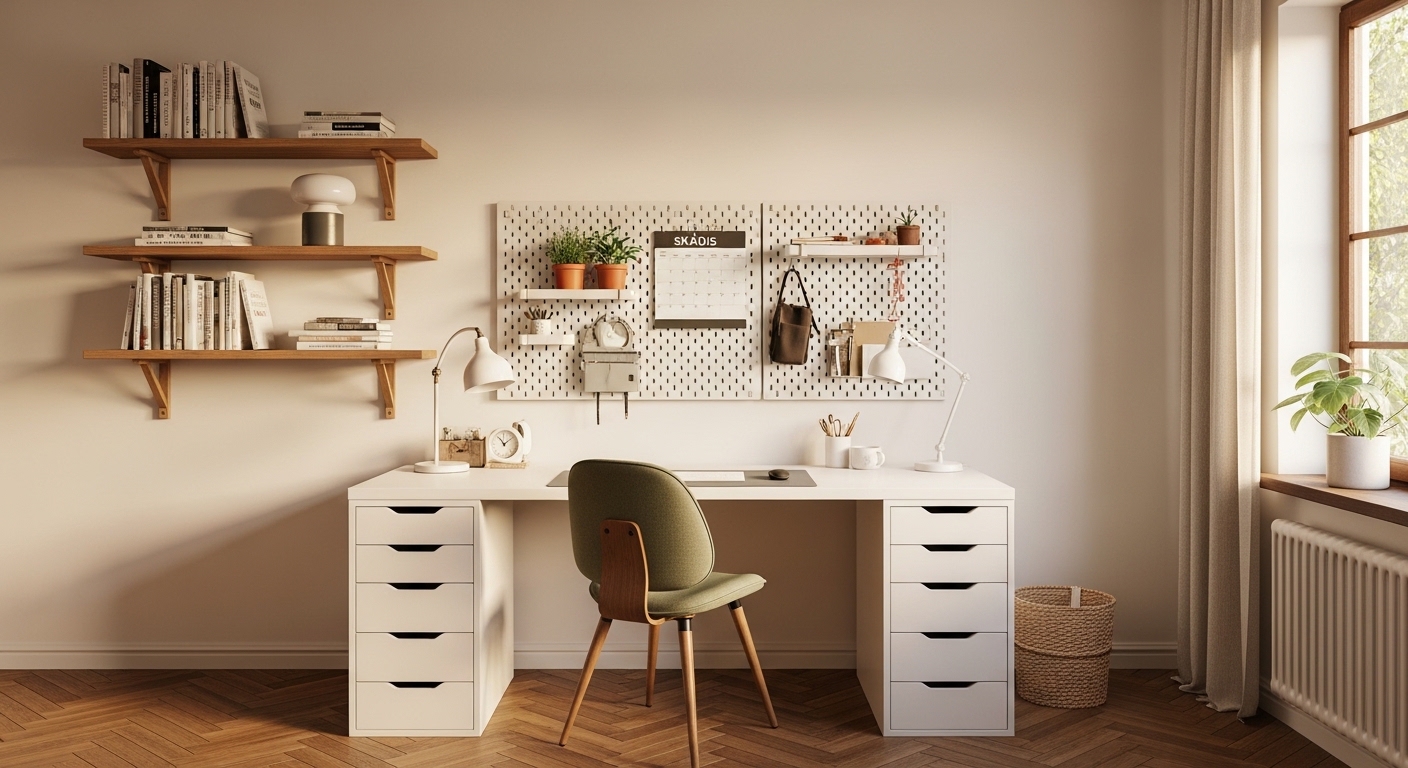
- ALEX Desk (or LAGKAPTEN + ALEX combo): The LAGKAPTEN tabletop paired with ALEX drawer units underneath is one of the most popular budget desk hacks for good reason. You get a large surface, built-in storage, and a clean look — approximately $150–$250 depending on size and finish.
- KALLAX Shelving Unit: Use it as a room divider, a desk base, or standalone storage. Pair with drawer inserts and door inserts to keep it looking tidy. Prices vary from approximately $50–$120.
- FJÄLLBERGET or MILLBERGET Chair: Ergonomic support without the $400+ price tag of premium office chairs. Approximately $80–$130 as of writing.
- SKÅDIS Pegboard: A wall-mounted organizer that keeps your desk surface clear. Hooks, shelves, and containers are sold separately. Approximately $20–$35.
- HEKTAR or RANARP Desk Lamp: Both offer warm, directional task lighting with an industrial-meets-minimal aesthetic. Approximately $25–$45.
Oddly enough, the chair is where most people underspend and regret it. If you're working 6+ hours a day, the desk matters less than what you're sitting in.
DIY Decor Ideas
This is where a budget IKEA setup starts to look like something you'd find on a design blog. A few targeted DIY touches make a significant difference.
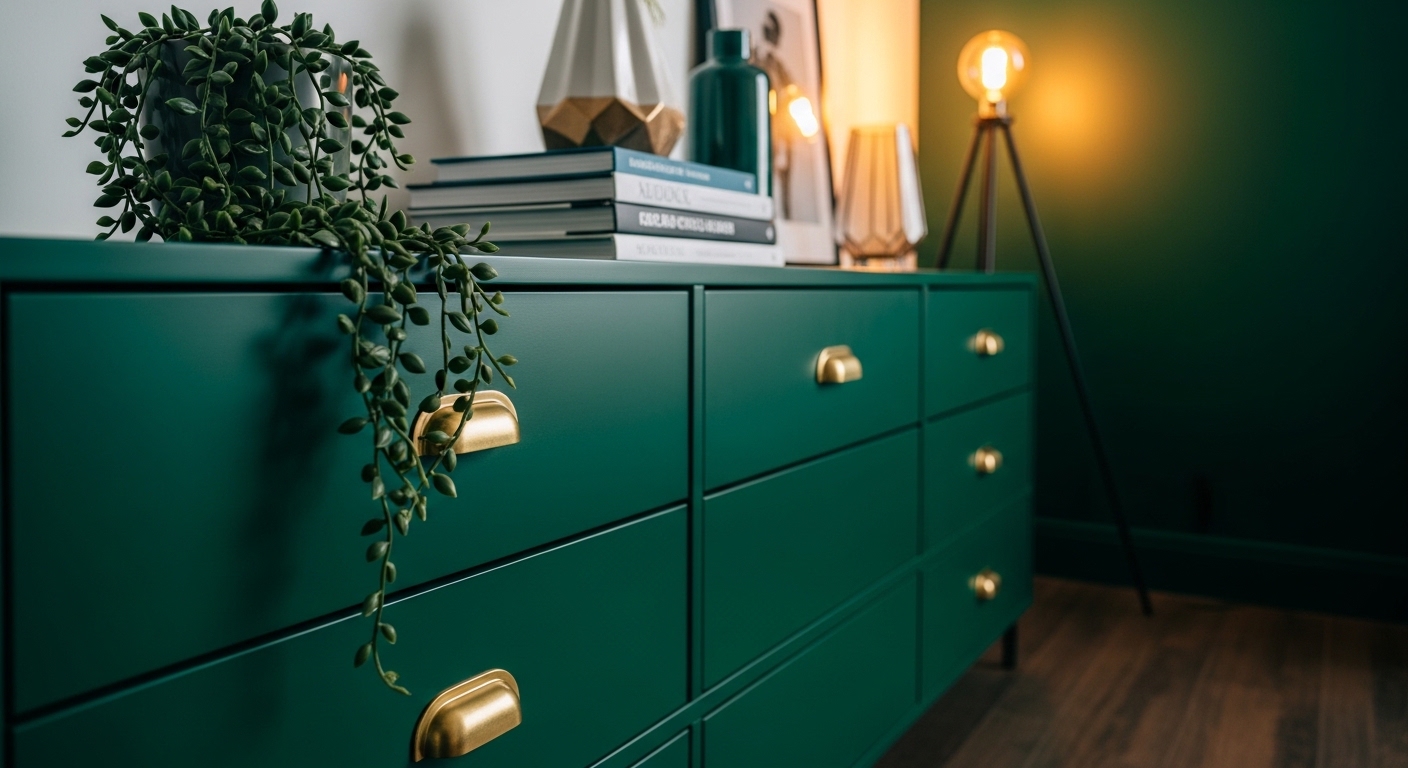
Paint the KALLAX: A standard white KALLAX becomes something entirely different with a coat of matte terracotta, deep forest green, or warm charcoal. Use chalk paint for a smooth, no-primer finish on the laminate surface.
Add hairpin legs to a LINNMON top: The LINNMON tabletop on its own looks budget. Add a set of hairpin legs (available on Amazon or Etsy for approximately $30–$60) and it suddenly reads as custom furniture.
Wallpaper or peel-and-stick panels behind the desk: A single accent wall behind your workspace adds depth and personality without permanent commitment — ideal for renters. Geometric patterns or subtle textures work best at desk level.
Upgrade the hardware: Swap out IKEA drawer pulls for ceramic or brass knobs. It costs under $20 and changes the entire feel of an ALEX unit.
"The most expensive-looking rooms are rarely the most expensive. They're just the most intentional." — a principle worth keeping in mind every time you reach for the cart.
Lighting & Ambience
Lighting is the most underrated part of any home office setup — and it's where IKEA genuinely delivers at a low price point.
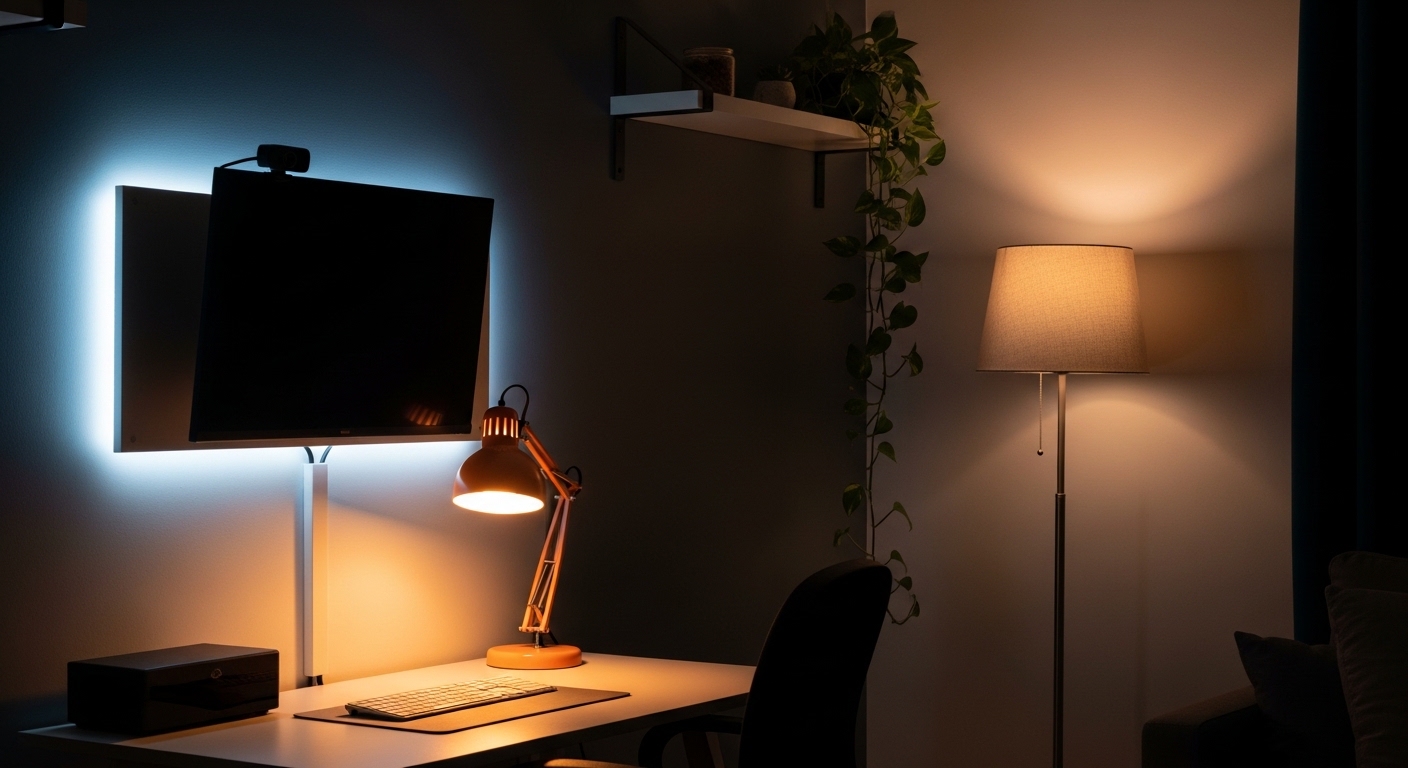
Layer your lighting across three levels: task, ambient, and accent. Your desk lamp handles task lighting. A floor lamp or overhead pendant handles ambient. A small LED strip behind your monitor or under a shelf adds accent light that reduces eye strain during evening work sessions.
IKEA's TERTIAL arm lamp is a cult favorite for a reason — it's adjustable, minimal, and costs approximately $15. Pair it with a warm-white bulb (2700K) rather than the cool-white bulbs that come in most budget lamps. That single swap makes a room feel warmer and less clinical.
If your office has no natural light, a daylight bulb (5000K) in your main overhead fixture can help with focus during the day — just switch to warmer tones in the evening to wind down.
Where to Save vs Splurge
Not everything in your home office deserves the same budget allocation. Here's a realistic breakdown:
Save on:
- Desk surface (LAGKAPTEN or LINNMON tops are genuinely functional)
- Decorative accessories (thrift stores and secondhand apps are excellent for this)
- Cable management solutions (IKEA's SIGNUM cable tray is approximately $15 and works well)
- Storage bins and boxes (IKEA DRONA boxes for KALLAX are approximately $5 each)
Splurge on:
- Your chair — ergonomics matter more than aesthetics here
- Your monitor or laptop stand — eye-level screens reduce neck strain significantly
- Lighting quality — a $15 bulb upgrade beats a $100 lamp with the wrong color temperature
At first, it can feel counterintuitive to spend more on things you don't see in photos. But the chair and lighting are what you actually live with every day.
Final Styling Checklist
Before you call the space done, run through these finishing details. Small things at this stage make the biggest visual difference.
- Clear the desk surface — keep only what you use daily visible. Everything else goes in drawers or on shelves.
- Manage cables — use velcro ties, a cable tray under the desk, or a cable box on the floor. Visible cables are the fastest way to make a tidy room look messy.
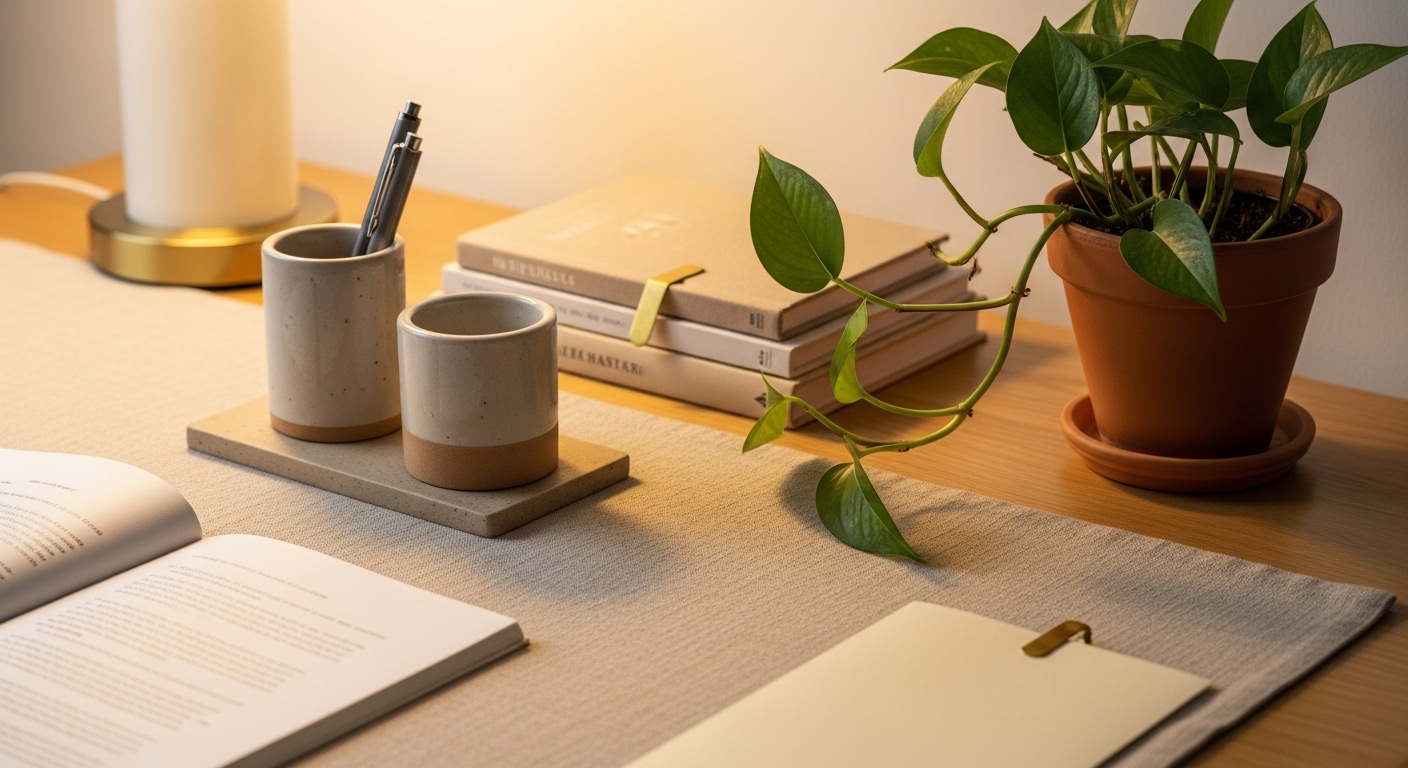
- Add one plant — a single trailing pothos or a small snake plant adds life without requiring much care or space.
- Check your wall behind the desk — bare walls feel unfinished. A pegboard, a small gallery wall, or even one large print makes a significant difference.
- Layer your textures — a small rug under the chair, a linen desk mat, a ceramic mug holder. These details shift the space from functional to considered.
- Test your lighting at night — sit at your desk after dark and see how it feels. Adjust lamp angles and bulb warmth before settling on a final setup.
A well-styled home office doesn't require a renovation budget or a dedicated room. It requires clarity about what you need, a few smart IKEA picks, and the patience to style slowly rather than all at once. The spaces that feel most intentional are usually the ones built piece by piece — not bought all in one cart. Start with the desk and chair. Add light. Then layer in the details that make it feel like yours.
Comments
Post a Comment