Not everyone has a spare bedroom to sacrifice. Most of us are working from a corner of the living room, a sliver of hallway, or a kitchen table that doubles as a desk by 9am. If you've been searching for home office ideas for small spaces, the good news is that a dedicated room was never really the point — a dedicated zone is. With the right setup, even the tightest apartment can hold a workspace that actually works.
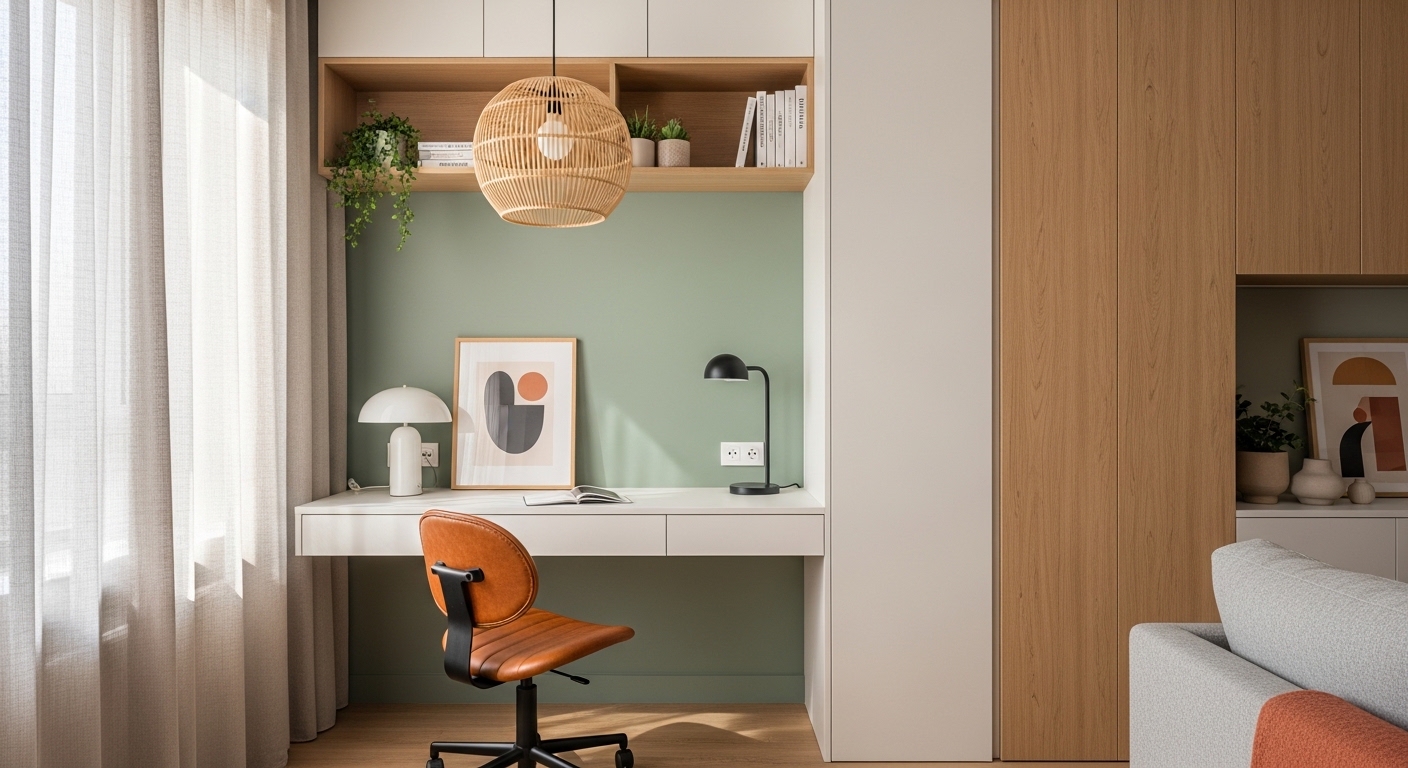
Smart Layout Strategies
The first step is resisting the urge to carve out the biggest possible footprint. Counterintuitively, a smaller, more intentional zone often feels more productive than a sprawling setup crammed into a corner with no visual boundary.
Think in terms of zones, not rooms. A rug, a shift in wall color, or even a curtain rod with a linen panel can visually separate your workspace from the rest of your living area. That psychological separation matters more than square footage.
A few layouts that consistently work well in small apartments:
- The window alcove desk — a floating shelf or slim console table placed directly under a window maximizes natural light and uses dead wall space.
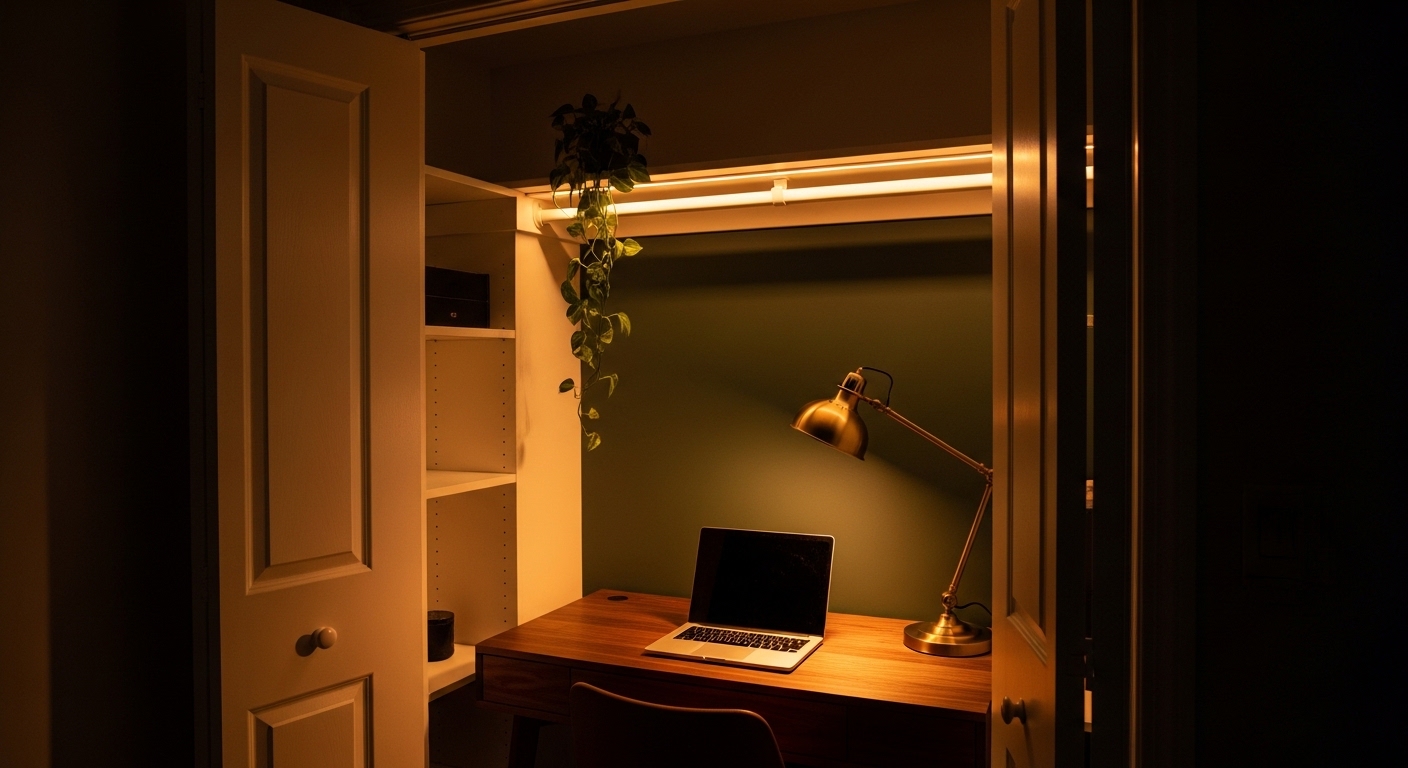
- The closet office (cloffice) — remove the hanging rod, add a desktop surface, and install a few shelves. Close the doors at the end of the day and your office disappears.
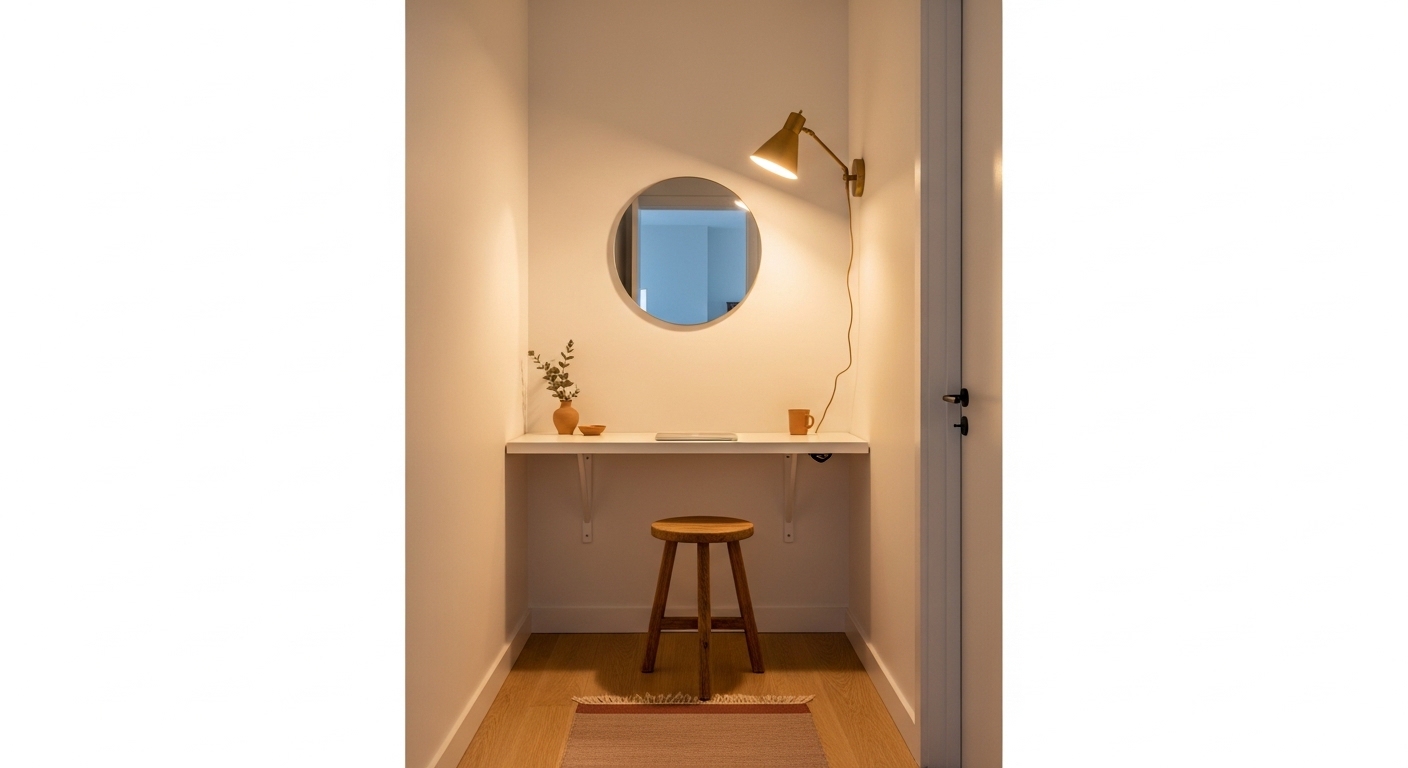
- The hallway nook — a narrow floating desk along a hallway wall is often overlooked but surprisingly functional for laptop-based work.
- The room divider desk — a bookshelf or open shelving unit placed perpendicular to a wall creates a natural partition and storage in one.
Oddly enough, the hallway option tends to feel less claustrophobic than a tucked corner — the linear sightline gives a sense of depth that a boxed-in nook can't offer.
Storage That Looks Stylish
Storage in a small home office has one job: keep the surface clear. The moment your desk becomes a dumping ground, the whole zone collapses mentally and visually.
Vertical storage is your best tool here. Wall-mounted shelves above the desk, pegboards with small baskets and hooks, or a slim tall bookcase beside the desk all pull clutter upward and off the work surface. It keeps the floor plan open and the desk itself breathing.
"A clear desk isn't about minimalism — it's about giving your brain one less thing to process before you even open your laptop."
For renters who can't drill, adhesive wall strips rated for heavier loads (always check weight limits carefully) or freestanding shelf units work well. A rolling cart is another underrated option — it tucks beside the desk during work hours and rolls into a closet when you're done.
Stylish storage picks that don't look like office supply store leftovers:
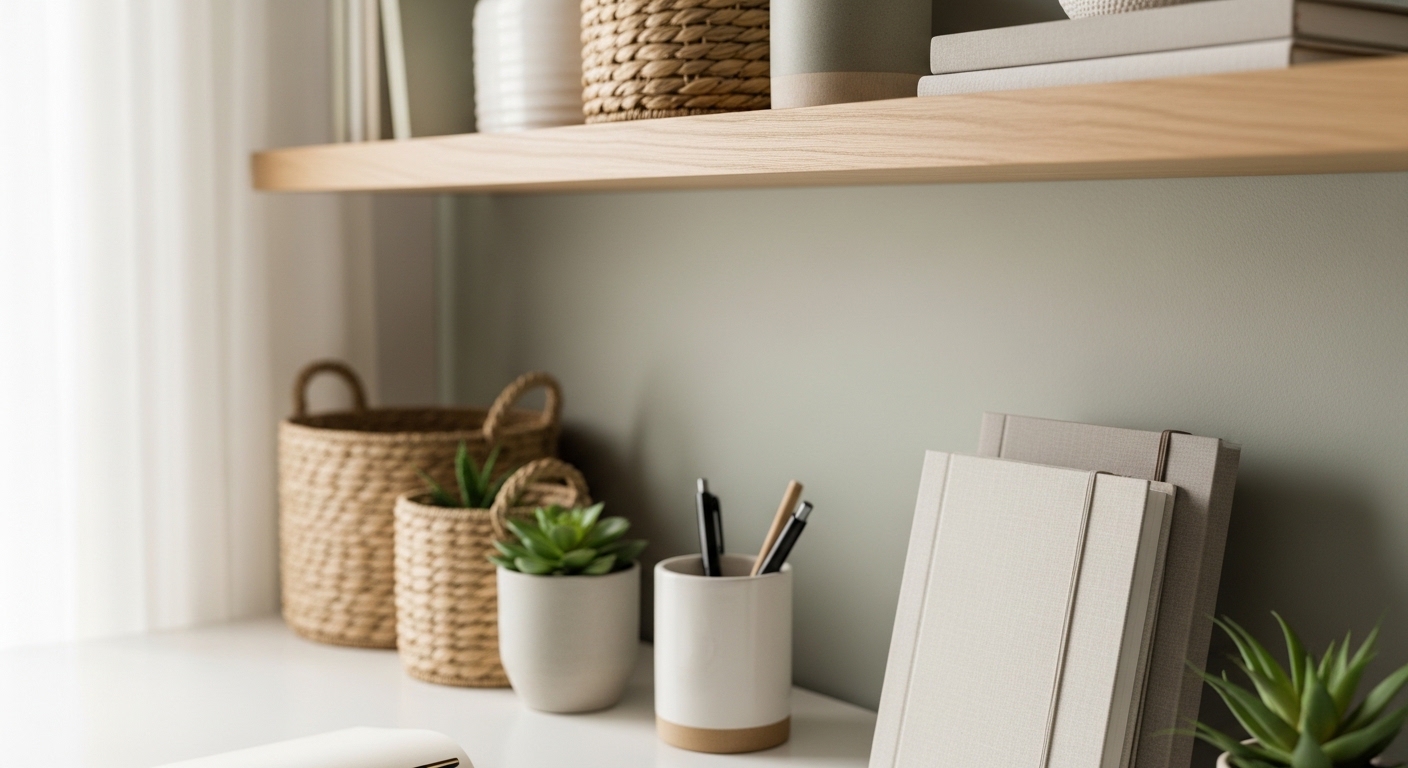
- Woven seagrass baskets on open shelves for paper and supplies
- A ceramic pen holder or small tray for desktop essentials
- Matching linen-covered boxes for document storage
- A slim magazine file in matte black or natural wood for notebooks
Lighting Tricks for a Bigger Feel
Lighting does more work in a small office than almost any other element. A single overhead bulb will flatten the space and make it feel like a utility room. Layering light sources — even just two — changes everything.
A focused task light on the desk handles the functional side. A secondary ambient source (a small floor lamp in the corner, a plug-in wall sconce, or even a LED strip behind the monitor) adds depth and warmth that makes the zone feel intentional rather than improvised.
For closet offices specifically, under-shelf LED strip lighting is a game-changer. It illuminates the work surface evenly without requiring any ceiling fixture, and it creates a warm glow that makes the enclosed space feel curated rather than cramped.
Natural light placement matters too. If you have a choice, position the desk so the window is to the side rather than directly behind or in front of the screen. It reduces glare and gives the space a more open, airy quality throughout the day.
Color Palette Recommendations
Color in a small workspace has a dual role: it needs to feel calm enough for focus and defined enough to signal "this is the office." Those two goals aren't always easy to balance.
Light, slightly warm neutrals — soft whites, warm creams, pale greiges — keep the space feeling open and prevent the zone from visually shrinking. But a completely neutral workspace can feel a bit lifeless after a few hours. One accent wall or a single bold color on the back of a closet office adds personality without closing the room in.
Palettes that consistently work for small home offices:
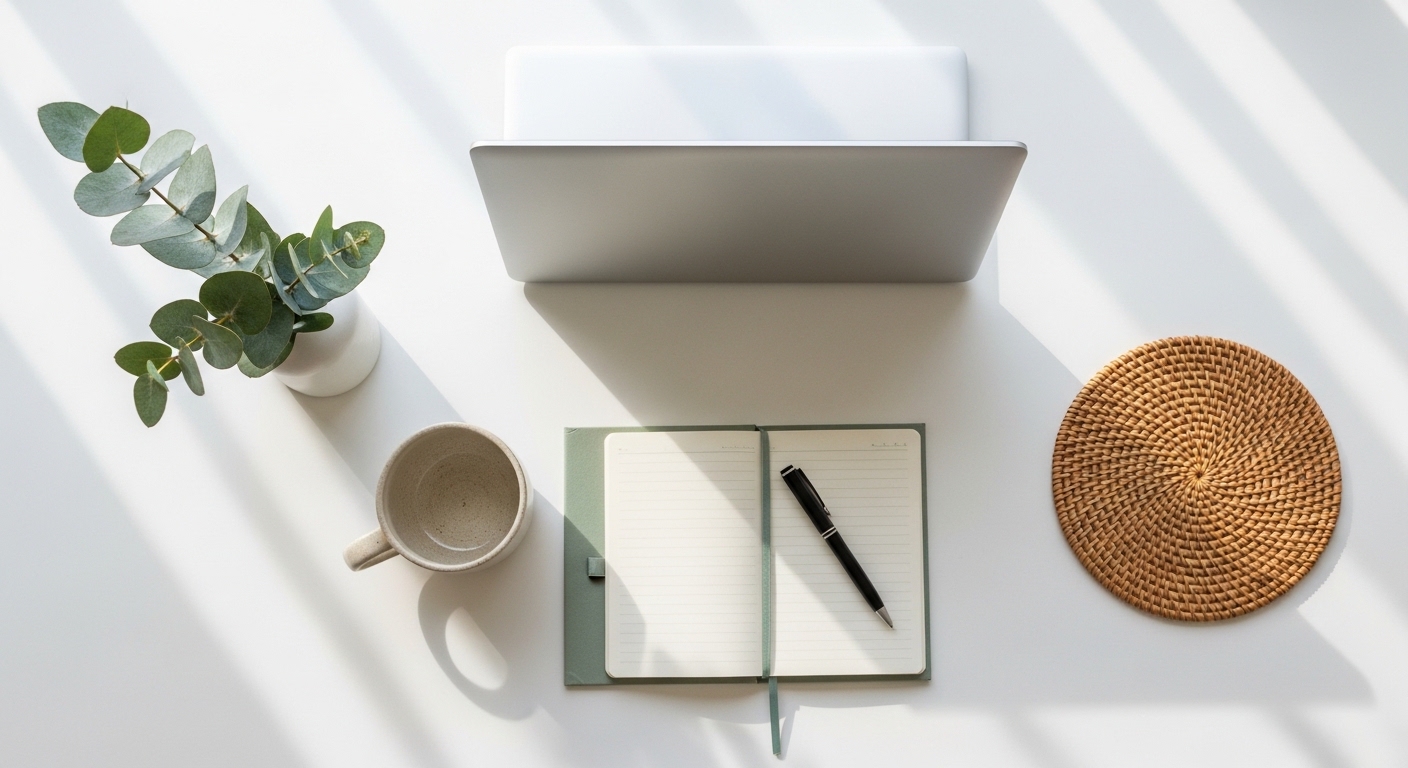
- Warm white + sage green + natural wood — fresh, calm, easy on the eyes during long work sessions
- Soft cream + terracotta + matte black — warm and grounded, works especially well with rattan or cane furniture details
- Pale blue-grey + white + brass — clean and slightly cool, good for spaces with limited natural light
- Deep forest green (accent) + off-white + walnut — moody but not dark, ideal for closet offices where the back wall becomes a focal point
At first, a single bold color on the back wall of a closet office can feel like too much. In practice, it almost always makes the space feel more finished — like a room rather than a storage area with a desk in it.
Cozy Finishing Touches
A workspace that feels good to sit in is one you'll actually use. This sounds obvious, but most small home office setups stop at functional and never reach comfortable.
A few small additions make a real difference:
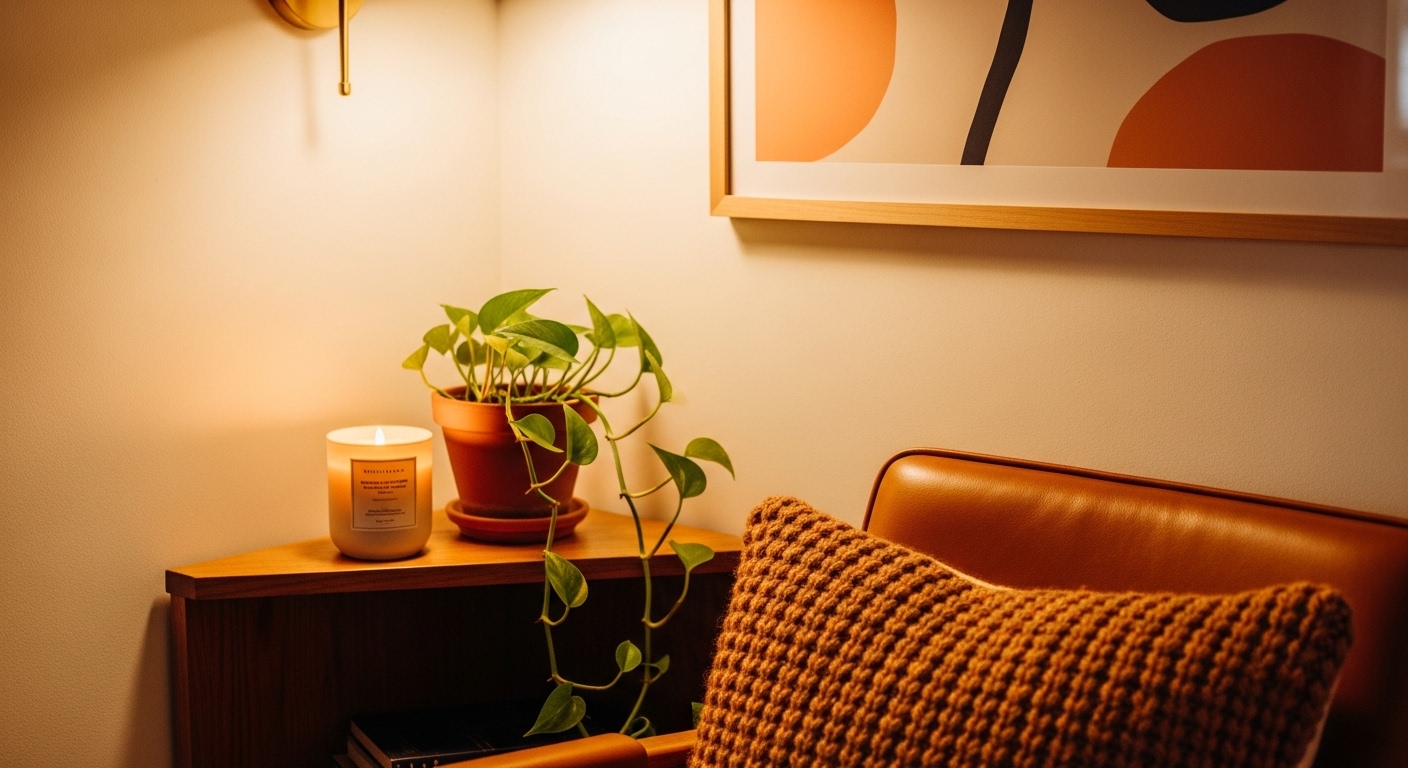
- A small plant or two — trailing pothos, a compact snake plant, or a single stem in a bud vase adds life without taking up much real estate
- A textured cushion on the chair seat, especially if you're using a dining chair as your desk chair
- A small scented candle or diffuser nearby — scent is an underrated focus trigger
- A piece of art or a framed print at eye level above the desk, something that gives you a visual resting point during long sessions
The goal isn't to over-decorate. Small apartments usually need fewer pieces than you think — one well-chosen print and a single plant will do more for the atmosphere than a shelf full of miscellaneous objects.
Budget-Friendly Upgrades
You don't need a renovation budget to pull this off. Most impactful small home office upgrades cost under $100 and take an afternoon to implement.
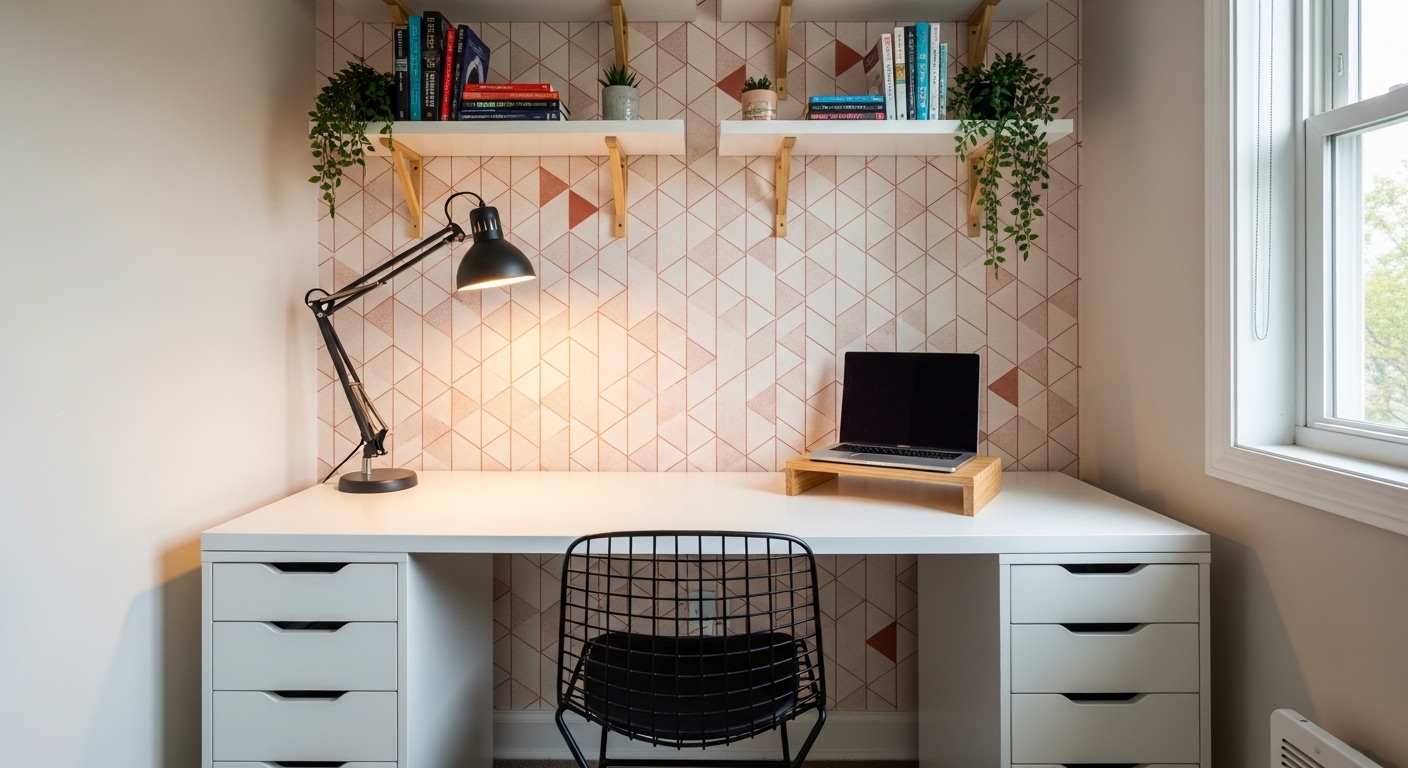
Start with the desk surface itself. A solid-core door blank from a hardware store (approximately $40–$60 as of writing) laid across two filing cabinets or a pair of IKEA ALEX drawer units gives you a generous, sturdy desktop for a fraction of the cost of a purpose-built desk. It's one of the most reliable budget hacks in small-space design.
Other high-impact, low-cost upgrades:
- Peel-and-stick wallpaper on the back wall of a closet office — prices vary widely, but a single accent panel typically runs $25–$50 and is fully removable for renters
- A clip-on or clamp desk lamp in brushed brass or matte black — approximately $20–$45, adds instant style and frees up desk surface
- Floating shelves from IKEA LACK or similar — around $15–$30 per shelf, use adhesive mounting strips if drilling isn't an option
- A monitor riser or laptop stand — improves ergonomics and creates storage space underneath, typically $15–$35
- Cable management clips or a cable box — one of the most underrated upgrades, instantly makes any desk look more intentional
Removing one thing often does more than adding something new. A cluttered desk with good lighting still looks cluttered. Clear the surface first, then layer in the upgrades.
A dedicated room was never the requirement. The right corner, the right light, and a surface that stays clear — that's the whole formula. Once the zone feels intentional, the work tends to follow.
Comments
Post a Comment