The modern farmhouse living room is one of the most beloved interior styles right now — and for good reason. It takes the soul of a countryside home and filters it through a clean, contemporary lens. Think shiplap walls paired with sleek furniture, linen throws draped over a streamlined sofa, and mixed metals that catch the light just right. Whether you live in a sprawling suburban home or a compact apartment, this style is endlessly adaptable. If you've been dreaming of a space that feels both grounded and effortlessly chic, this guide is your starting point.
Defining the Modern Farmhouse Style
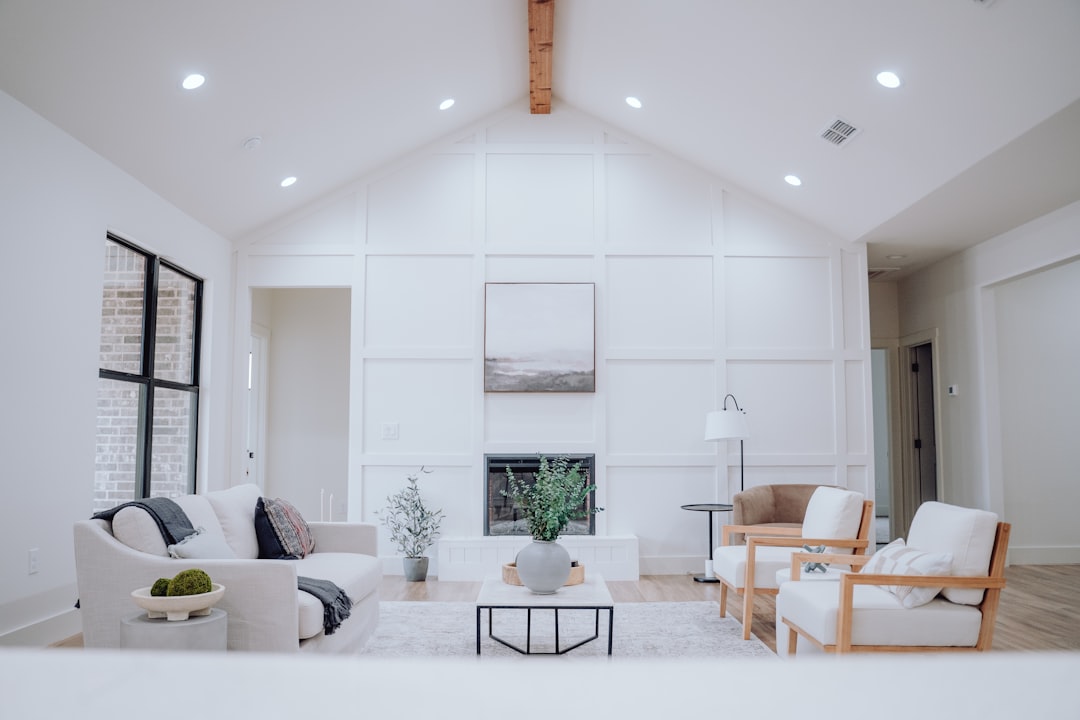
Modern farmhouse is not about recreating a barn. It is about borrowing the warmth, texture, and nostalgia of rural living and pairing it with the simplicity and intention of modern design. The result is a space that feels lived-in but never cluttered, casual but never sloppy.
At its core, the style rests on a few defining principles:
- Honest, natural materials like wood, linen, cotton, and stone
- A restrained color palette anchored in whites, creams, and warm neutrals
- Clean architectural lines softened by organic textures
- Functional furniture that prioritizes comfort without sacrificing form
- Intentional contrast — rough with smooth, matte with gloss, old with new
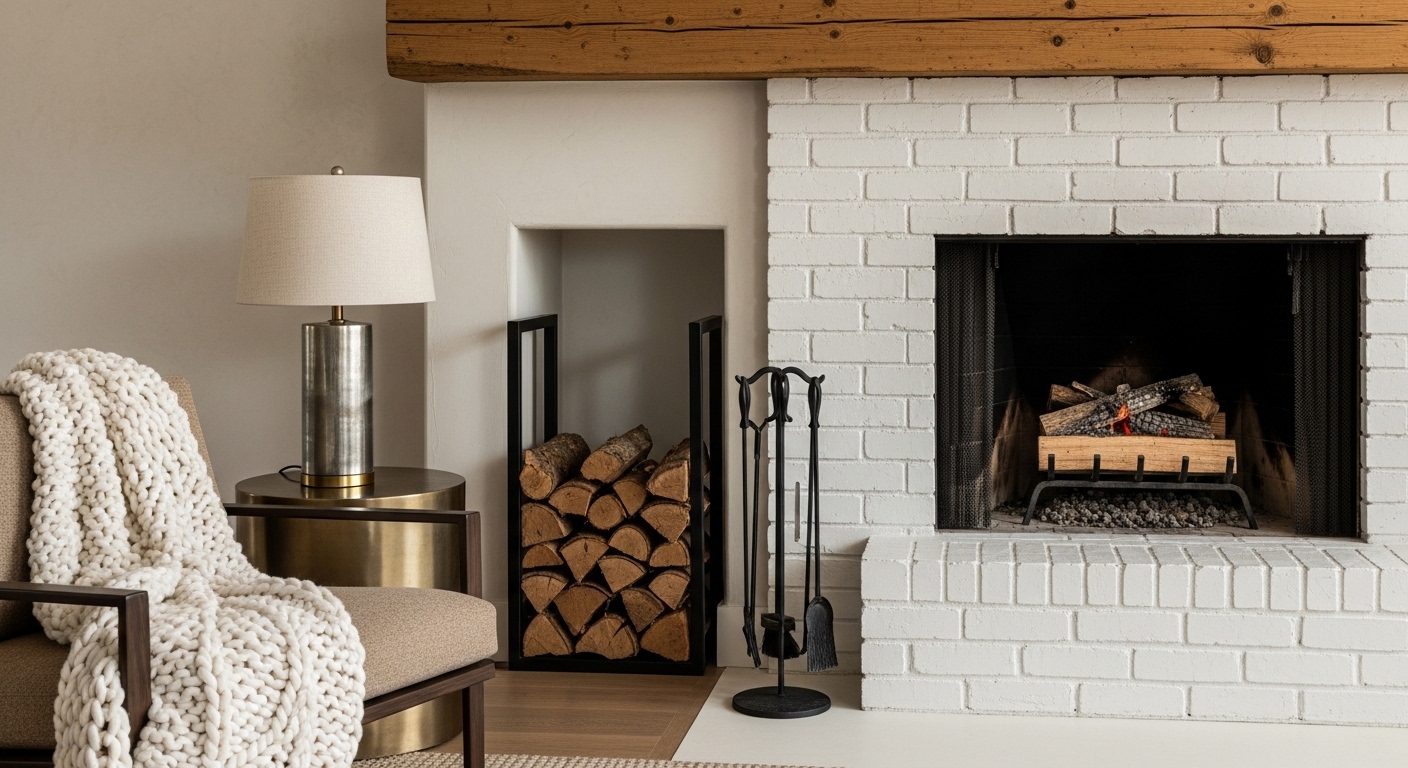
It is this balance of opposites that gives the style its magnetic quality. A raw wood beam above a crisp white fireplace surround. A sleek sectional sofa layered with a hand-stitched quilt. These pairings create visual tension that feels exciting rather than chaotic.
Best Color Combinations for a Farmhouse Living Room
Color is where modern farmhouse gets its quiet confidence. The palette is never loud, but it is never boring either. The key is layering shades that feel warm and grounded while keeping the overall room light and airy.
Some of the most effective color combinations include:
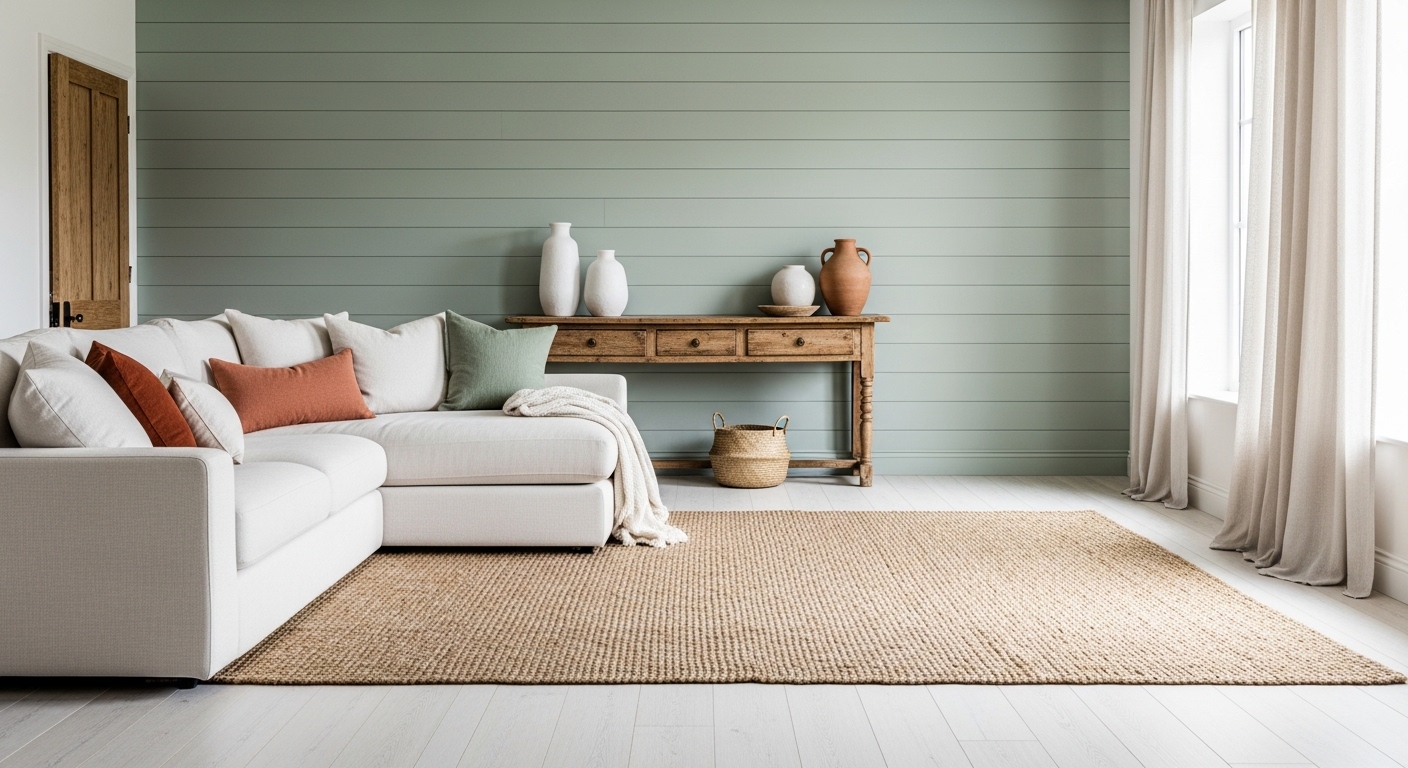
- Warm white and soft sage: A classic pairing that brings in a breath of nature without feeling too bold
- Creamy off-white and charcoal: High contrast with a sophisticated edge, especially effective on shiplap
- Warm beige and dusty terracotta: Earthy and inviting, perfect for layering through textiles and ceramics
- Pale linen and muted navy: A fresh take that leans slightly coastal without losing the farmhouse soul
When in doubt, start with a warm white base — walls, trim, and ceiling — and build your palette through furniture, rugs, and accessories. This approach gives you flexibility to evolve the look over time without repainting.
"The best farmhouse rooms feel like they were collected slowly over time — not designed all at once. Start with your largest pieces in neutral tones, then let personality come through in the details."
Furniture and Materials That Define the Look
Furniture in a modern farmhouse living room does the heavy lifting. Each piece should feel purposeful, comfortable, and rooted in natural materials. The goal is a curated mix that looks like it evolved organically — not a showroom floor.
Focus on these material combinations:
- Reclaimed or wire-brushed wood: For coffee tables, shelving, and side tables — the more texture and grain, the better
- Linen and cotton upholstery: Sofas and chairs in natural woven fabrics feel relaxed and breathable
- Black iron and matte metal: Hardware, light fixtures, and frame accents that add definition without heaviness
- Brushed brass or aged gold: Used sparingly for warmth — think lamp bases, tray handles, or shelf brackets
- Woven textures: Jute rugs, rattan baskets, and macrame wall hangings for organic layering
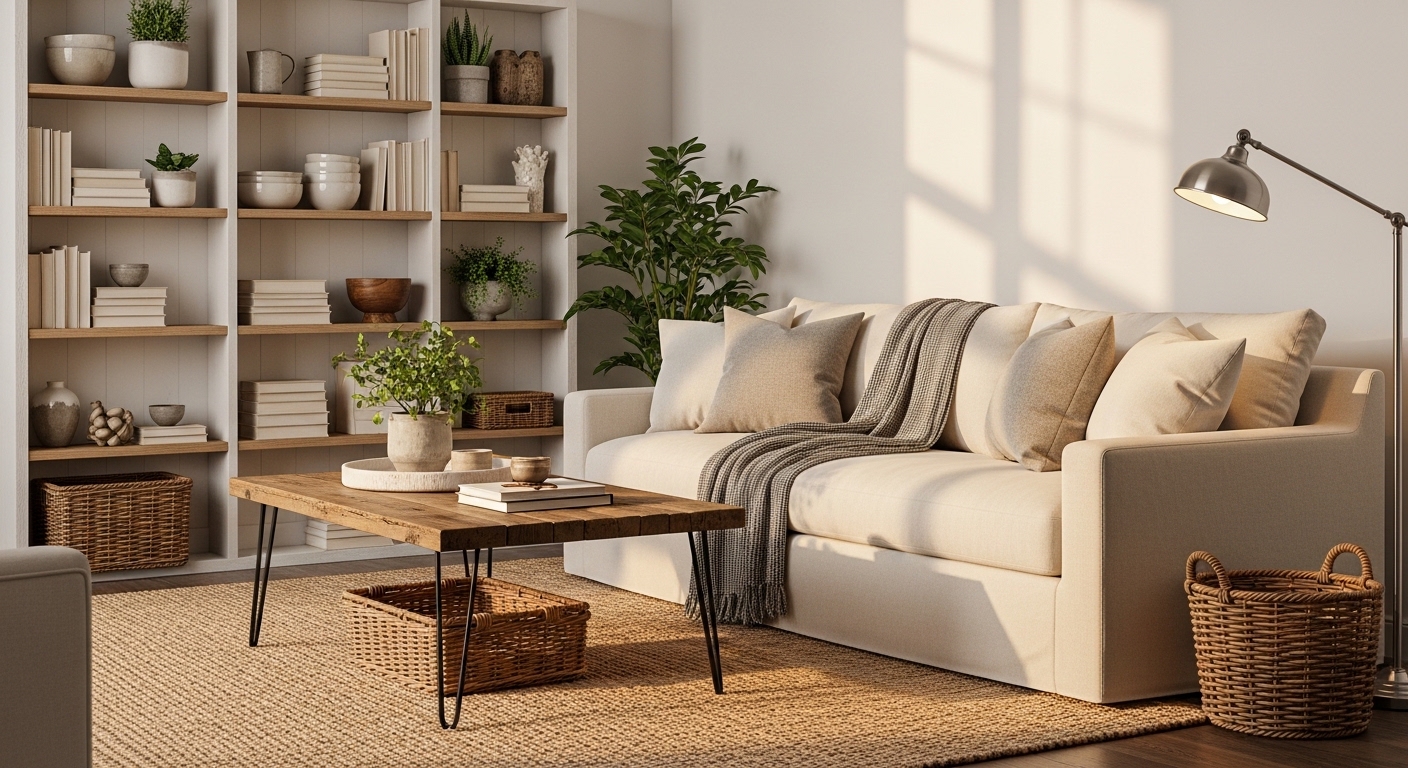
Avoid furniture that feels too polished or overly ornate. Clean silhouettes with visible joinery, tapered legs, and honest construction are the sweet spot. A slipcovered sofa in natural linen is a farmhouse icon for good reason — it is forgiving, comfortable, and ages beautifully.
Decor Accessories That Complete the Farmhouse Feel
Accessories are where the modern farmhouse style truly comes alive. This is your opportunity to layer in personality, warmth, and that sense of slow-collected charm that makes the style so appealing on Pinterest and Instagram alike.
The most effective farmhouse accessories include:
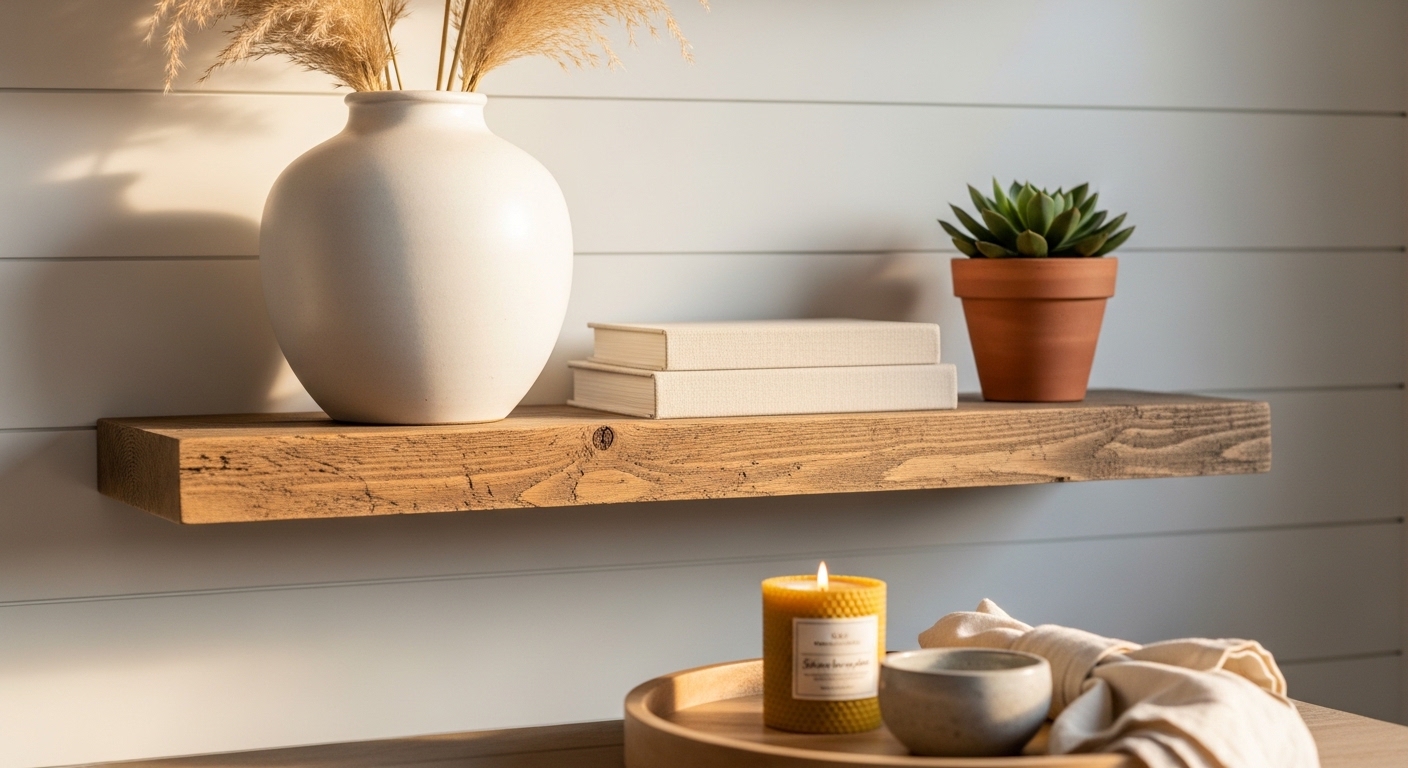
- Dried botanicals — pampas grass, eucalyptus, and cotton stems in simple vases
- Vintage-inspired clocks, especially oversized iron or wood-framed styles
- Stacked books with linen or neutral covers on coffee tables and shelves
- Ceramic and stoneware in matte finishes — bowls, pitchers, and sculptural objects
- Woven blankets and textured cushions in cream, oatmeal, and muted earth tones
- Galvanized metal accents — trays, planters, or lanterns for an authentic farmhouse nod
- Simple framed botanical prints or black-and-white photography in black frames
The trick is restraint. Choose a few meaningful pieces over many small ones. Group items in odd numbers and vary heights to create visual rhythm. A tall dried stem arrangement next to a low ceramic bowl next to a stacked book creates the kind of effortless vignette that photographs beautifully.
Lighting and Atmosphere in a Modern Farmhouse Room
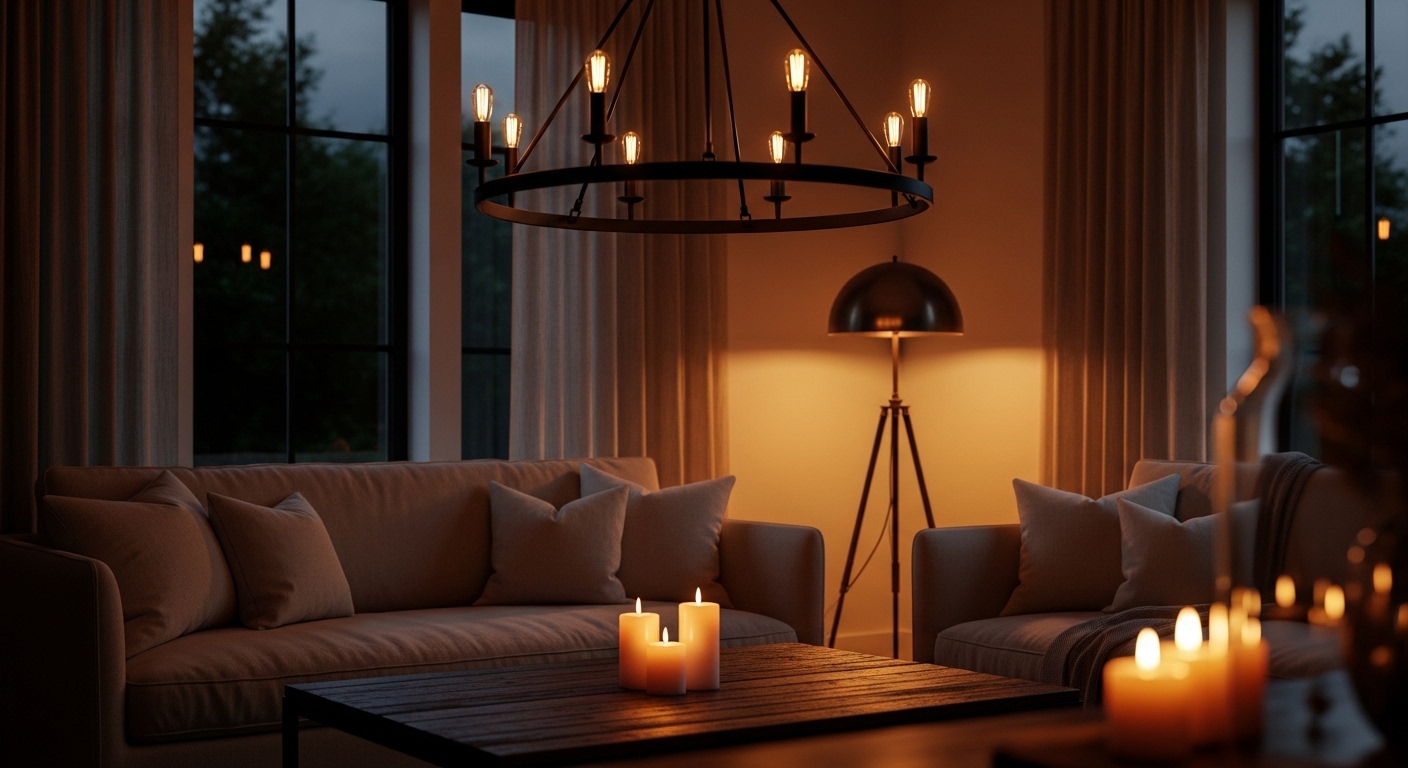
Lighting is the invisible ingredient that transforms a well-decorated room into a truly atmospheric one. In a modern farmhouse living room, the goal is warmth — layers of soft, amber-toned light that make the space feel like a refuge at any hour of the day.
Build your lighting in three layers:
- Ambient lighting: A statement ceiling fixture sets the tone — look for an oversized woven rattan pendant, a black iron chandelier, or an industrial-style cage light
- Task lighting: Brushed brass or matte black floor lamps and table lamps placed beside seating areas for reading and intimacy
- Accent lighting: Candles, lanterns, and LED string lights tucked into shelving or along mantels for warmth and depth
Always choose bulbs with a warm color temperature — approximately 2700K to 3000K — to enhance the golden, cozy quality of natural materials. Dimmer switches are a worthwhile upgrade that dramatically shifts the mood of a room from daytime casual to evening intimate. For any electrical modifications, always consult a licensed professional.
Natural light matters just as much. Keep window treatments simple — sheer linen panels that filter light softly rather than block it. This preserves the airy, open quality that keeps modern farmhouse from feeling heavy.
Common Mistakes to Avoid in Farmhouse Decorating
The modern farmhouse aesthetic looks effortless, but there are a few common missteps that can tip the balance from charming to chaotic — or worse, make the space feel like a theme park rather than a home.
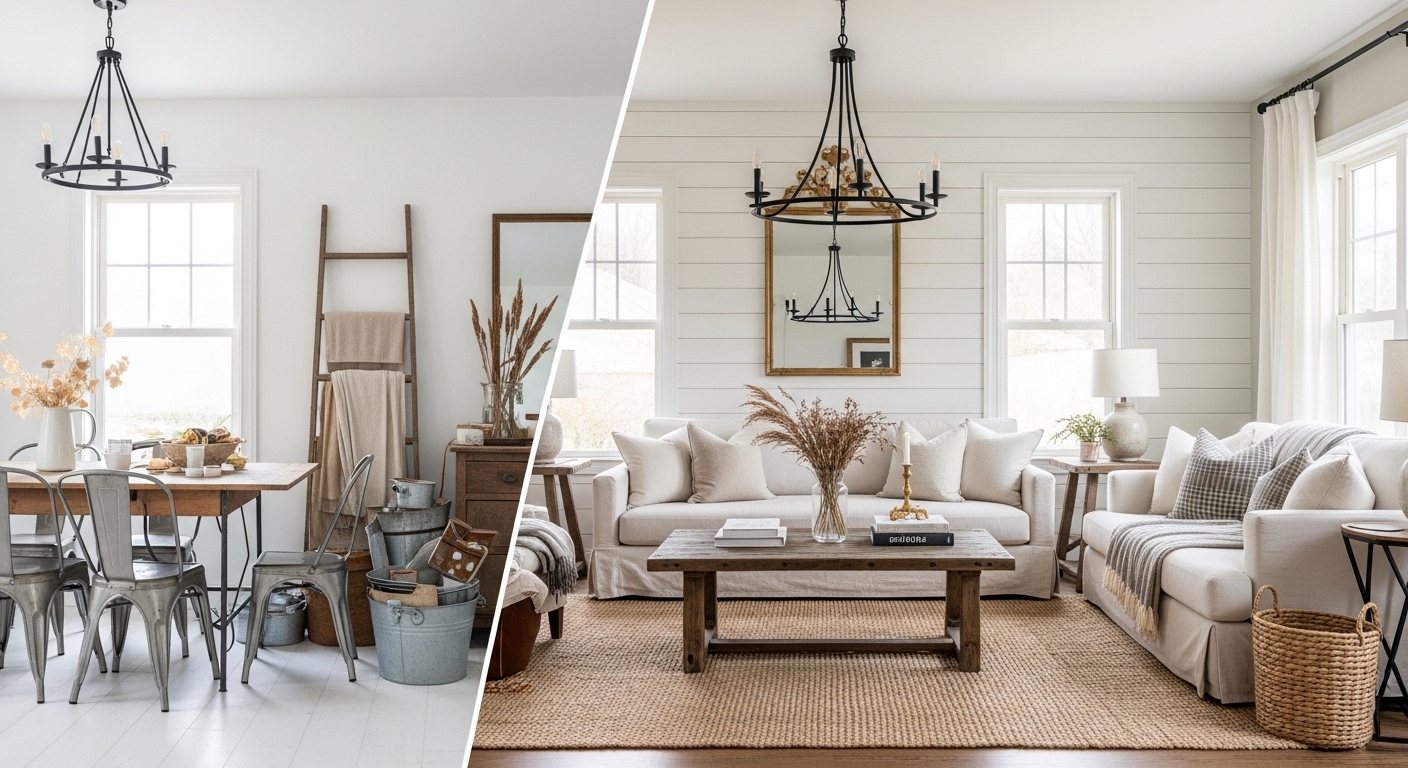
- Overdoing the rustic elements: Too many distressed pieces, mason jars, and barn signs at once reads as costume rather than style. Edit ruthlessly and let each rustic piece breathe.
- Ignoring scale: A tiny rug under a large sofa or an undersized light fixture in a high-ceilinged room breaks the visual harmony immediately. Always size up.
- Mixing too many metals: Two or three metal finishes work beautifully — matte black, brushed brass, and aged iron are a strong trio. More than that creates visual noise.
- Choosing cold whites: Blue-toned or stark white walls fight against the warmth of natural wood and linen. Always test paint swatches in natural light and lean toward creamy, warm whites.
- Neglecting texture variety: A room that relies only on smooth surfaces loses the tactile richness that makes farmhouse style so inviting. Layer rough, smooth, woven, and soft materials intentionally.
- Overcrowding surfaces: Farmhouse styling is about curated abundance, not clutter. Leave breathing room between objects and resist the urge to fill every shelf and surface.
Bringing It All Together
A modern farmhouse living room is ultimately about feeling — the warmth of natural wood underfoot, the softness of linen against your skin, the quiet glow of candlelight on a textured wall. It is a style that rewards patience and intention. Start with your foundation: a warm neutral palette, honest materials, and a few key furniture pieces in natural fabrics. Then layer in texture, light, and personality through accessories and botanicals. Trust the process of slow curation. The most beautiful farmhouse rooms are never finished all at once — they grow, evolve, and deepen over time, just like the best homes always do.
Comments
Post a Comment