The open concept living room dining room is one of the most sought-after layouts in modern homes and apartments. It feels airy, social, and endlessly versatile — but without a clear design strategy, it can also feel chaotic or undefined. The secret lies in creating visual harmony between two distinct zones while letting them breathe as one connected space. Whether you are working with a compact studio footprint or a generous open-plan floor, these ideas will help you style a space that feels intentional, beautiful, and completely livable.
Modern Minimalist Ideas
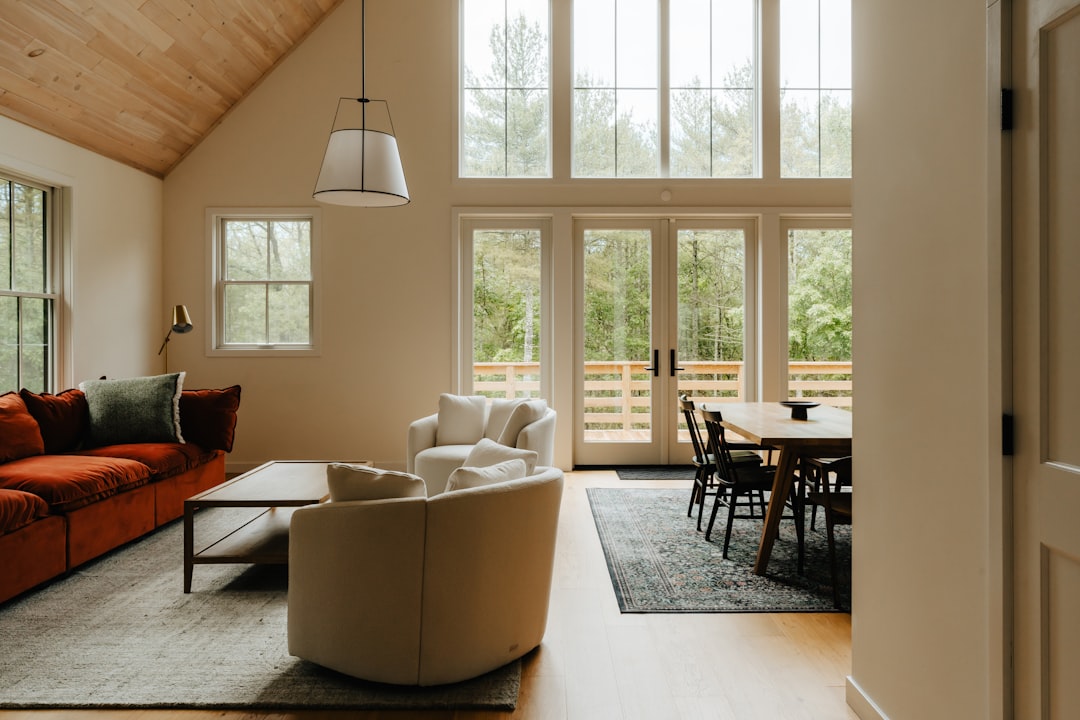
Minimalism in an open-plan space is not about emptiness — it is about precision. Every piece earns its place. Think clean-lined furniture with low profiles, a restrained color palette of whites, warm grays, and natural wood, and a deliberate absence of clutter. In the living zone, a streamlined sofa in a solid neutral pairs beautifully with a simple rectangular coffee table. In the dining area, a slim-legged table and stackable or folding chairs keep the visual weight light.
The key to minimalist open-plan success is repetition of materials. Use the same wood tone across the dining table legs, shelving, and a side table in the living area. This creates a visual thread that ties both zones together without a single dividing wall.
"In open-plan living, restraint is your most powerful design tool. Choose less, but choose better."
- Stick to a maximum of three furniture finishes across both zones.
- Use a single large area rug under the sofa and coffee table to anchor the living area.
- Let negative space do the work — resist the urge to fill every corner.
- Choose dining chairs that feel light and airy, such as acrylic, cane, or slim metal frames.
Cozy Neutral Rooms
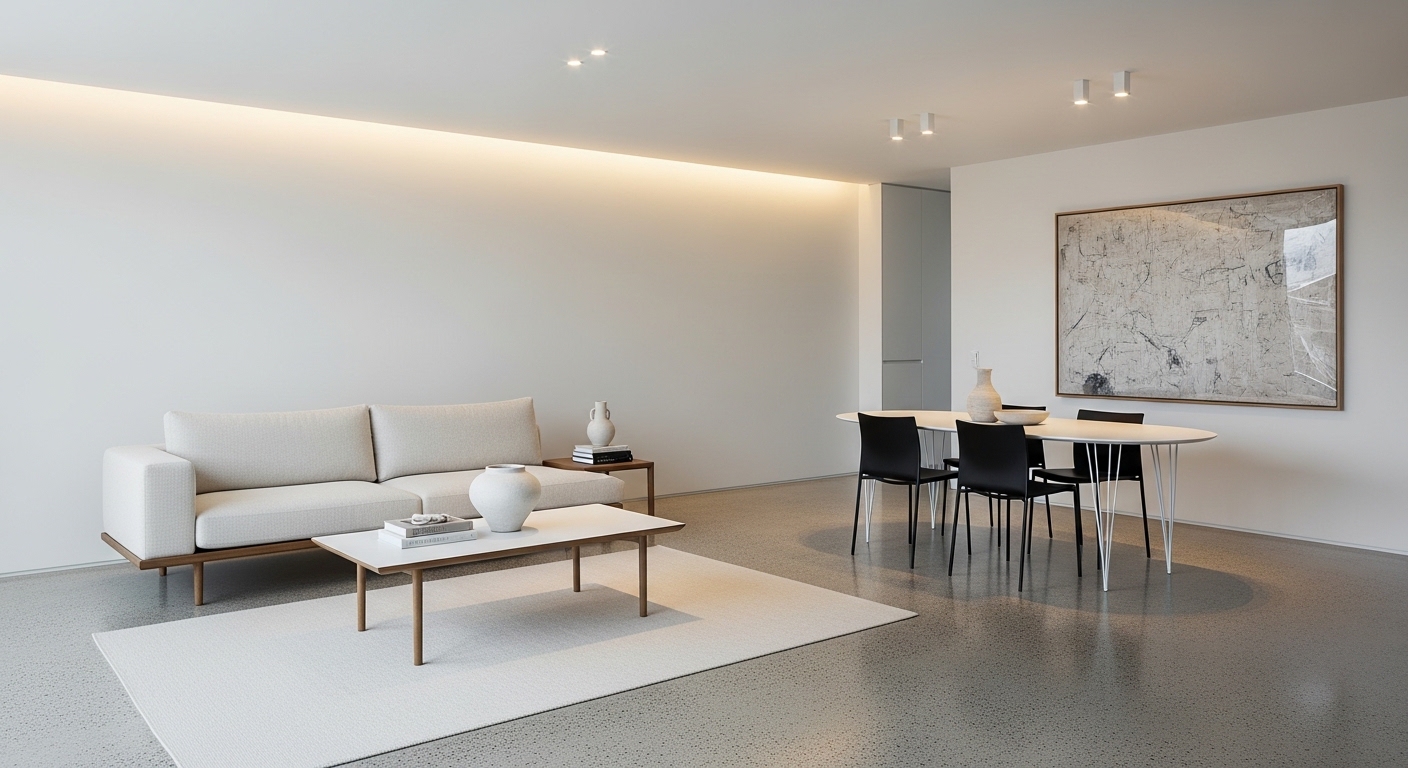
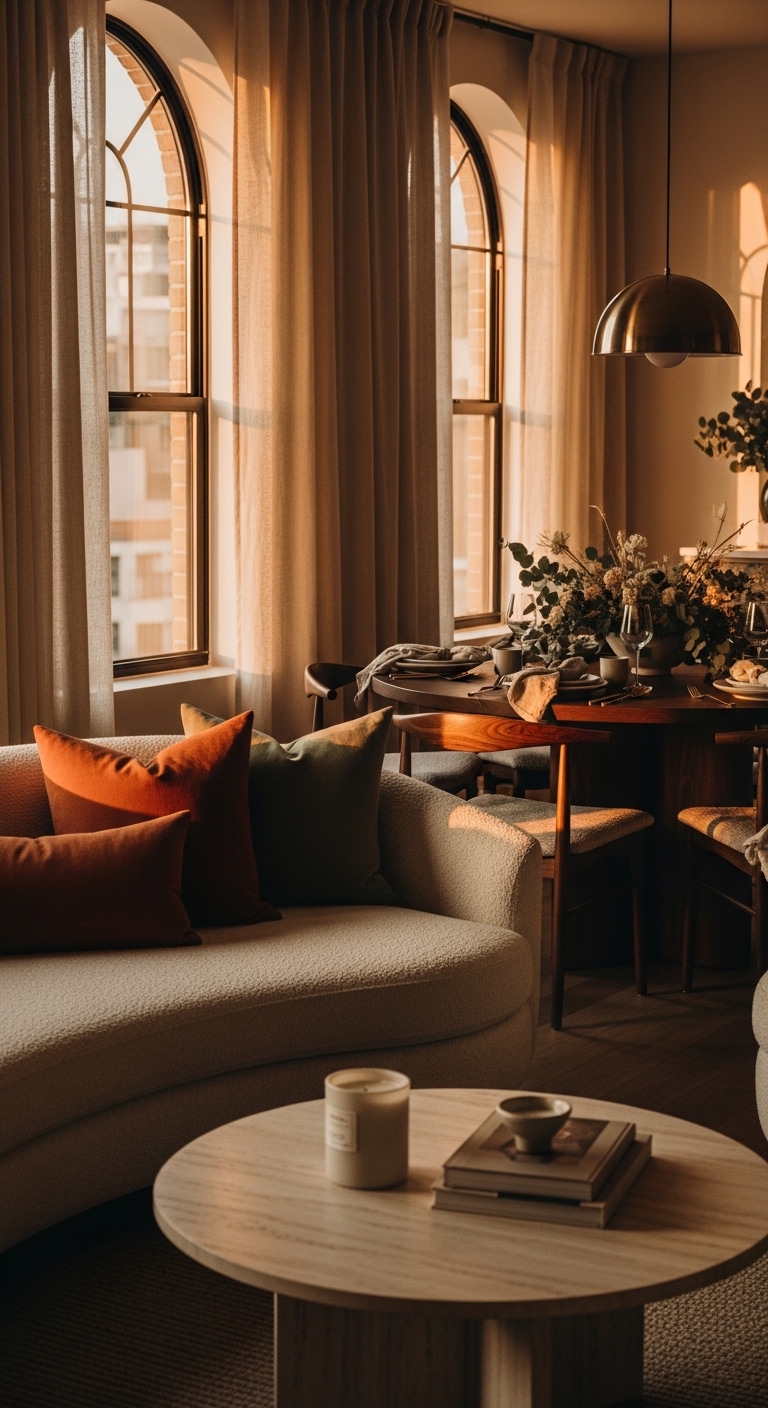
Neutral does not mean boring — especially in an open-concept layout where warmth and texture become the real stars. Layering tones of cream, oat, sand, and soft taupe across both zones creates a cohesive envelope that feels instantly relaxing. The trick is to vary the textures so the palette stays rich and interesting: chunky knit throws on the sofa, a jute or wool area rug underfoot, linen curtains pooling gently at the floor, and a raw-edge wooden dining table that brings organic warmth.
In a neutral open-plan room, the dining and living areas can share the same color story while using different textures to signal the shift in function. A boucle sofa in the living zone and woven rattan dining chairs in the dining area both live within the same warm neutral family but feel distinctly different up close.
- Layer at least three different textures within your neutral palette.
- Use a statement rug in the living zone to visually separate it from the dining space.
- Add warmth with terracotta, amber, or dusty rose accents in cushions and ceramics.
- Choose warm-toned bulbs (2700K–3000K) to make neutrals glow rather than look flat.
Dark & Moody Interiors
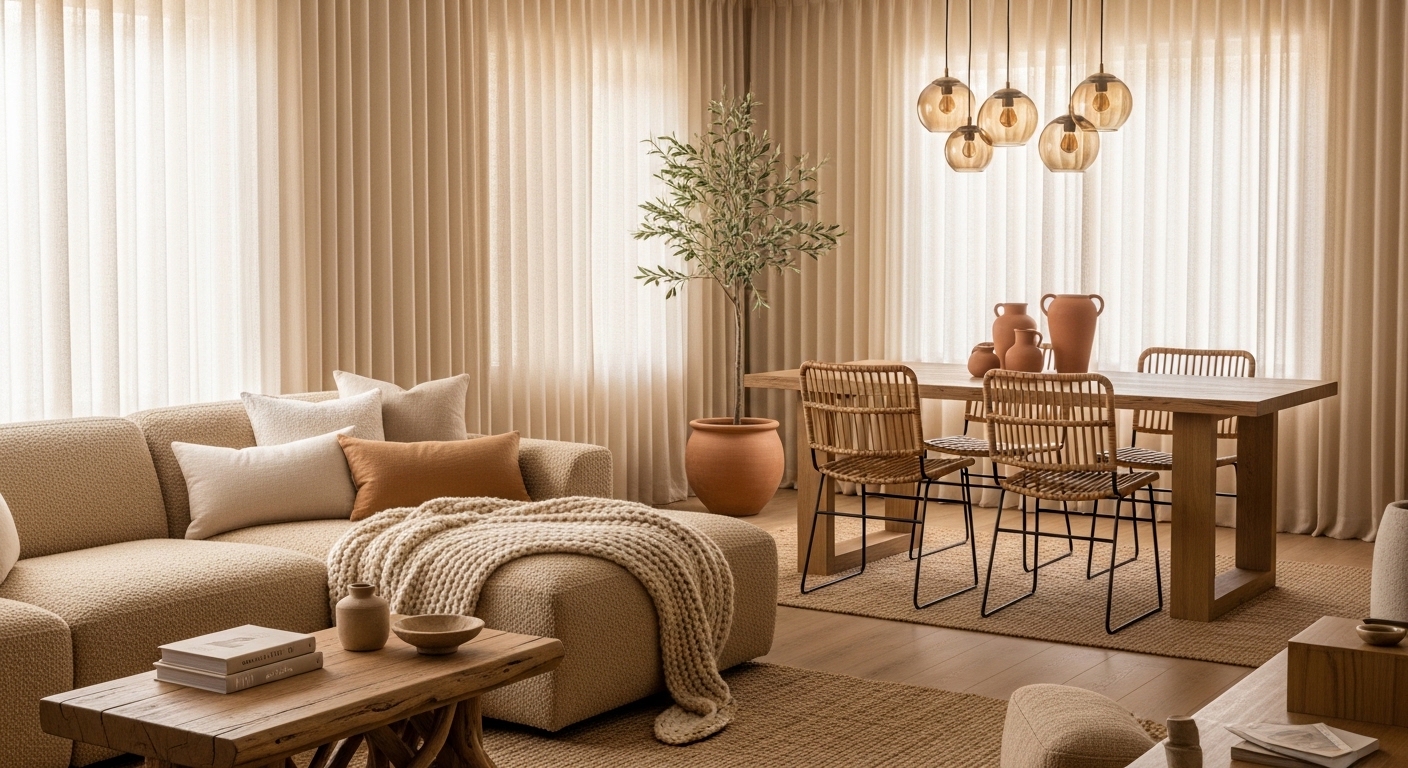
For those who want their open-plan space to feel dramatic and enveloping, a dark and moody palette is a bold and rewarding choice. Deep forest green, charcoal, midnight navy, or rich terracotta on the walls create an immersive backdrop that makes both the living and dining zones feel like one luxurious retreat. The open layout actually works in your favor here — the expansive wall space becomes a canvas for a single, sweeping color story.
Balance the depth of dark walls with warm metallic accents: brushed brass pendant lights above the dining table, gold-framed mirrors, and amber glass candleholders. In the living zone, velvet cushions in jewel tones — emerald, rust, or sapphire — add richness without competing with the wall color. Keep the floor lighter (pale oak or light stone) to prevent the space from feeling too enclosed.
- Paint all walls, ceiling, and trim in the same dark tone for a fully immersive effect.
- Use warm metallic finishes to prevent the space from feeling cold or heavy.
- Introduce a large mirror to reflect light and add visual depth.
- Keep upholstery in tactile fabrics — velvet, bouclé, or suede — for a luxurious feel.
Scandinavian Inspiration
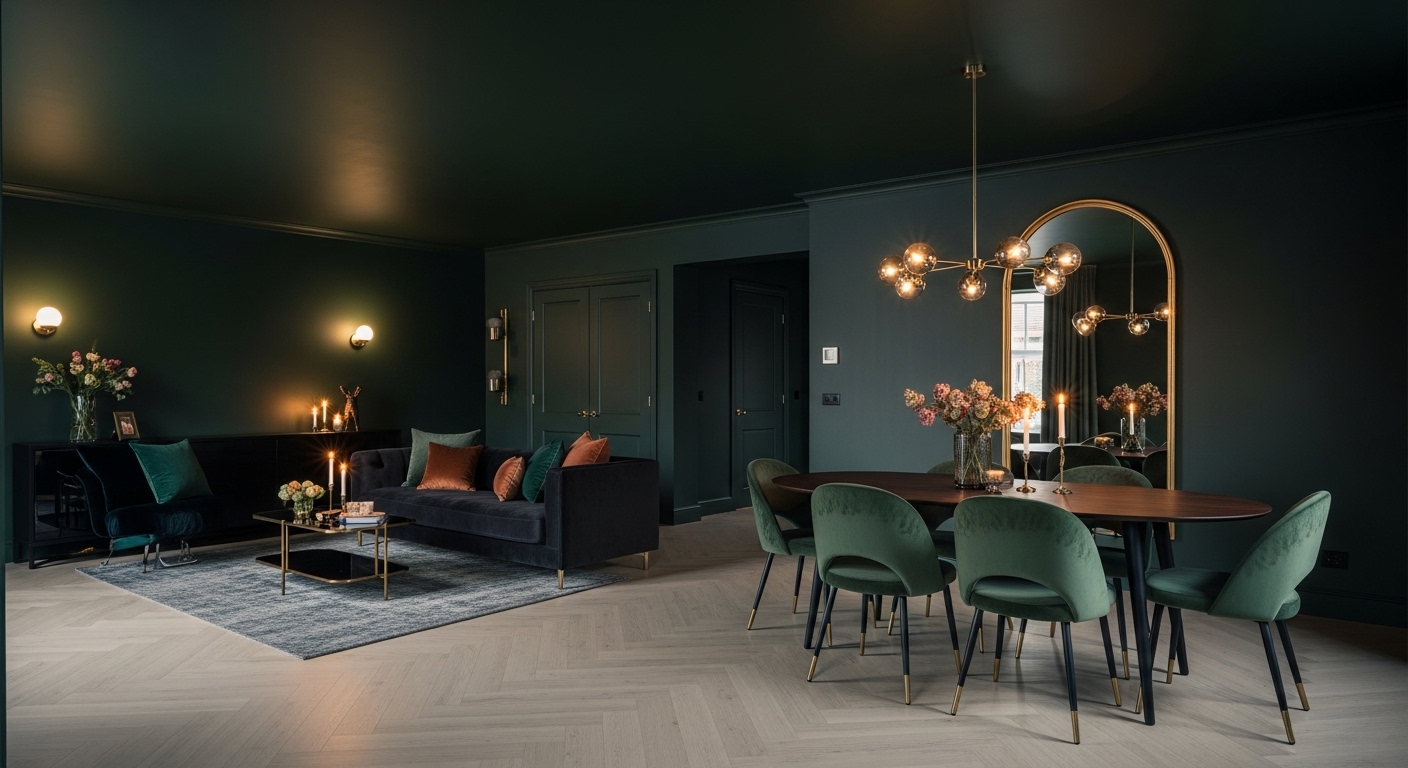
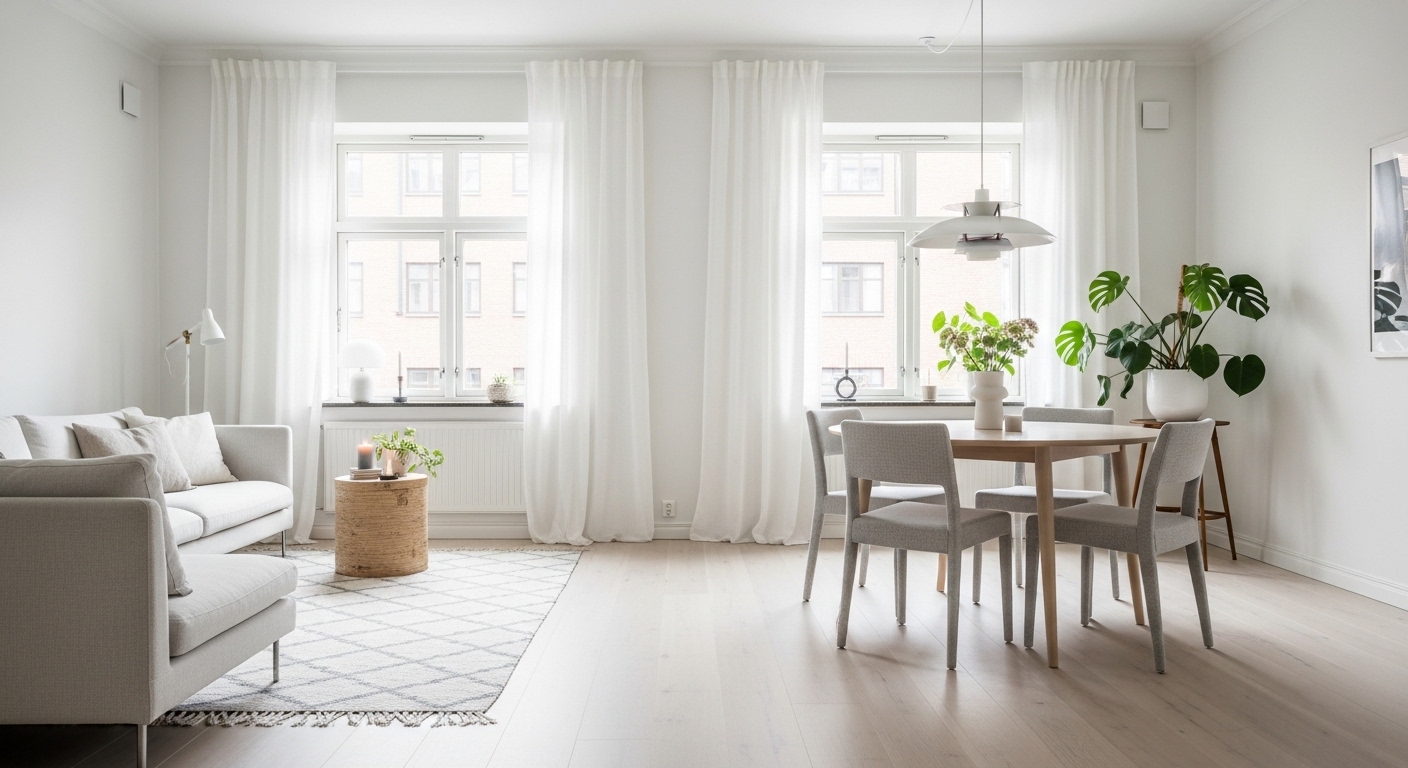
Scandinavian design is practically made for open-concept living. Its philosophy of functional beauty, natural materials, and light-filled simplicity translates seamlessly across both the living and dining zones. The palette stays soft — whites, pale grays, birch wood, and dusty blues — while the forms remain clean and purposeful. Nothing is decorative without also being useful.
In a Scandi open-plan space, the dining table often doubles as a workspace or creative surface. Choose a round or oval table in pale ash or birch with simple tapered legs. Pair it with matching or complementary chairs in a soft gray or natural linen. In the living area, a low platform sofa in off-white or light gray sits on a flat-weave wool rug in a simple geometric pattern. Greenery — a monstera, trailing pothos, or a cluster of small succulents — brings the outdoors in and softens the clean lines.
- Prioritize natural light: use sheer curtains or no curtains at all if privacy allows.
- Choose furniture with tapered wooden legs to keep the visual floor space open.
- Add hygge with candles, soft throws, and a sheepskin draped over a chair.
- Keep decor functional: a ceramic fruit bowl, a wooden serving board, simple pottery.
Japandi Style Details
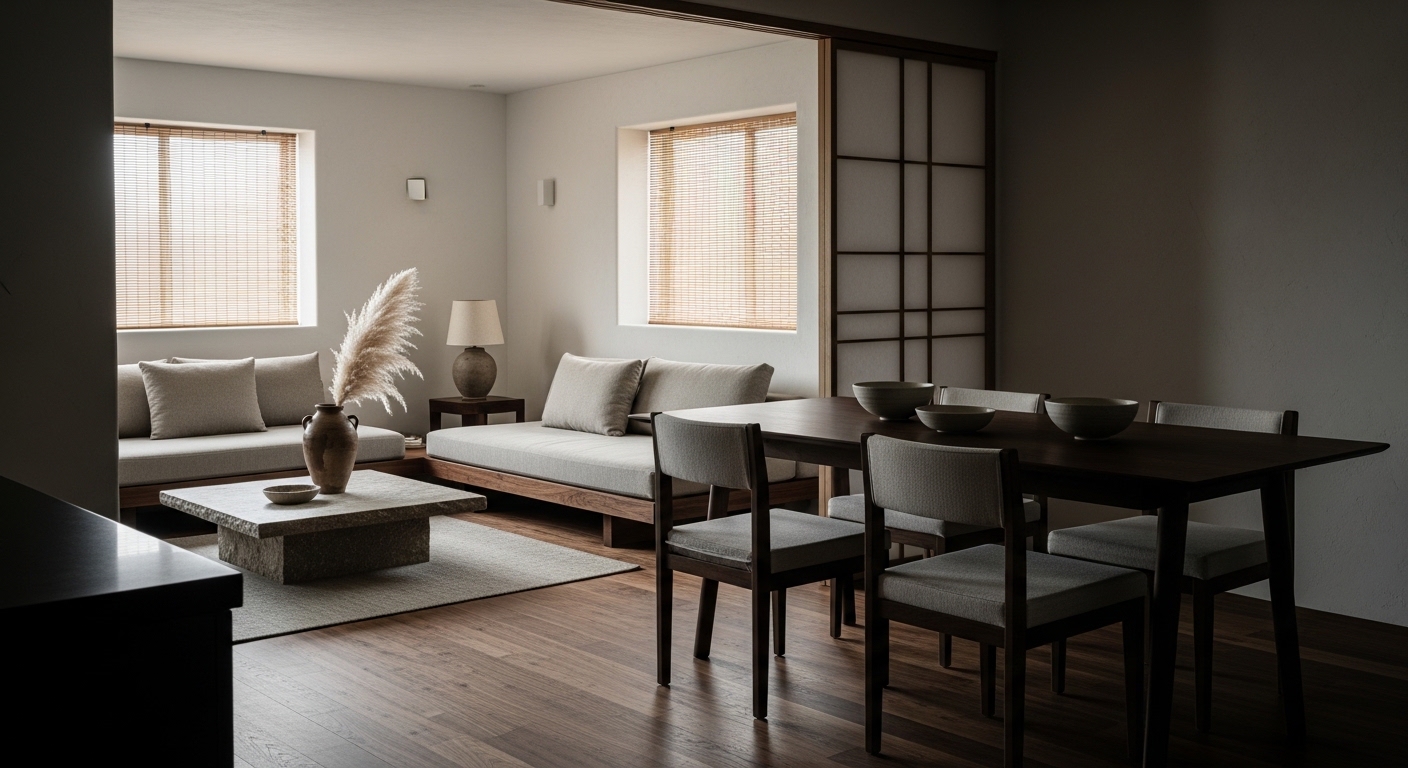
Japandi — the beautiful fusion of Japanese minimalism and Scandinavian warmth — is one of the most compelling styles for an open-concept living and dining space. It brings together wabi-sabi imperfection, natural materials, and a deeply intentional approach to every object in the room. The result is a space that feels both serene and sophisticated.
In a Japandi open-plan layout, the boundary between living and dining zones is defined not by furniture arrangement alone but by material shifts. A tatami-inspired low sofa platform in the living area gives way to a dark walnut dining table with hand-thrown ceramic tableware on display. Bamboo, linen, clay, and stone appear throughout both zones, creating a quiet material dialogue. The color palette leans into warm charcoals, earthy greens, and raw whites — never stark, always organic.
- Choose furniture with visible joinery or handcrafted details for authentic Japandi character.
- Display a single branch or dried botanical arrangement instead of a bouquet.
- Use sliding panels or shoji-inspired screens to softly divide zones when needed.
- Keep surfaces clear — one beautiful object is worth ten average ones.
Budget-Friendly Looks
Creating a stunning open-concept living and dining room does not require a designer budget. Some of the most beautiful open-plan spaces come together through smart shopping, creative DIY, and a clear vision. The key is to invest in one or two anchor pieces — a great sofa or a solid dining table — and build everything else around them affordably.
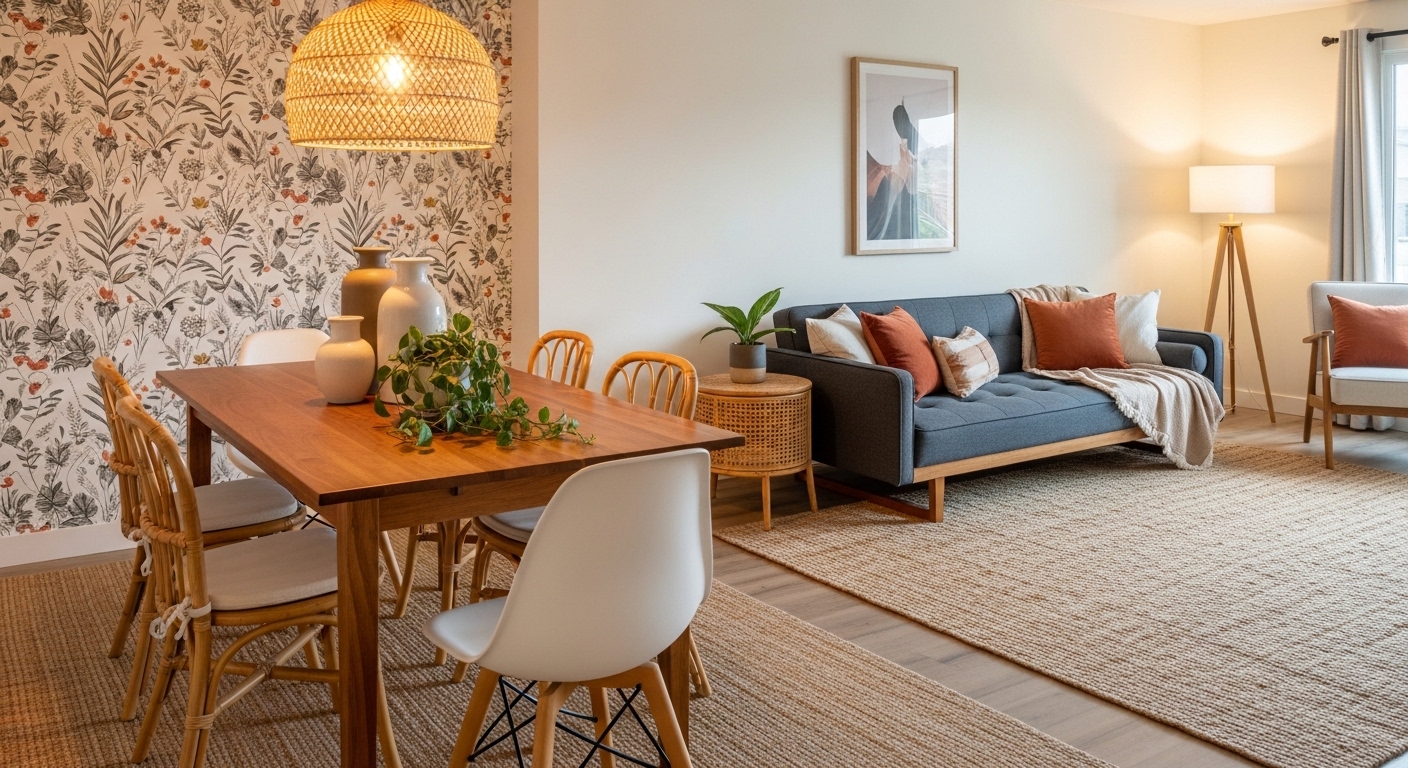
Thrift stores, marketplace apps, and flat-pack furniture retailers are your best friends here. A secondhand dining table sanded and re-stained can look like a bespoke piece. Affordable rattan chairs from budget retailers photograph beautifully and add texture. Peel-and-stick wallpaper on a single accent wall can define the dining zone without a renovation. And a large, inexpensive area rug is perhaps the single most impactful purchase you can make for an open-plan space — it anchors the living zone and instantly makes the room feel designed.
- Anchor rug: A large area rug (approximately 8x10 ft) in a neutral tone — prices vary widely, often starting around $80–$150 at budget retailers.
- Secondhand dining table: Look for solid wood tables on marketplace apps, often available for approximately $50–$200 depending on condition and location.
- Flat-pack sofa: Many affordable retailers offer well-reviewed sofas in the $400–$800 range as of writing — check assembly reviews before purchasing.
- Peel-and-stick wallpaper: A single accent wall can transform the dining zone for approximately $30–$80 in materials.
- Thrifted decor: Ceramic vases, wooden bowls, and vintage frames add character for just a few dollars each.
Lighting is another area where budget choices make an outsized impact. A statement pendant above the dining table — even an affordable one — immediately elevates the entire open-plan space and signals that the dining zone is intentional and considered.
Bringing It All Together
The most successful open concept living room dining room designs share one thing in common: they feel like a single, cohesive story told in two chapters. Whether your style leans minimalist, moody, Scandinavian, or Japandi, the principles remain the same — define your zones with rugs and lighting, connect them with a shared color palette and material language, and let every piece serve both form and function. Start with what inspires you most from these ideas, and build outward from there. Your open-plan space is waiting to become the most beautiful room in your home.
Comments
Post a Comment