Carving out a dedicated workspace in a bedroom corner is one of the most practical things you can do for a small apartment. The challenge isn't finding the space — it's making sure your home office ideas in bedroom corner setups don't bleed into your sleep zone. With the right layout, lighting, and a few intentional choices, a corner desk can feel like a proper studio nook rather than a cluttered afterthought.
Smart Layout Strategies
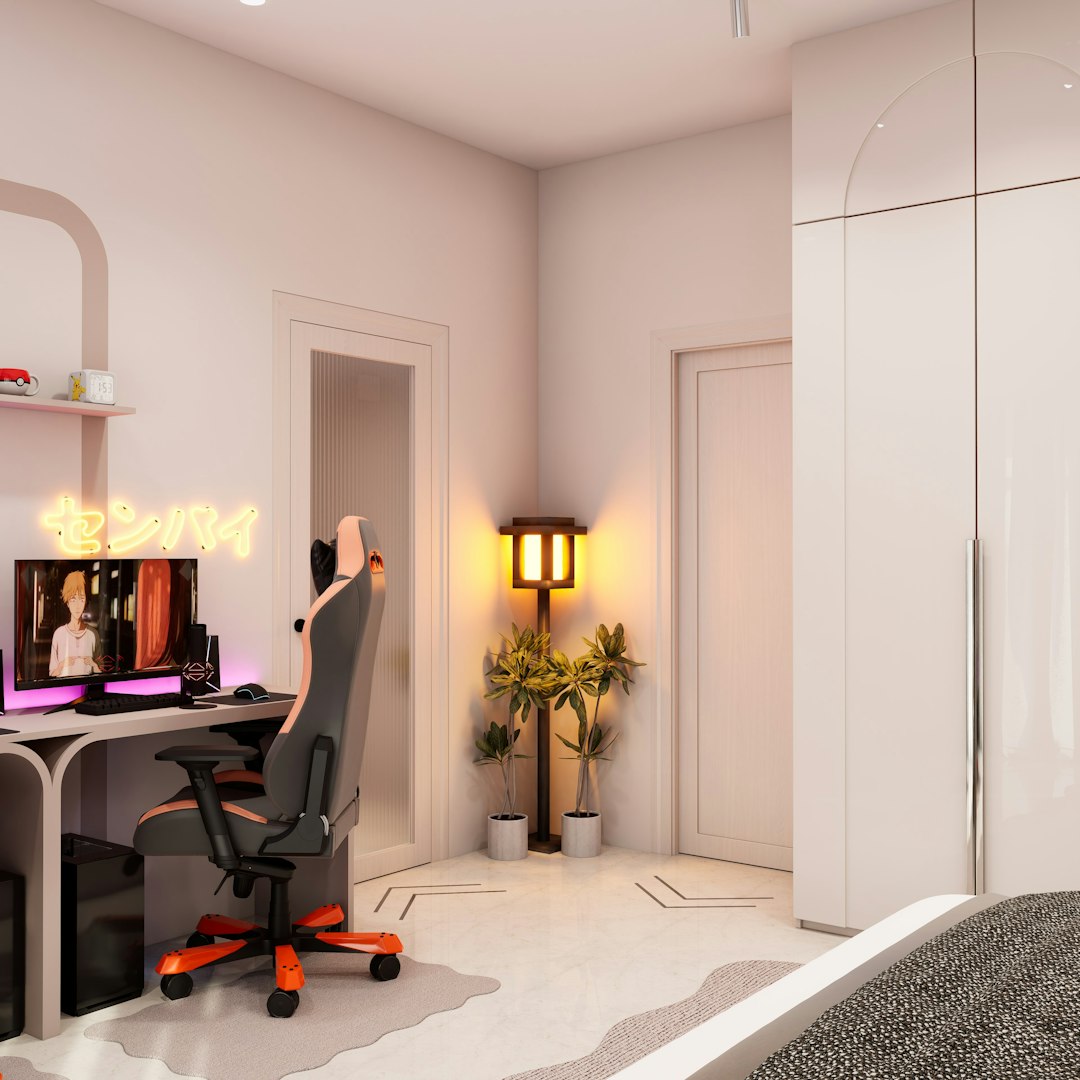
The corner of a bedroom is actually one of the most structurally useful spots in any room. Two walls meet, which means you have built-in structure for shelving, cable management, and visual containment. That natural boundary helps the workspace feel defined without needing a room divider.
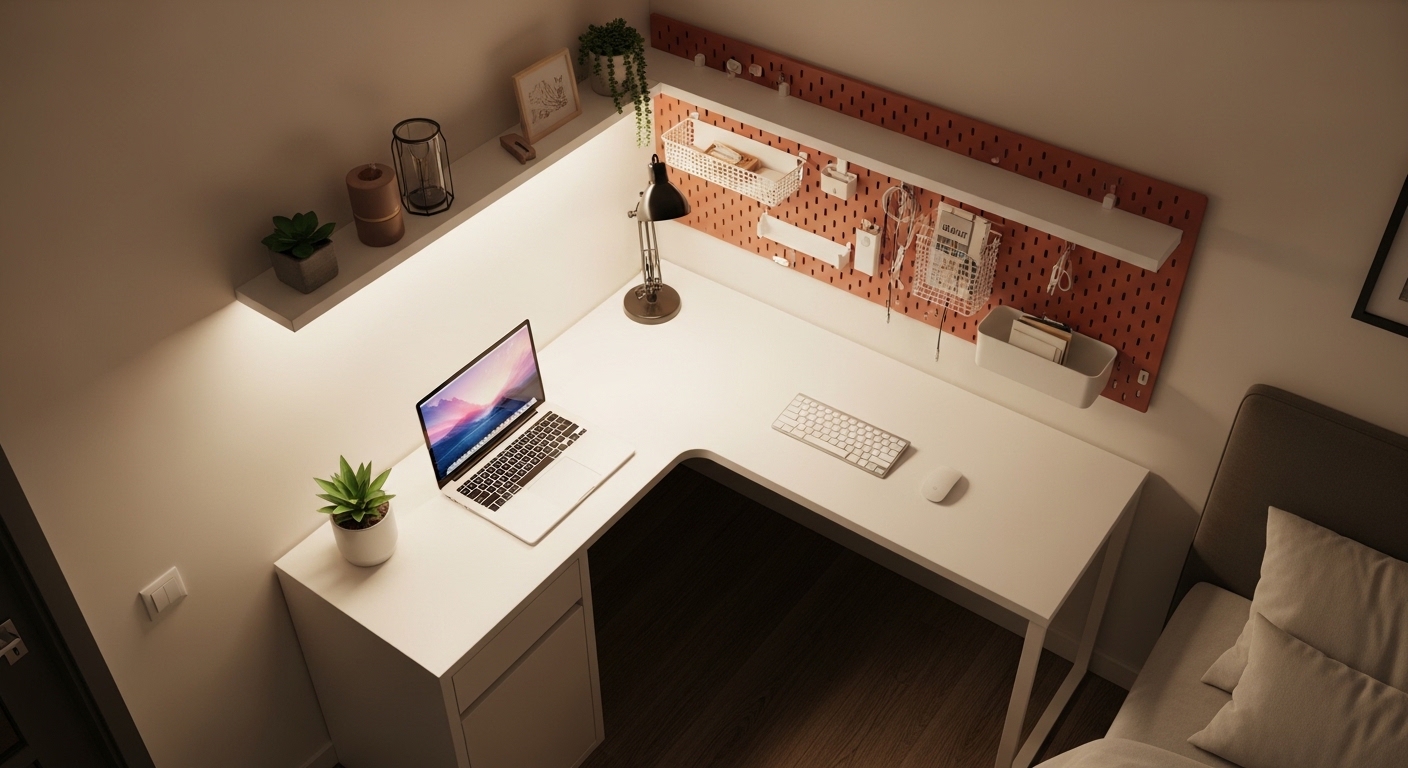
Start by measuring your corner carefully — including ceiling height and any baseboards or outlets. A floating desk or a compact L-shaped surface that tucks into the angle works far better than a freestanding desk pushed sideways against one wall. The L-shape lets you separate your monitor from your writing surface, which matters more than most people expect.
One thing that often gets overlooked: chair clearance. You need at least 30 inches of pull-back space behind your chair to sit and stand comfortably. Measure that before buying anything.
Storage That Looks Stylish
Storage is where most bedroom office setups fall apart. Papers pile up, chargers tangle, notebooks stack unevenly — and suddenly the corner looks chaotic from across the room, including from your bed.
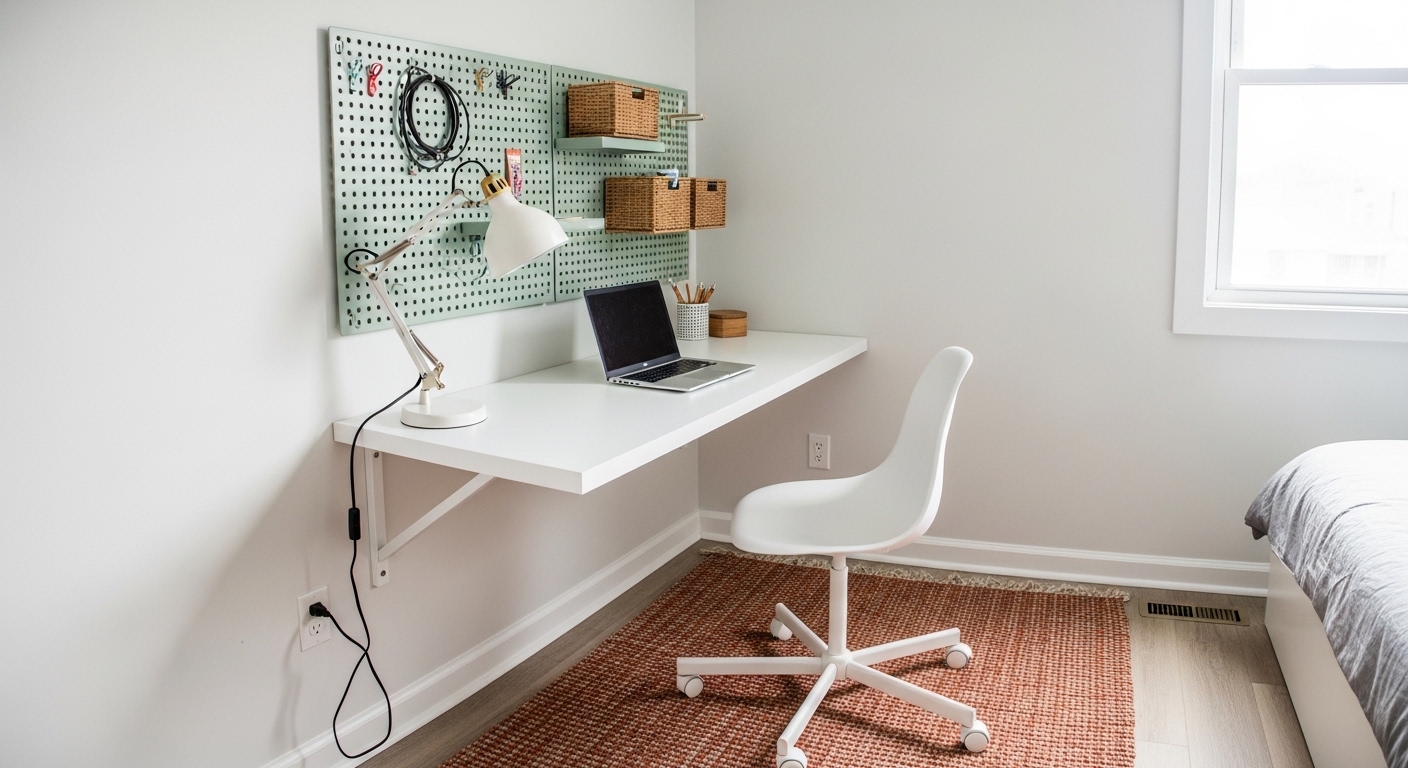
The solution is vertical storage that doubles as decor. A slim pegboard painted in a muted tone (dusty rose, sage, charcoal) gives you flexible hooks and shelves without requiring a full bookcase. Wall-mounted floating shelves above the desk keep the floor clear and the eye moving upward, which makes the ceiling feel higher.
For desk-level storage, consider:
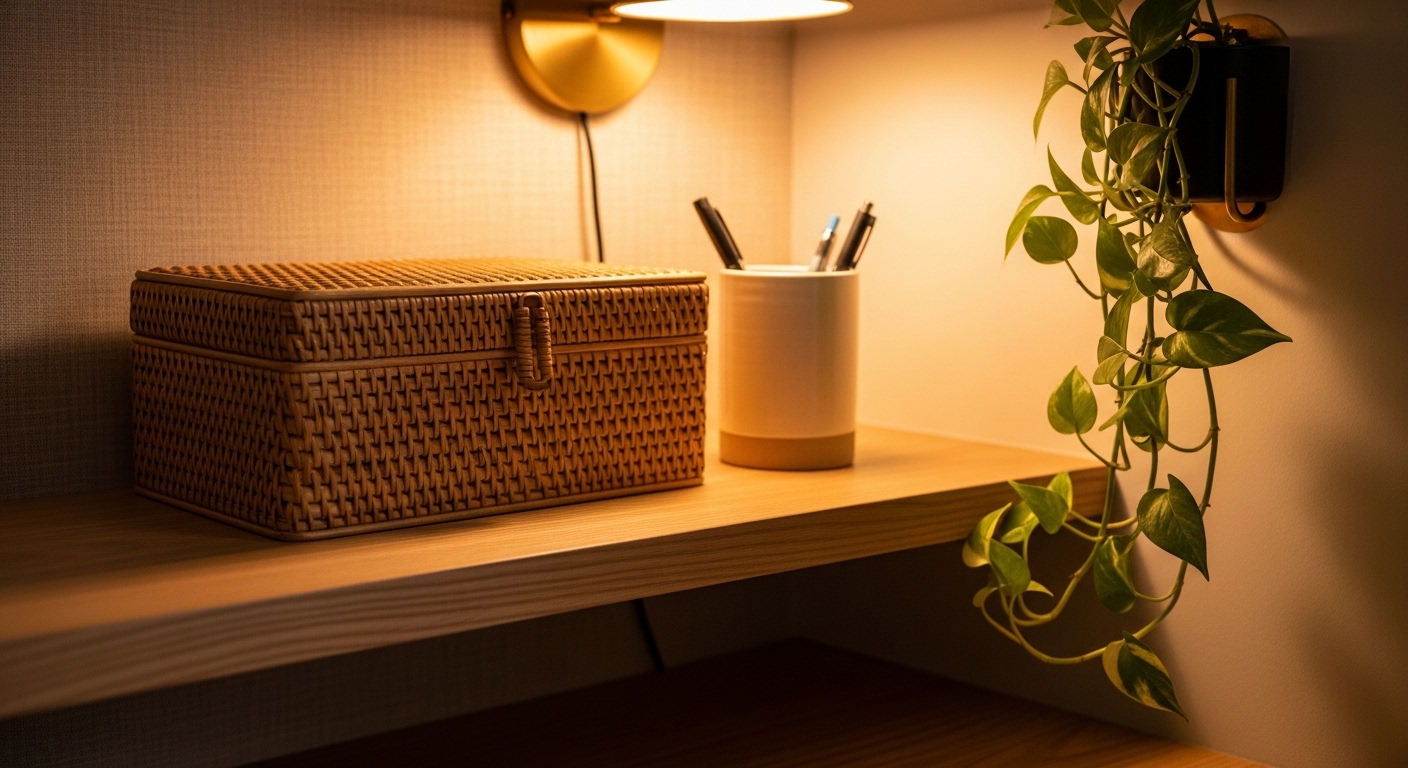
- A small rattan or linen-covered box for loose papers and notebooks
- A ceramic pen holder instead of plastic desk organizers
- A slim two-drawer unit that slides under the desk and doubles as a side table
- Magnetic strips or cork tiles for notes instead of sticky notes scattered everywhere
Oddly enough, removing one extra shelf from the plan often makes the whole setup look more intentional.
Lighting Tricks for a Bigger Feel
Lighting is what separates a functional corner desk from one that feels like a proper workspace. Overhead bedroom lighting is almost always too dim for focused work and too warm for accurate screen use. You need a dedicated task light — but it doesn't have to be clinical.
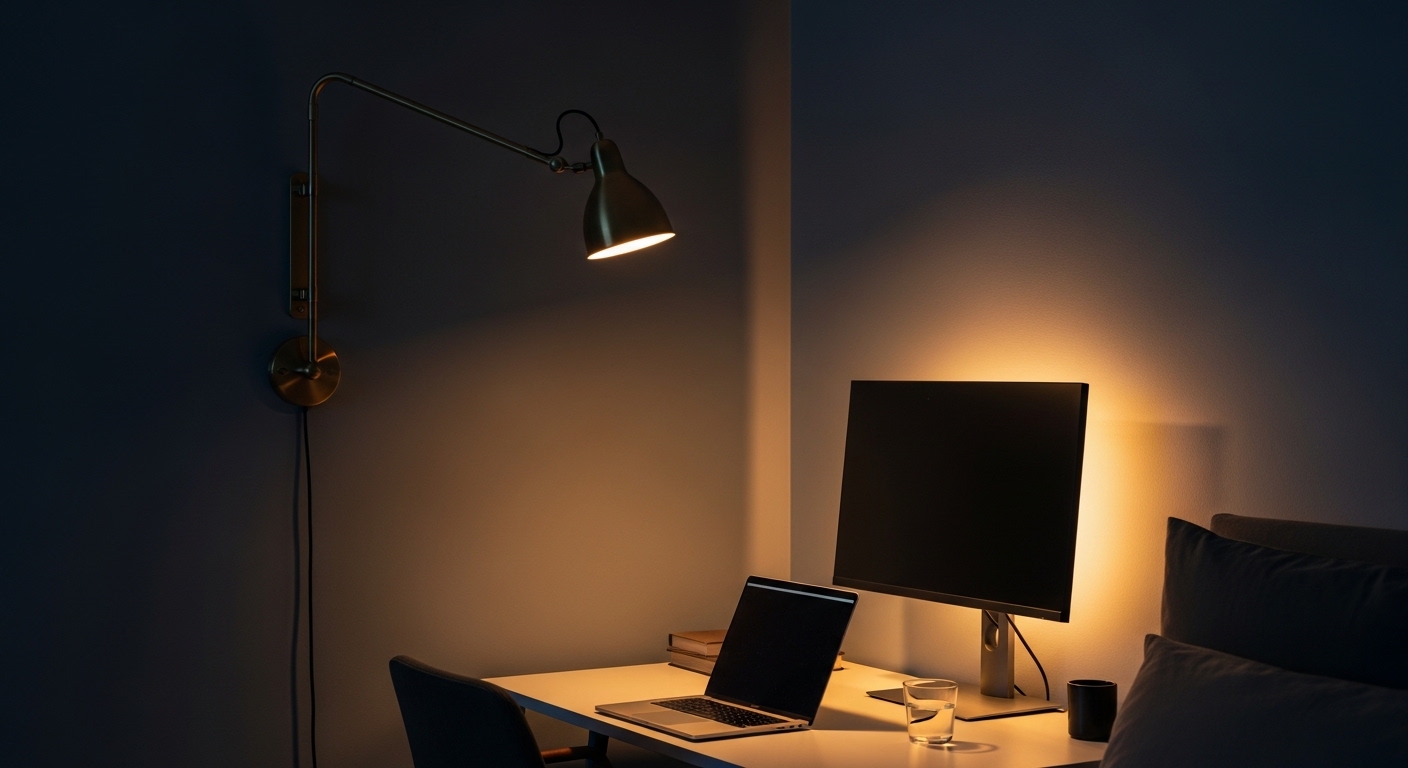
A wall-mounted swing-arm sconce above the desk is the most space-efficient option. It keeps the desk surface clear and adds an architectural element that makes the corner feel designed rather than improvised. Look for adjustable brass or matte black styles — they read as intentional decor even when the laptop is closed.
If you can't drill into walls (hello, renters), a clip-on task lamp attached to a shelf edge works just as well. Pair it with a small LED strip tucked behind the monitor or along the underside of a shelf for ambient fill light. That combination — task light plus soft backlight — reduces eye strain and makes the corner glow warmly in the evening.
"Layer your lighting the way you layer your decor — one source is never enough, and the warmest light always wins at the end of the day."
Color Palette Recommendations
Color is the fastest way to either visually separate the office corner from the sleeping area — or accidentally make the whole room feel like a cubicle.
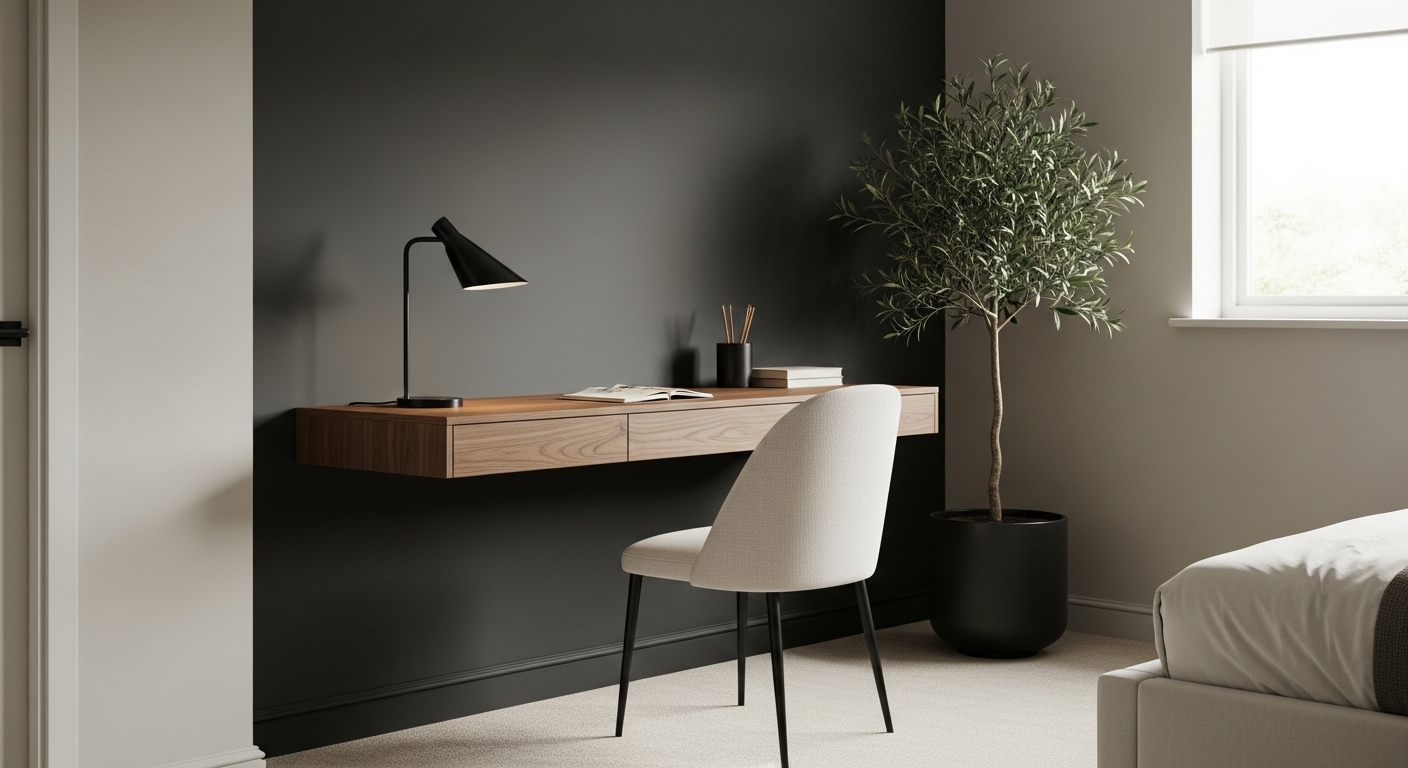
The approach that tends to work best in small bedrooms: keep the desk zone within the same overall palette as the room, but add one grounding element that signals "work mode." That might be a darker accent wall behind the desk, a contrasting desk surface, or a bold chair color against otherwise neutral walls.
Palettes that work well for bedroom office corners:
- Warm neutrals + terracotta: Cream walls, a warm wood desk, terracotta or rust chair — calm but not cold
- Cool greens + white: Sage or eucalyptus tones with a white floating desk — fresh and focused
- Deep charcoal + natural wood: A moody accent wall behind the desk with warm timber tones — dramatic but contained
- Soft blush + black accents: Feminine without being fussy, especially with matte black hardware
Avoid using a completely different color scheme for the desk area. At first it seems like a clever way to define the zone, but it usually just makes the room feel smaller and more fragmented.
Cozy Finishing Touches
A bedroom office that only feels productive is a missed opportunity. The corner should feel like somewhere you actually want to sit — not just somewhere you have to.
A small area rug under the desk chair does a lot of work. It grounds the zone visually, adds warmth underfoot, and signals to your brain that this is a distinct space within the room. Even a 2x3 foot runner tucked under the desk makes a difference.
Beyond the rug, a few well-chosen objects shift the mood from "functional" to "inviting":
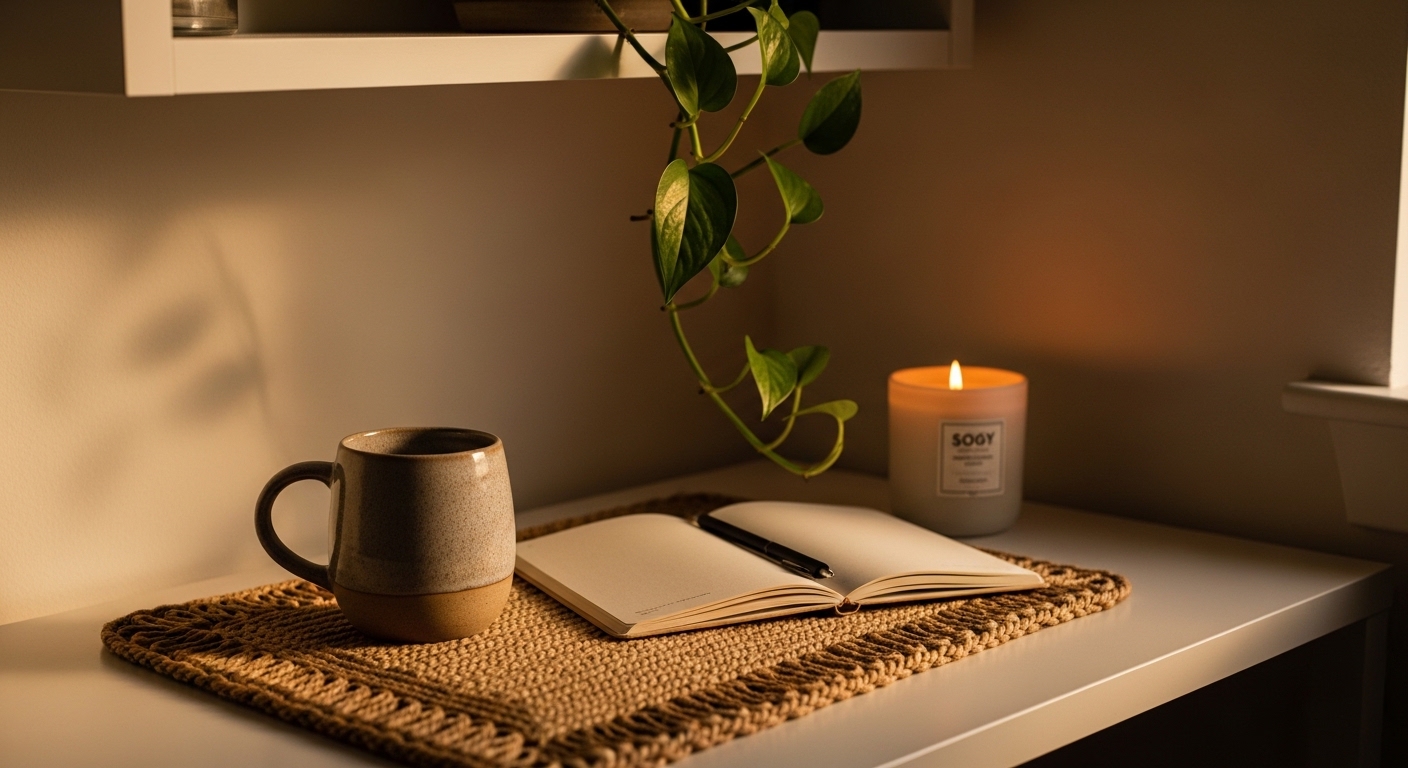
- One trailing plant (pothos or heartleaf philodendron) on a high shelf or hanging hook
- A small framed print or art card propped against the wall rather than hung — easier for renters
- A candle or diffuser on the desk edge for a sensory cue that signals focus time
- A woven or textured desk mat instead of a plain mouse pad
Small apartments usually need fewer decor pieces than you think. Three well-placed objects beat seven mediocre ones every time.
Budget-Friendly Upgrades
Setting up a bedroom corner office doesn't require a full renovation budget. Most of the impact comes from a handful of well-chosen pieces, not an entire room overhaul.
Approximate starting points (prices vary by retailer and region, and are subject to change):
- Floating wall-mounted desk: approximately $60–$150 for solid options from IKEA, Wayfair, or Amazon
- Pegboard kit with accessories: approximately $25–$60 depending on size and finish
- Clip-on or swing-arm task lamp: approximately $20–$80 for quality adjustable styles
- Small area rug (2x3 or 3x5): approximately $30–$90 for flatweave or jute options
- Ergonomic chair (entry-level): approximately $80–$200 — worth prioritizing over decor
The chair is the one place not to cut corners. Back pain from a bad chair will undo every aesthetic win in the room. Everything else can be sourced secondhand, DIY'd, or swapped over time.
Thrift stores and Facebook Marketplace are genuinely good sources for desk lamps, small shelves, and storage baskets. A $12 secondhand brass lamp repainted in matte black can look like a $90 designer piece.
A bedroom corner office works best when it earns its place in the room — visually and functionally. The goal isn't to hide it or apologize for it, but to make it feel like it was always meant to be there. With a clear layout, layered lighting, and a few grounding textures, even the smallest corner can hold a workspace that genuinely supports how you live and work.

Comments
Post a Comment