The Japandi living room aesthetic has taken over every mood board and Pinterest feed for good reason. It blends the warmth of Scandinavian hygge with the mindful simplicity of Japanese wabi-sabi — and the result is a space that feels genuinely calm, intentional, and beautiful. The best part? You do not need a designer budget to pull it off. With the right furniture choices, a restrained color palette, and a few well-placed natural textures, you can transform your living room into a serene Japandi retreat without overspending.
Before You Start Planning
Before you buy a single item, take a moment to audit what you already own. Japandi is rooted in intentionality — it is about keeping only what serves a purpose or brings quiet joy. Walk through your living room and identify pieces that feel heavy, cluttered, or visually noisy. Remove them first. You may be surprised how much closer you already are to the aesthetic than you think.
Next, define your personal version of Japandi. Some lean warmer with honey-toned woods and cream textiles. Others prefer a cooler, more graphic interpretation with dark charcoal accents and pale ash furniture. Knowing your direction before shopping saves money and prevents impulse buys that do not fit the vision.
"Japandi is not about buying more — it is about choosing better. Every object in the room should earn its place."
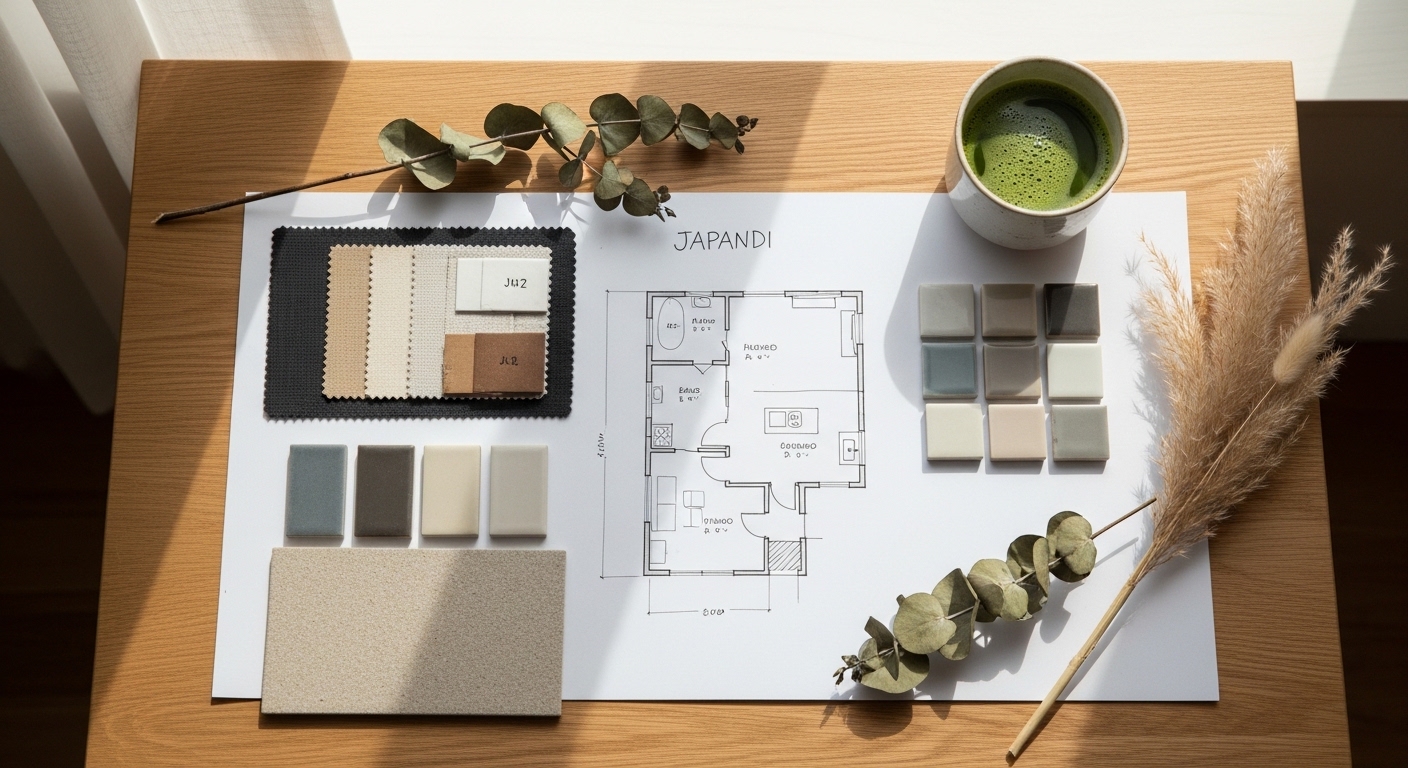
Sketch a rough floor plan. Note your natural light sources, your largest wall, and any architectural features worth highlighting. This simple step helps you prioritize where your budget will have the most visual impact.
Affordable Furniture Picks
Japandi furniture is defined by clean lines, low profiles, and natural materials. You do not need to shop at high-end Scandinavian boutiques to find pieces that fit. Thrift stores, Facebook Marketplace, and budget-friendly retailers often carry exactly the right shapes — they just need the right styling around them.
Focus on these key furniture pieces for a Japandi living room:
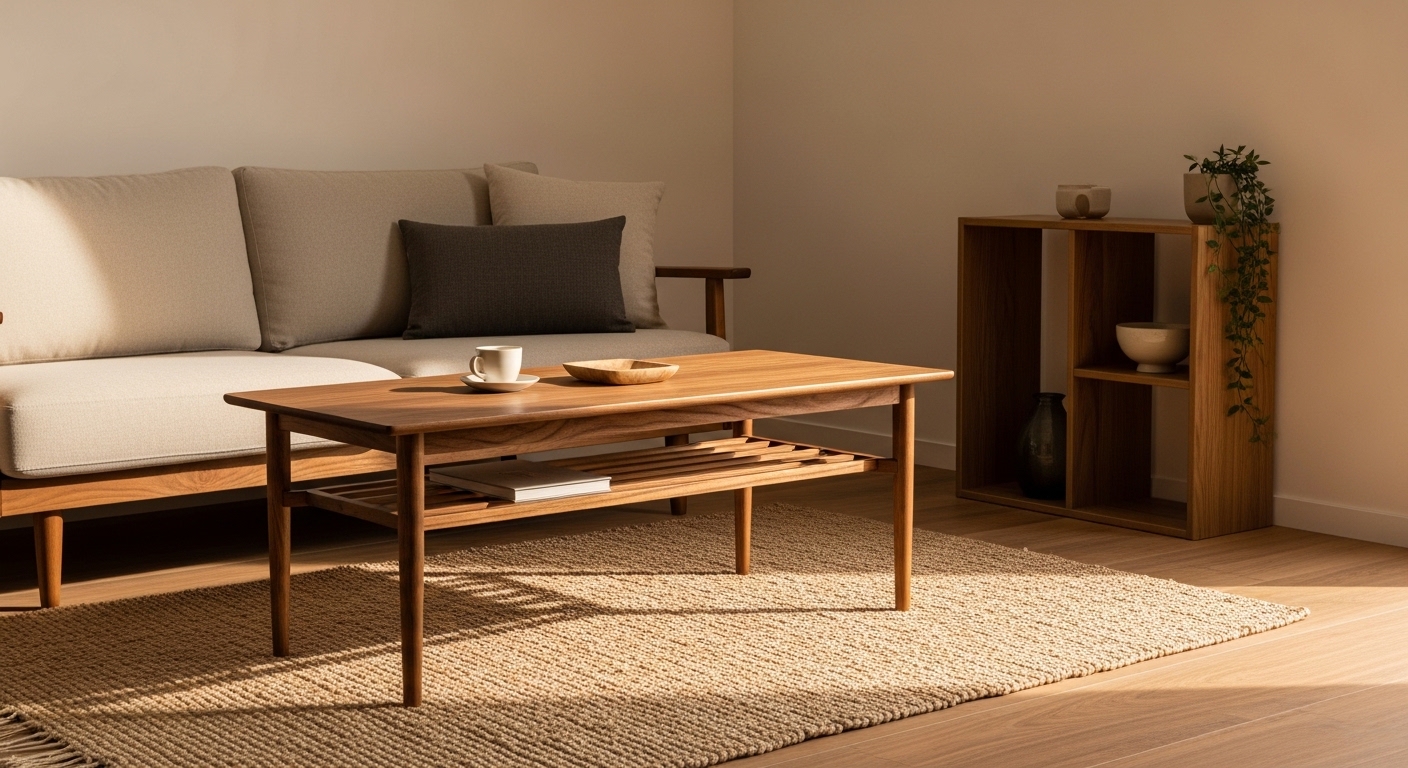
- Low-profile sofa in natural linen or boucle — Look for simple silhouettes without ornate legs or tufting. Neutral tones like oat, sand, or warm white work best. Approximately $300–$800 at budget retailers.
- Solid wood coffee table with tapered legs — Oak, walnut, or bamboo finishes all read as Japandi. Secondhand finds are ideal here. Prices vary widely, often $50–$200 used.
- Modular shelving in light wood or matte black — Open shelving styled with restraint adds visual interest without clutter. Approximately $80–$200 new.
- Floor cushions or a low accent chair — A zaisu-style floor seat or a simple curved accent chair adds a Japanese touch. Look for natural cotton or linen upholstery. Approximately $40–$150.
- Woven jute or wool area rug — Grounds the space and adds warmth underfoot. Natural fiber rugs in warm neutrals are widely available. Approximately $60–$180.
When shopping secondhand, prioritize the silhouette over the finish. A scratched oak table can be lightly sanded and oiled. A dated sofa in the right shape can be transformed with a neutral slipcover.
DIY Decor Ideas
Some of the most authentic Japandi decor is handmade or foraged. The aesthetic celebrates imperfection — a hand-pinched ceramic bowl, a branch collected from a walk, a linen cushion cover sewn from fabric remnants. These touches add soul to the space in a way that mass-produced decor rarely can.
Try these budget-friendly DIY ideas:
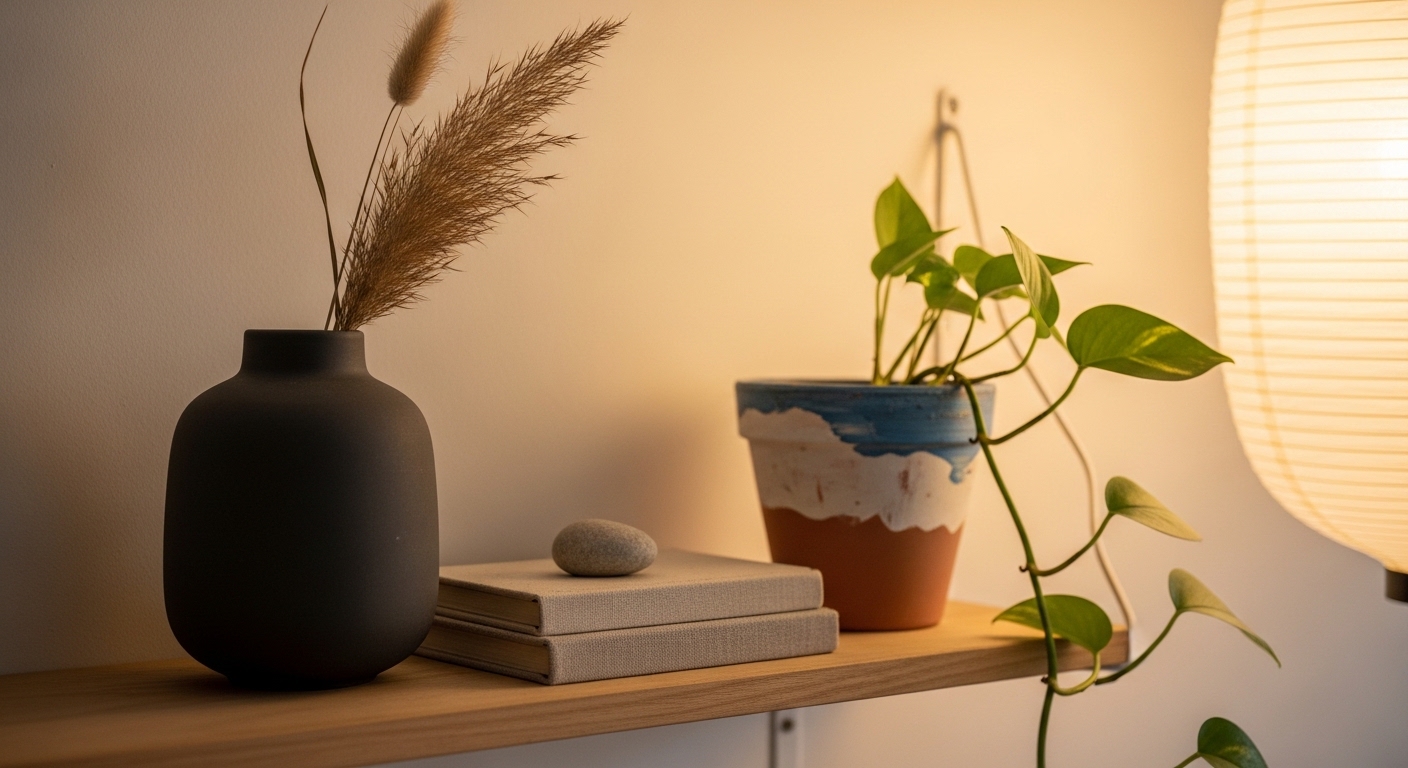
- Dried botanical arrangements — Collect dried pampas grass, eucalyptus, or seed pods and arrange them in a simple tall vase. Zero cost if foraged, minimal if purchased.
- Painted terracotta pots — Buy inexpensive terracotta pots and paint them in matte charcoal, warm white, or sage. Group them in odd numbers for a curated look.
- Linen cushion covers — Purchase plain linen fabric and sew or tie simple cushion covers. Natural undyed linen is especially on-brand for Japandi.
- Wabi-sabi wall art — Frame a single brushstroke painting, a pressed botanical, or a piece of handmade washi paper. Simple black or natural wood frames keep it cohesive.
- Rope or macrame plant hangers — Hang trailing plants at varying heights to bring organic movement into the room.
The key with Japandi DIY is restraint. Make a few beautiful things rather than filling every surface. Negative space is a design element here, not a gap to fill.
Lighting & Ambience
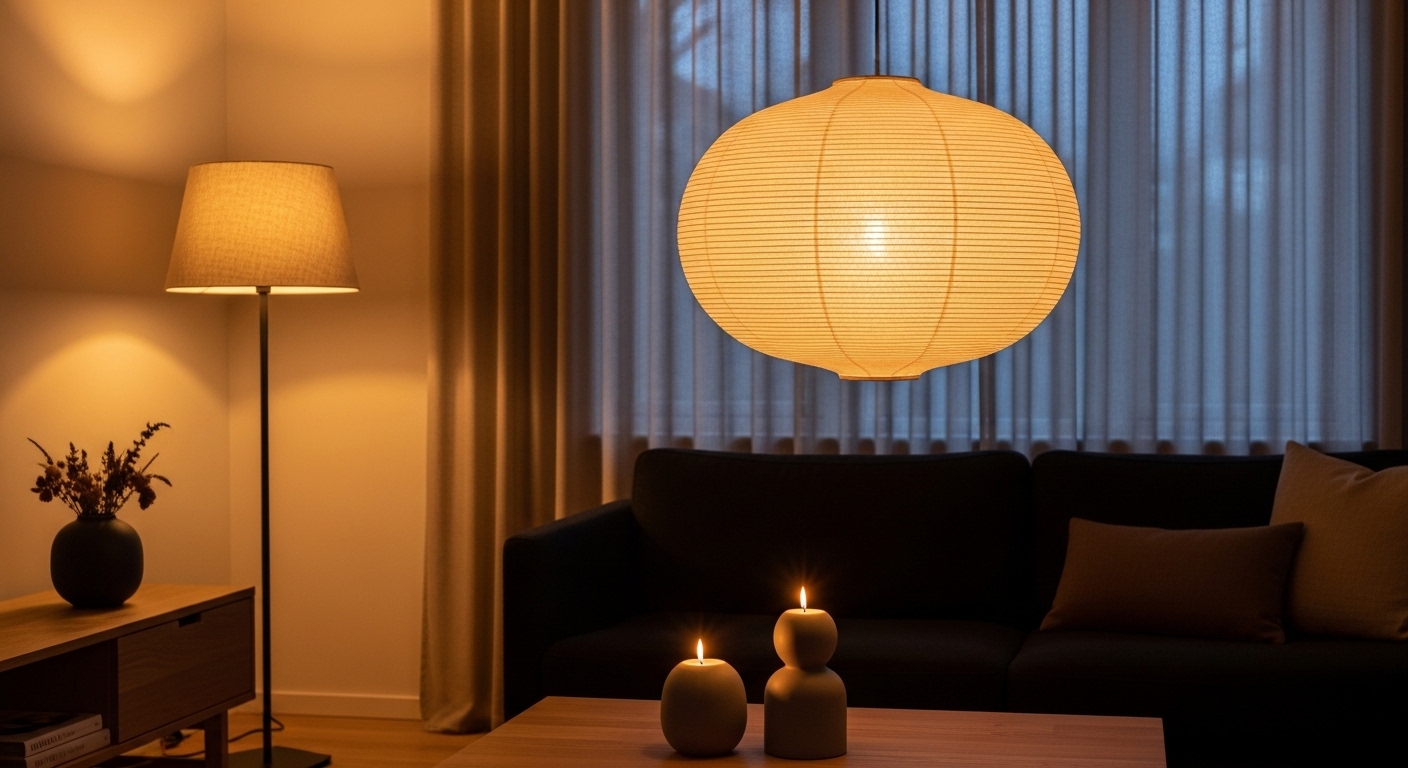
Lighting is where Japandi truly comes alive. Both Japanese and Scandinavian design traditions prioritize soft, layered, human-scale light over harsh overhead fixtures. The goal is a warm, glowing atmosphere that feels like candlelight — intimate and calm at any hour of the day.
Build your lighting in layers:
- Warm-toned LED bulbs — Swap any cool white bulbs for warm white (2700K–3000K). This single change transforms the mood of a room immediately and costs very little.
- Paper or rattan pendant lamp — A washi paper pendant or a woven rattan shade over a dining or reading area adds immediate Japandi character. Prices vary, approximately $30–$100.
- Floor lamp with a fabric shade — A simple arc or tripod floor lamp with a linen or rice paper shade creates a cozy reading corner.
- Candles and candle holders — Matte ceramic or concrete candle holders with unscented or lightly scented candles add warmth and ritual to the space.
- String lights or LED strips behind shelving — Used sparingly, these create a soft backlit glow that adds depth without looking festive.
Avoid recessed spotlights pointing directly at decor objects. Japandi lighting should feel diffused and enveloping, not theatrical.
Where to Save vs Splurge
A smart Japandi budget is about strategic spending. Some elements are worth investing in because they anchor the entire room. Others are easy to source affordably without sacrificing the look.
Save on:
- Decorative objects — ceramics, vases, and trays from thrift stores or discount home stores
- Cushion covers and throws — neutral linen options are widely available at low price points
- Plants — propagate cuttings from friends or choose low-cost varieties like pothos or snake plants
- Wall art — DIY framed botanicals or simple brushstroke prints cost very little
- Side tables — simple bamboo or rattan options from budget retailers work beautifully
Splurge on:
- The sofa — as the largest piece, its quality and silhouette define the room
- The area rug — a natural fiber rug in the right size grounds the entire layout
- One quality pendant light — a well-chosen fixture elevates the whole space
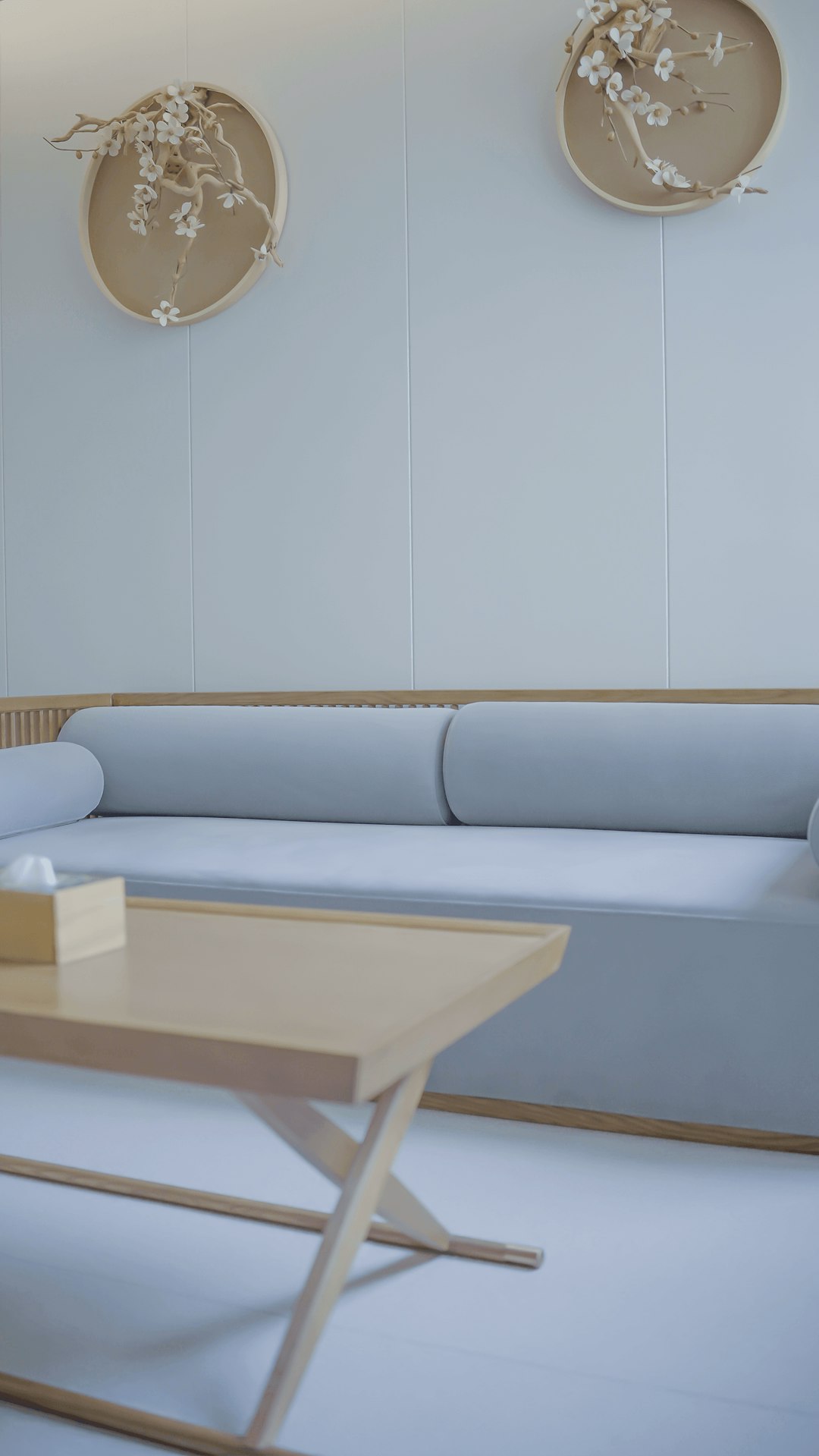
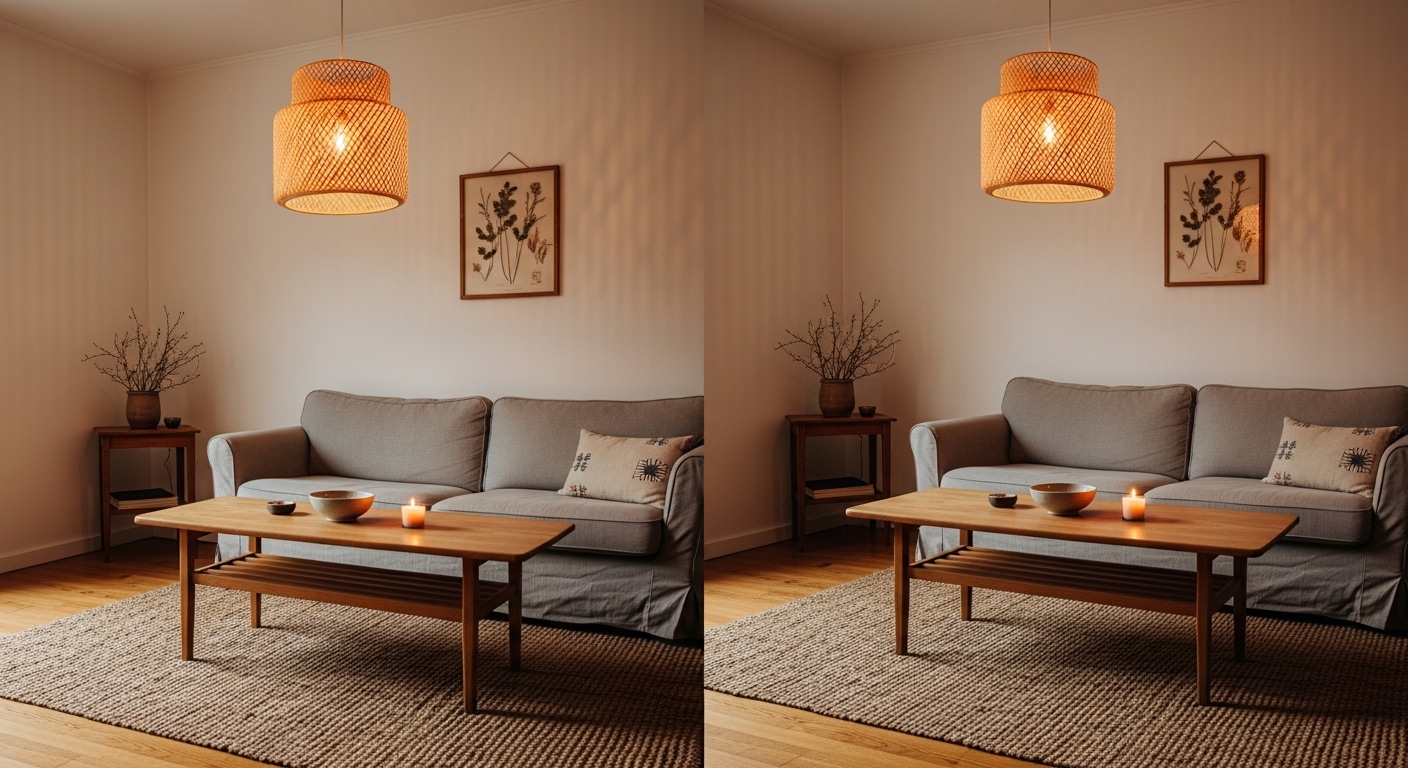
Before: A cluttered living room with mismatched furniture, cool overhead lighting, and no cohesive palette. After: A calm, curated Japandi space with warm layered light, natural textures, and intentional decor — achieved for under $500 in new purchases.
Final Styling Checklist
Before you call the room complete, walk through this final checklist. Japandi styling is as much about editing as it is about adding. Step back and view the room from the doorway — that first impression tells you everything.
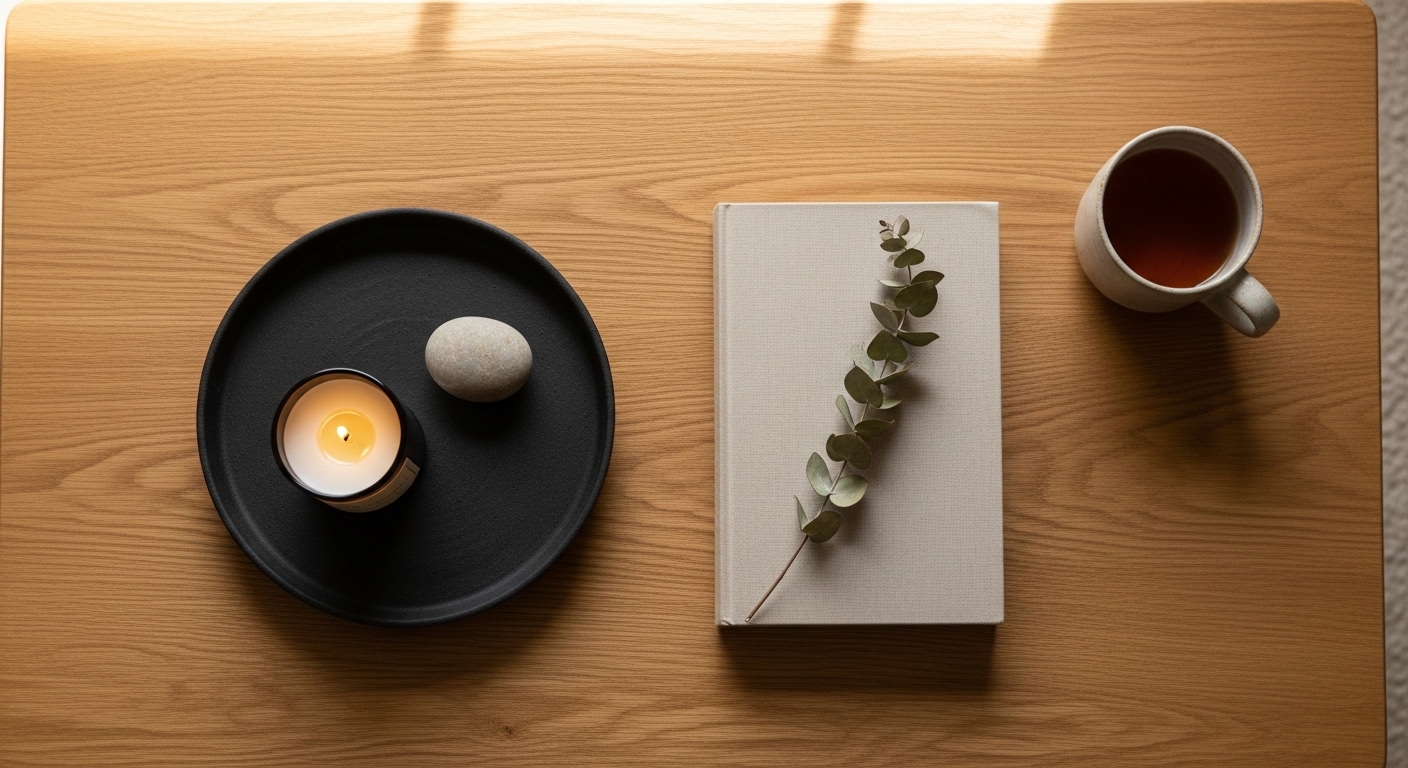
- Clear the surfaces. Each surface should hold no more than two or three objects, arranged with breathing room between them.
- Check your color count. Limit your palette to three to four tones — typically a warm neutral base, one wood tone, one dark accent, and one soft textile color.
- Introduce one living element. A plant, a branch, or fresh botanicals bring the organic quality that makes Japandi feel alive rather than staged.
- Assess your textures. You should be able to identify at least three distinct textures — linen, wood grain, ceramic, stone, or woven fiber.
- Dim the lights. Test the room in the evening with only your layered lighting active. If it feels warm and calm, you have succeeded.
- Remove one more thing. When in doubt, take something away. Japandi always leans toward less.
Print this list and keep it handy as you style. It is easy to drift toward adding more — the checklist keeps you anchored to the philosophy.
Bringing It All Together
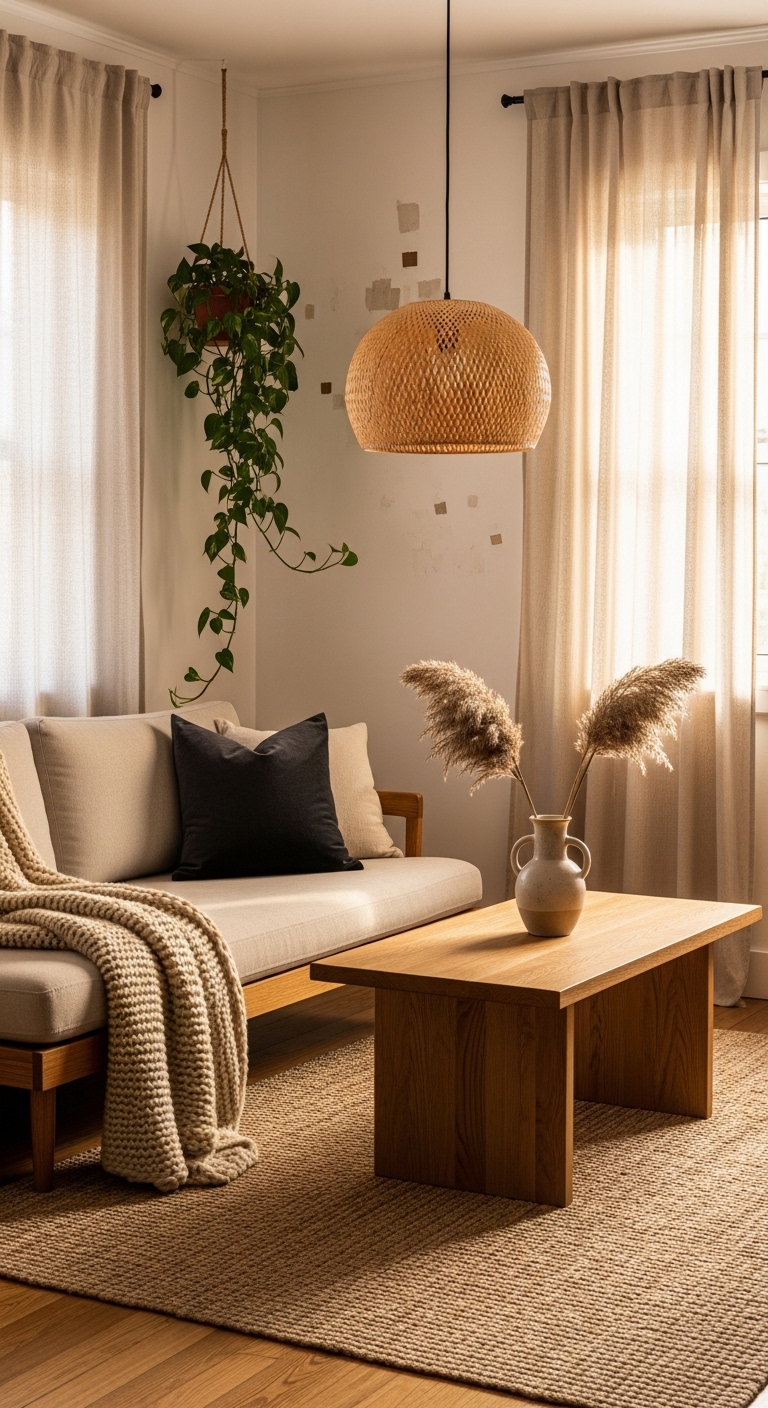
A Japandi living room on a budget is entirely achievable — and the process of creating it is as rewarding as the result. By starting with a clear vision, shopping intentionally, embracing DIY touches, and editing ruthlessly, you can build a space that feels genuinely luxurious without a luxury price tag. The philosophy at the heart of Japandi is one of enough — and when you get it right, the room will feel like exactly that. Peaceful, grounded, and completely yours.
Comments
Post a Comment