Designing a living room with no natural light can feel like a challenge — but it doesn't have to mean dark, cramped, or uninviting. With the right layered lighting, a thoughtful color palette, and intentional decor choices, even the most windowless room can feel warm, airy, and beautifully styled. Whether you're in a basement apartment, an interior-facing flat, or simply a room that the sun forgot, these living room ideas for no natural light will completely transform how your space looks and feels.
Start With a Clear Vision
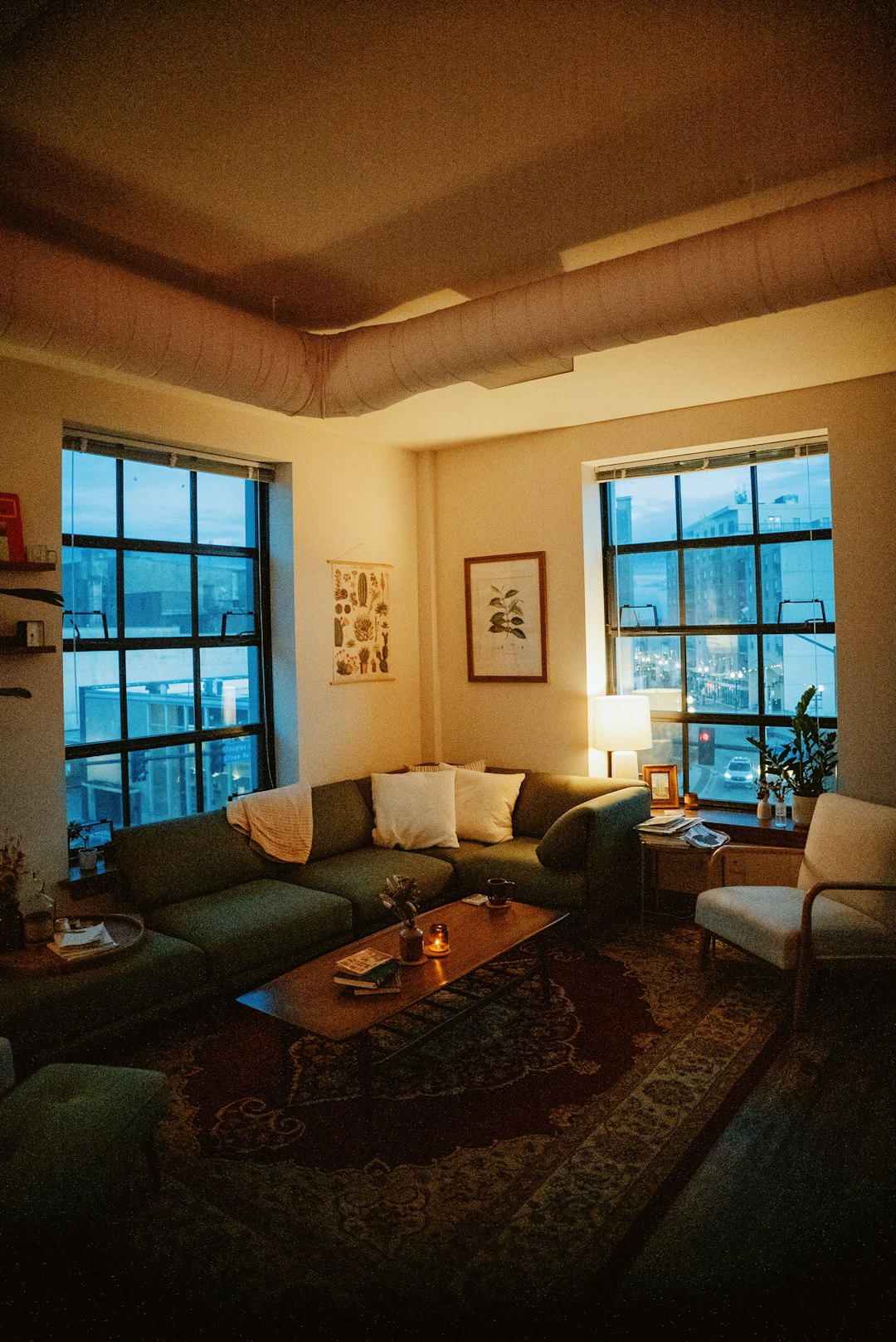
Before you move a single piece of furniture or buy a single bulb, take a moment to define the mood you want. A room without natural light isn't destined to feel like a cave — it can feel like a boutique hotel lounge, a cozy Scandinavian den, or a moody, sophisticated retreat. Your vision shapes every decision that follows.
Ask yourself a few key questions:
- Do you want the room to feel light and airy, or warm and intimate?
- How is the room primarily used — relaxing, entertaining, working?
- What existing furniture or decor are you keeping?
- What's your approximate budget for updates?
Answering these honestly gives you a creative anchor. From here, every choice — from paint color to lamp placement — becomes purposeful rather than guesswork. Rooms without windows actually have one surprising advantage: you have complete control over the atmosphere, all day and all night.
"A room without natural light is a blank canvas for atmosphere. You're not fighting the sun — you're composing the mood yourself."

Step-by-Step Transformation Guide
Transforming a windowless living room is all about working in layers — light, color, texture, and reflection all play a role. Follow this sequence for the most cohesive result.
Step 1: Paint the Walls a Light-Reflective Color
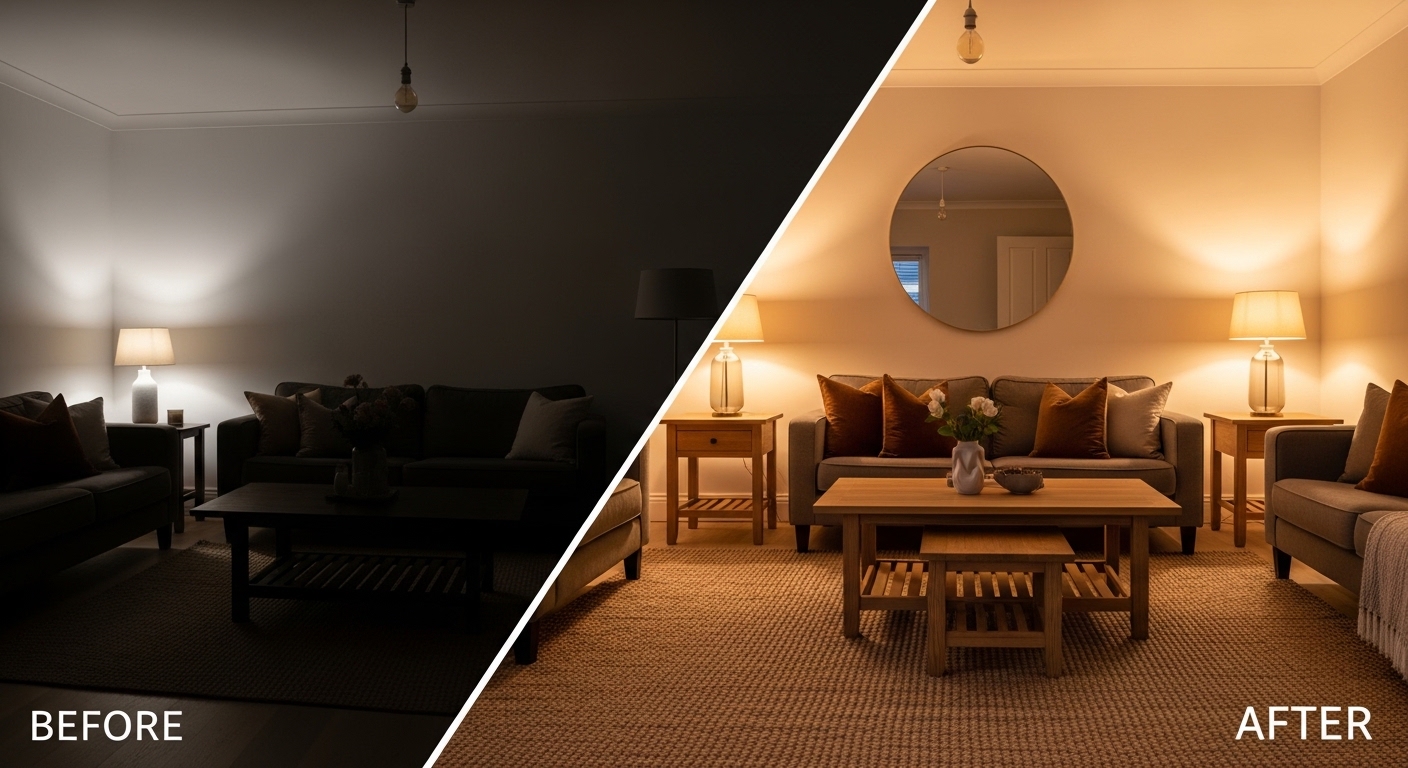
Forget stark white — in a room without natural light, pure white can actually look flat and cold. Instead, reach for warm whites, soft creams, or light warm greiges. These tones bounce artificial light beautifully and create a sense of gentle warmth rather than clinical brightness.
Step 2: Layer Your Lighting
This is the single most impactful change you can make. A single overhead light creates harsh shadows and a flat, uninviting feel. Instead, build three layers:
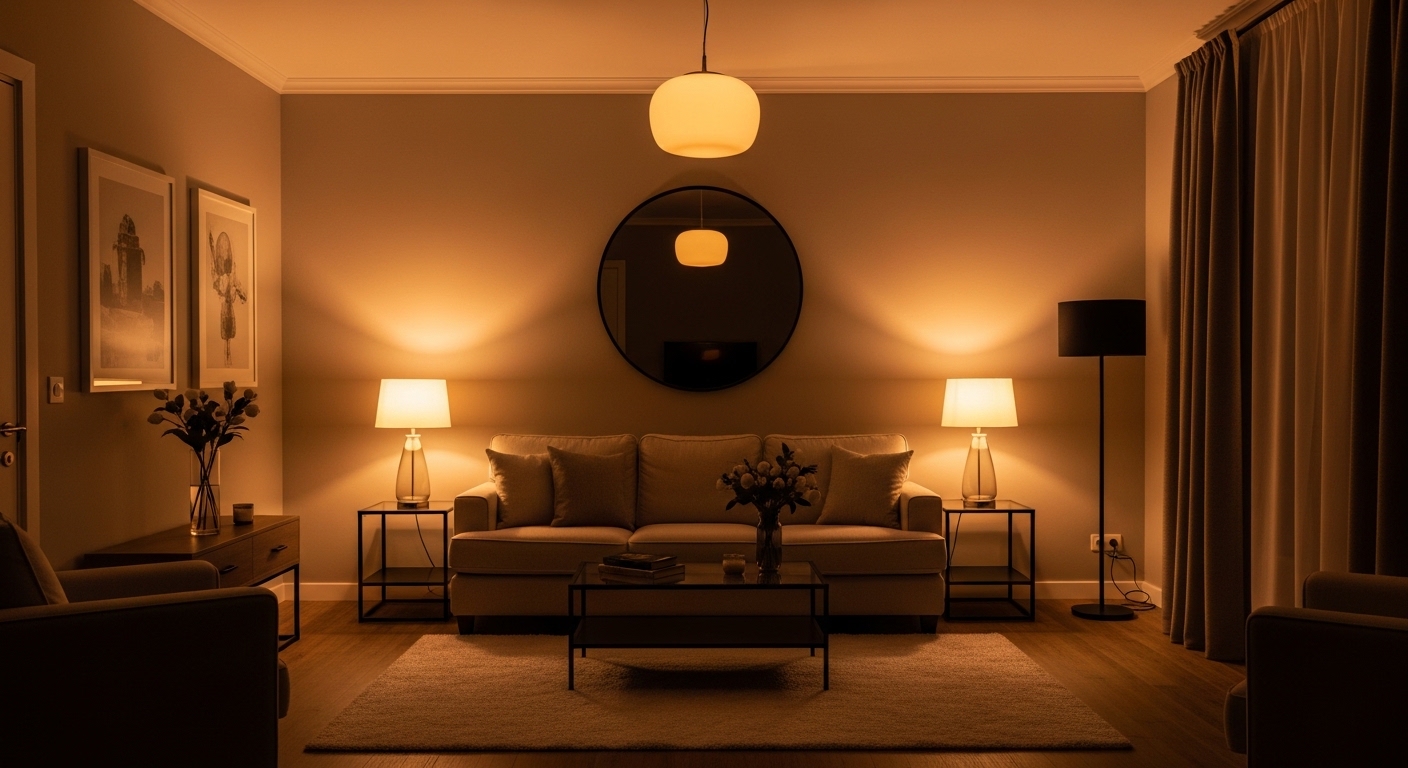
- Ambient lighting — recessed ceiling lights or a central pendant for overall brightness
- Task lighting — floor lamps and table lamps positioned near seating
- Accent lighting — LED strip lights behind shelving, picture lights, or candle-style sconces for warmth and depth
Step 3: Introduce Mirrors Strategically
Mirrors are the closest thing to a free window. A large mirror placed opposite or adjacent to your primary light source will visually double the brightness of the room. Lean an oversized floor mirror against a wall, or create a gallery-style cluster of smaller mirrors for a more eclectic look.
Step 4: Choose Light-Toned, Reflective Furniture
Dark, heavy furniture absorbs light and makes a room feel smaller. Opt for sofas and chairs in oatmeal, cream, or soft sage. Add a glass or light wood coffee table to keep the floor zone visually open.
Step 5: Add Warmth Through Texture
Without sunlight streaming in, texture becomes your best tool for making a room feel alive. Layer a chunky knit throw over the sofa, add a woven jute rug underfoot, and mix velvet cushions with linen ones. These tactile elements catch light at different angles and create visual richness.
Product Picks & Where to Find Them
You don't need a designer budget to pull this off. These are some of the most effective product categories to invest in, along with what to look for and approximate price ranges (prices vary by retailer and region).
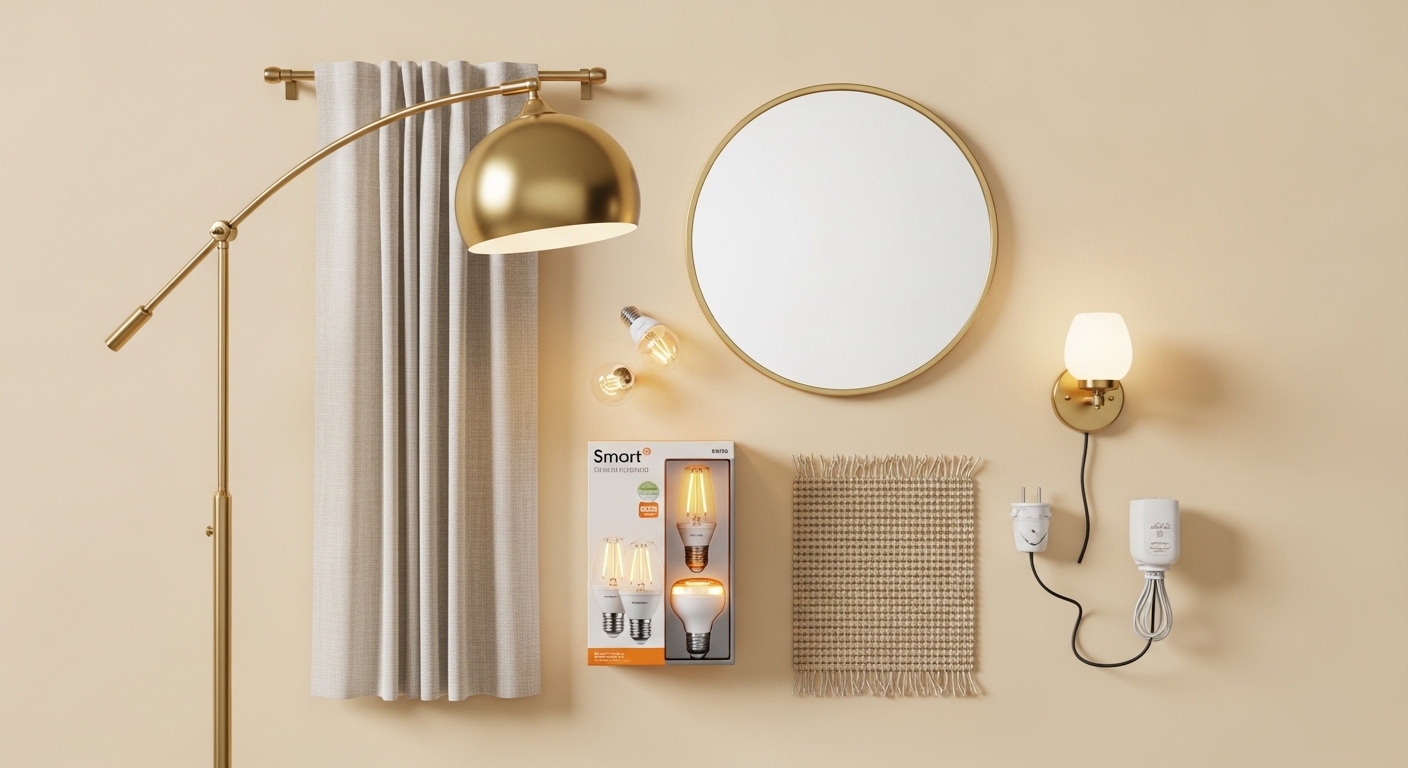
- Arc floor lamp with warm bulb — A tall arching lamp positioned behind the sofa floods the seating area with soft, directional light. Look for models with dimmer switches. Approximately $60–$180.
- Large round wall mirror (24–36 inches) — A statement mirror in a brass, black, or natural wood frame reflects light and adds a focal point. Approximately $50–$200.
- LED smart bulbs (2700K–3000K color temperature) — Warm-toned smart bulbs let you adjust brightness and warmth throughout the day. Approximately $10–$20 per bulb.
- Sheer linen curtains (even without windows) — Hanging floor-to-ceiling sheer panels on a wall creates the illusion of a window behind them, especially when backlit with LED strip lights. Approximately $30–$80 per panel.
- Woven jute or wool area rug — A light-toned textured rug grounds the seating area and adds warmth without darkening the floor zone. Approximately $80–$300 depending on size.
- Plug-in wall sconces — No electrician needed. Plug-in sconces mounted at eye level add architectural warmth and eliminate the need for structural work. Approximately $40–$120 each.
Styling Tips From Interior Designers
Professional designers who work with challenging spaces consistently return to a handful of principles. Here are the most actionable ones for a light-deprived living room.
Use Upward-Facing Lighting to Raise the Ceiling
Torchiere-style floor lamps that direct light upward wash the ceiling in a warm glow, making the room feel taller and more expansive. This is especially effective in rooms with low ceilings.
Don't Underestimate the Power of Gloss
A semi-gloss or satin finish on walls reflects more light than a flat matte finish. You can also introduce glossy or lacquered decor accents — a ceramic vase, a lacquered side table, or metallic picture frames — to scatter light around the room.
Bring in Biophilic Elements
Plants signal life and freshness, even in rooms without sunlight. Choose low-light-tolerant varieties such as:
- Pothos (extremely adaptable, trailing habit)
- ZZ plant (thrives in near-darkness)
- Snake plant (architectural form, very low maintenance)
- Peace lily (adds a soft, organic touch)
Group them near your artificial light sources to keep them healthy and to create a natural, layered vignette.
Keep the Floor as Light as Possible
Dark flooring absorbs light from the bottom up, making a room feel heavier. If you can't change the floor, use a large, light-toned area rug to cover as much of it as possible. This single trick can visually lift the entire room.
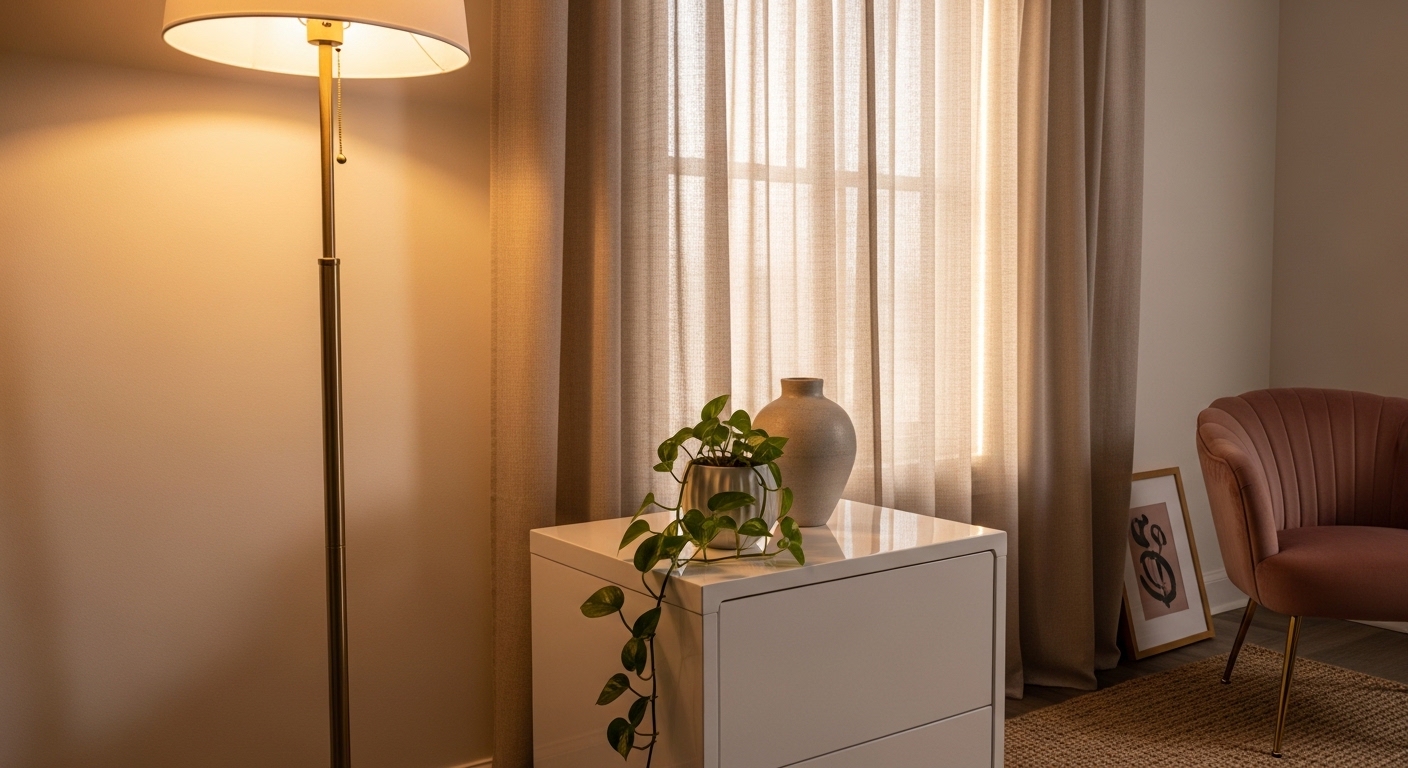
Create a Faux Window With Curtains and Backlighting
Mount a curtain rod high on a wall — ideally floor to ceiling — and hang sheer white or linen panels. Place an LED strip light or a slim floor lamp behind the panels. The diffused glow mimics the soft light of a window and adds a dreamy, editorial quality to the room.
Frequently Asked Questions
What is the best paint color for a living room with no natural light?
Warm whites and soft creams consistently perform best. Look for paint shades with warm undertones — slightly yellow, peachy, or greige — rather than cool blue or grey undertones. Popular choices include shades described as "warm white," "linen," "antique white," or "pale straw." Always test a large swatch on your actual wall before committing, as artificial light will affect how the color reads.
Can LED lights really replace natural light in a living room?
While no artificial light perfectly replicates sunlight, high-quality LED bulbs in the 2700K–3000K color temperature range come remarkably close to creating a warm, natural-feeling glow. For a more daylight-like effect, bulbs in the 4000K–5000K range mimic cooler midday light. Layering multiple light sources at different heights is far more effective than relying on a single bright overhead fixture.
How do I make a small, windowless living room feel bigger?
Focus on three things: light, reflection, and visual openness. Use mirrors to reflect light and create depth. Keep furniture legs visible (avoid pieces that sit flush to the floor) to create a sense of airiness. Choose a monochromatic or tonal color scheme so the eye moves smoothly around the room without visual interruptions. Avoid heavy curtains, dark rugs, and oversized furniture that crowds the space.
Is it worth hiring an interior designer for a windowless room?
For complex structural changes or electrical work such as installing recessed lighting, consulting a licensed professional is always advisable. For styling and decor decisions, many designers offer affordable one-hour consultations or online e-design services that can provide a personalized plan without a full-service fee.
What lighting color temperature is best for a cozy living room feel?
For a warm, welcoming atmosphere, aim for bulbs between 2700K and 3000K. This range produces a soft golden light similar to candlelight or late afternoon sun. Avoid anything above 4000K in a living room, as it tends to feel clinical and office-like rather than relaxing.
Final Thoughts: Light Is a Design Material
A living room without natural light isn't a design problem — it's a design opportunity. When you can't rely on the sun, you become more intentional about every element: the warmth of your bulbs, the sheen of your surfaces, the placement of your mirrors, and the texture of your textiles. The result is often a room that feels more curated, more atmospheric, and more uniquely yours than a sun-drenched space ever could.
Start with one change — swap your bulbs, hang a mirror, or add a floor lamp — and watch how quickly the room begins to shift. Small, layered improvements compound into a transformation that feels nothing short of remarkable. Your windowless living room has more potential than you think.
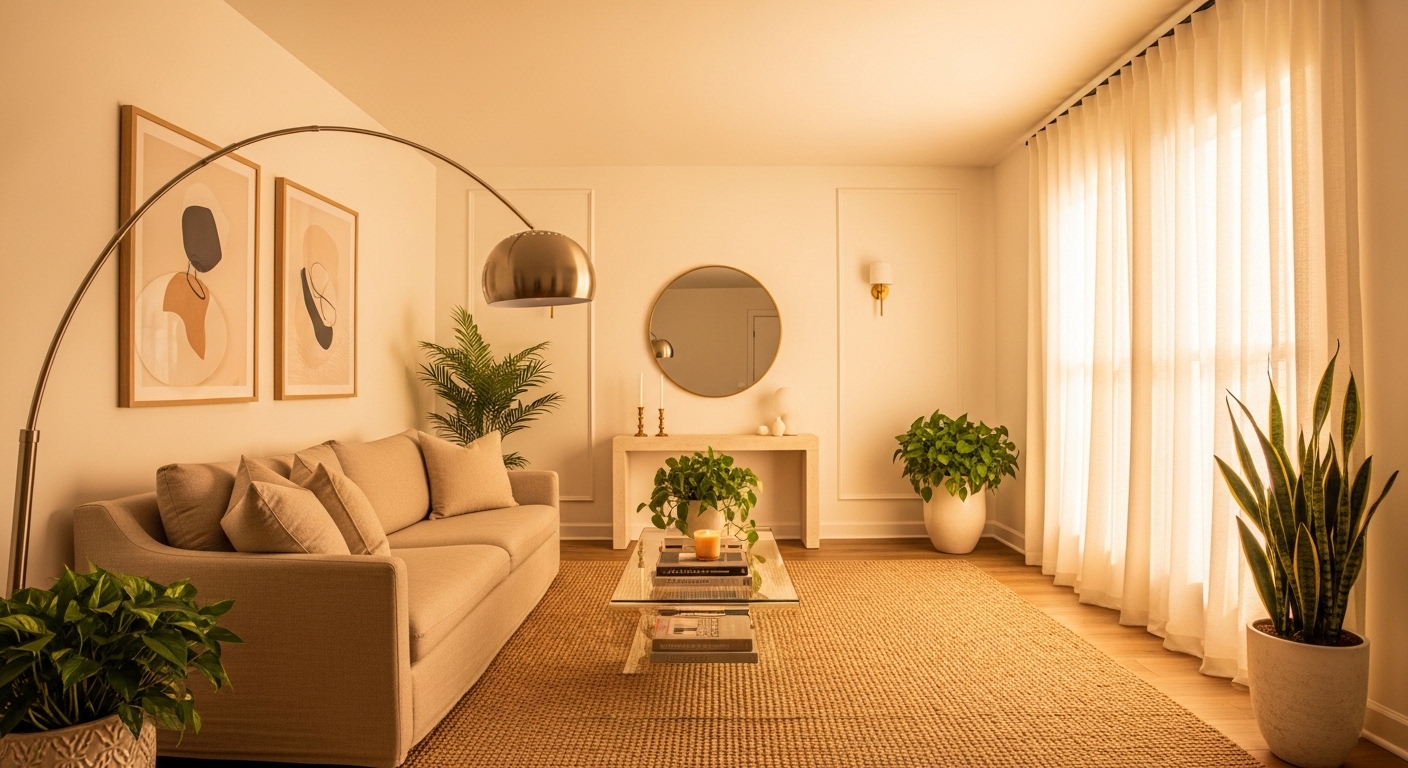
Whether you lean into a warm Scandinavian palette, a moody jewel-toned aesthetic, or a clean minimalist look, the principles remain the same: layer your light, reflect it generously, and let texture do the heavy lifting. Your living room doesn't need a window to feel like the most inviting room in the home.
Comments
Post a Comment