A well-designed bedroom does not need to shout to make a statement. For men who prefer a clean, functional, and understated space, the goal is simple: every element earns its place. Whether you are starting from scratch or refreshing a tired room, these masculine bedroom ideas will help you build a space that feels intentional, calm, and genuinely yours. Think structured layouts, grounded color palettes, quality textures, and lighting that sets the right mood — no clutter, no excess, just a room that works.
Defining the Masculine Minimalist Style
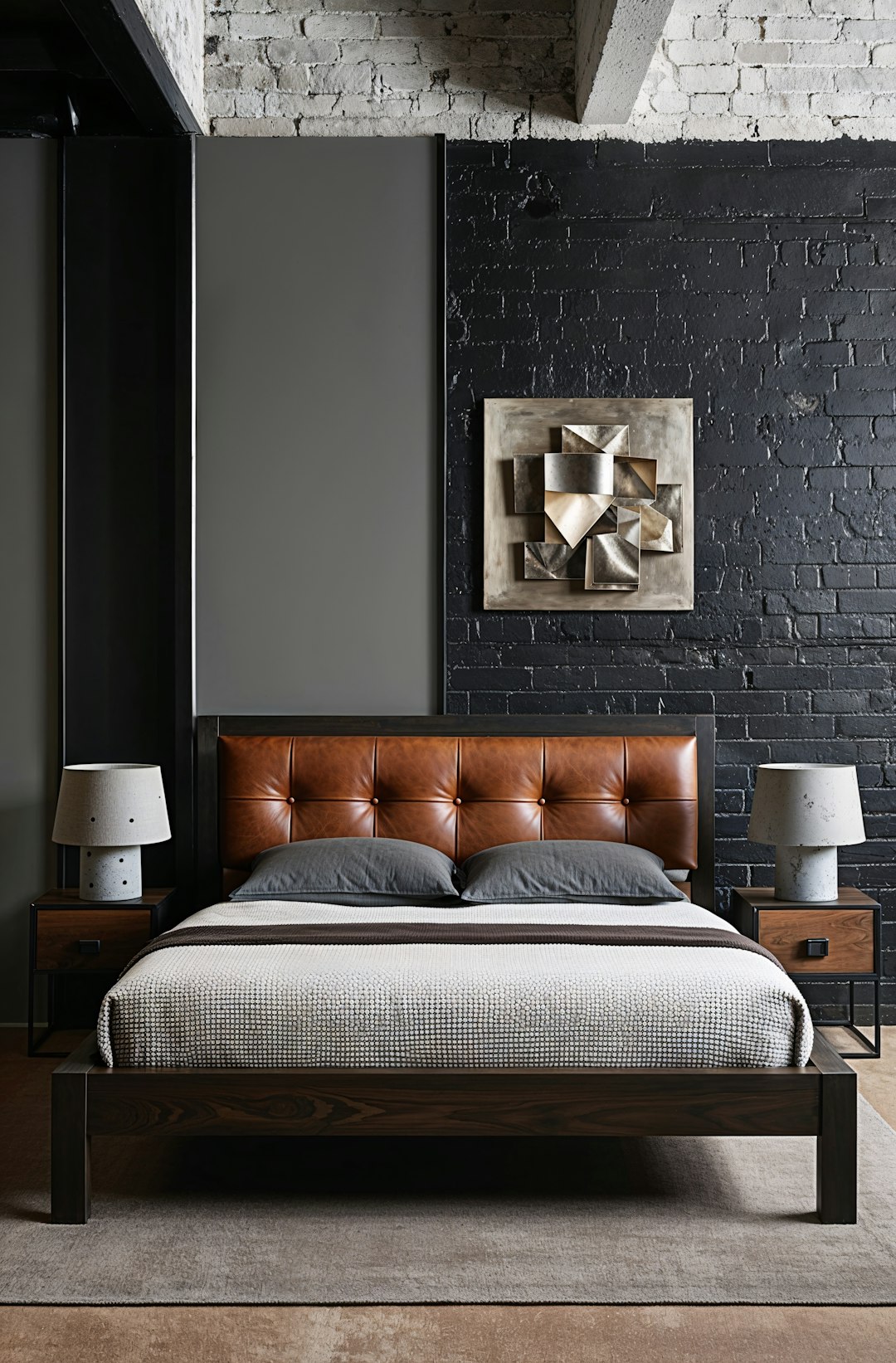
Masculine minimalism is not about stripping everything away until the room feels cold. It is about choosing with intention. This style draws from several overlapping design movements — Scandinavian simplicity, industrial rawness, and Japandi restraint — and blends them into something that feels both modern and deeply livable.
The defining characteristics are easy to recognize:
- Clean, uncluttered surfaces with only a few deliberate objects on display
- Furniture with strong, geometric silhouettes and no ornate detailing
- A limited material palette: wood, metal, concrete, leather, linen
- A sense of visual weight and groundedness rather than lightness and airiness
- Decor that serves a purpose or tells a story, never decorative for its own sake
This is a style built on confidence. It does not rely on trends. It relies on proportion, quality, and restraint.
Best Color Combinations for a Masculine Bedroom
Color is the fastest way to set the tone of a room. For a masculine, understated bedroom, the palette should feel grounded and cohesive rather than bold or decorative. The most effective combinations work with contrast and depth rather than brightness.
These palettes consistently deliver that calm, confident atmosphere:
- Charcoal + warm white + natural oak: A timeless combination that feels modern without being cold. The charcoal anchors the space, the warm white keeps it breathing, and the oak adds organic warmth.
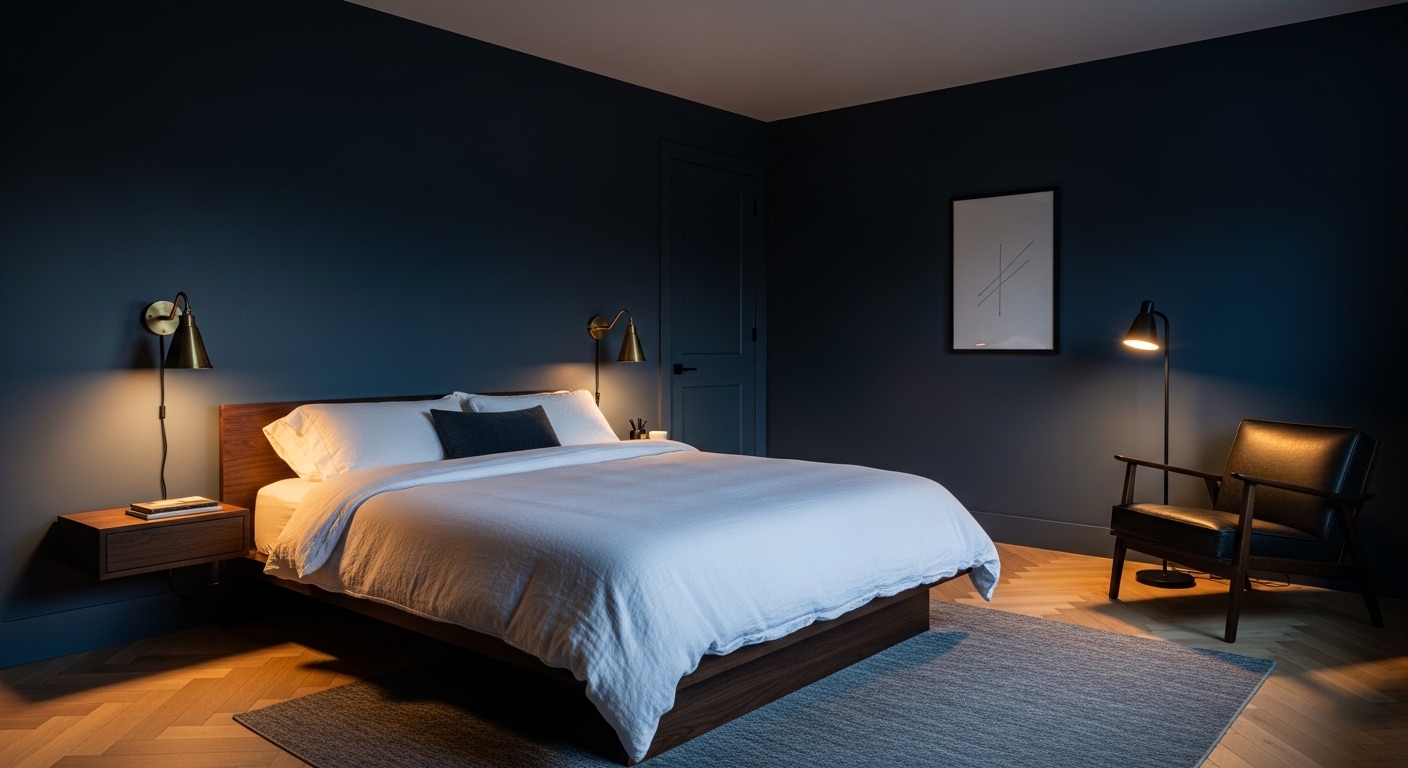
- Deep navy + off-white + brushed brass: Sophisticated and slightly editorial. Navy walls with white trim and brass hardware feel intentional and refined.
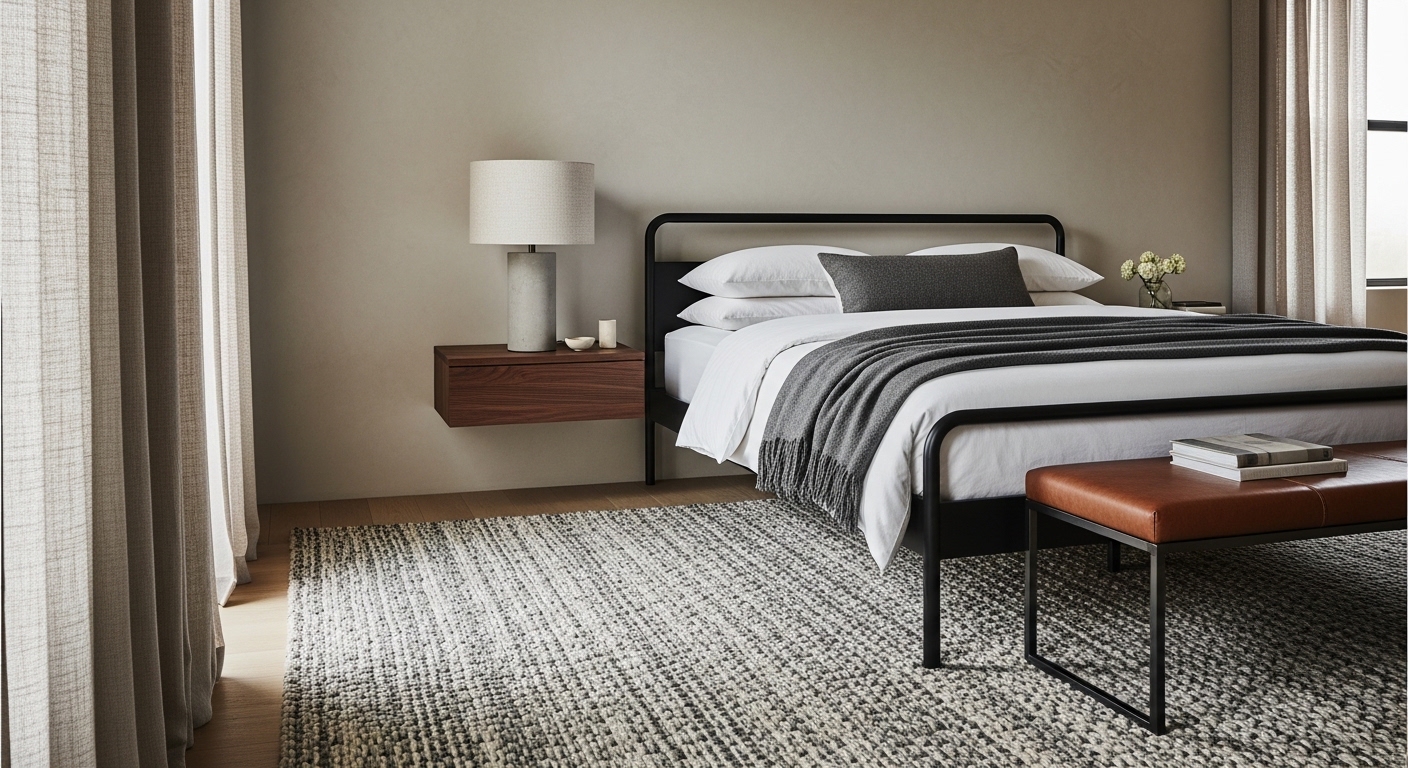
- Warm greige + black + dark walnut: A neutral-forward palette with strong contrast. Greige walls let the dark furniture and black accents do the visual work.
- Slate grey + concrete + muted olive: An industrial-leaning palette softened by the earthy olive. Works especially well in apartments with exposed elements.
- Cream + espresso brown + cognac leather: Warm and rich without being heavy. The cognac leather adds a classic masculine note that never goes out of style.
The most masculine rooms are not the darkest ones. They are the most considered ones. Choose one dominant tone and let everything else support it.
Furniture and Materials That Define the Look
In a masculine bedroom, furniture is not just functional — it is architectural. The pieces you choose should feel solid, purposeful, and built to last. Avoid anything that looks flimsy, overly decorative, or trend-dependent.
Focus on these material and furniture principles:
- Bed frame: A low-profile platform bed in dark walnut, matte black metal, or upholstered charcoal fabric. The lower the profile, the more grounded and modern the room feels.
- Nightstands: Simple geometric forms — concrete, dark wood, or black powder-coated steel. One drawer is enough. Avoid anything with decorative legs or ornate hardware.
- Dresser or wardrobe: Clean-fronted, handle-free or with minimal bar pulls in matte black or brushed nickel. Built-in wardrobes with flush doors are ideal.
- Seating: A single leather or boucle accent chair in a corner adds function without crowding the room. Choose a structured silhouette over a slouchy one.
- Desk (if needed): A simple floating shelf desk or a solid wood writing desk with clean lines. Keep the surface clear.
Materials to prioritize: solid wood, brushed or matte metals, concrete, genuine or faux leather, linen, and wool. These are textures that age well and photograph beautifully.
Decor Accessories That Add Character Without Clutter
Accessories are where a lot of masculine bedrooms go wrong — either they have none at all (making the room feel sterile) or they have too many (making it feel chaotic). The goal is a curated edit: a handful of objects that each carry visual or personal weight.
Think of accessories in these categories:
- Art: One large-scale piece above the bed or on a feature wall. Abstract, architectural photography, or graphic black-and-white prints work well. Avoid gallery walls with too many small frames.
- Textiles: Layer your bedding with intention — a fitted sheet, a duvet in a solid neutral, and one or two structured pillows. A chunky knit or woven throw adds texture without fuss.
- Plants: One or two plants maximum. A tall snake plant, a fiddle leaf fig, or a low-maintenance ZZ plant in a dark ceramic or concrete pot adds life without demanding attention.
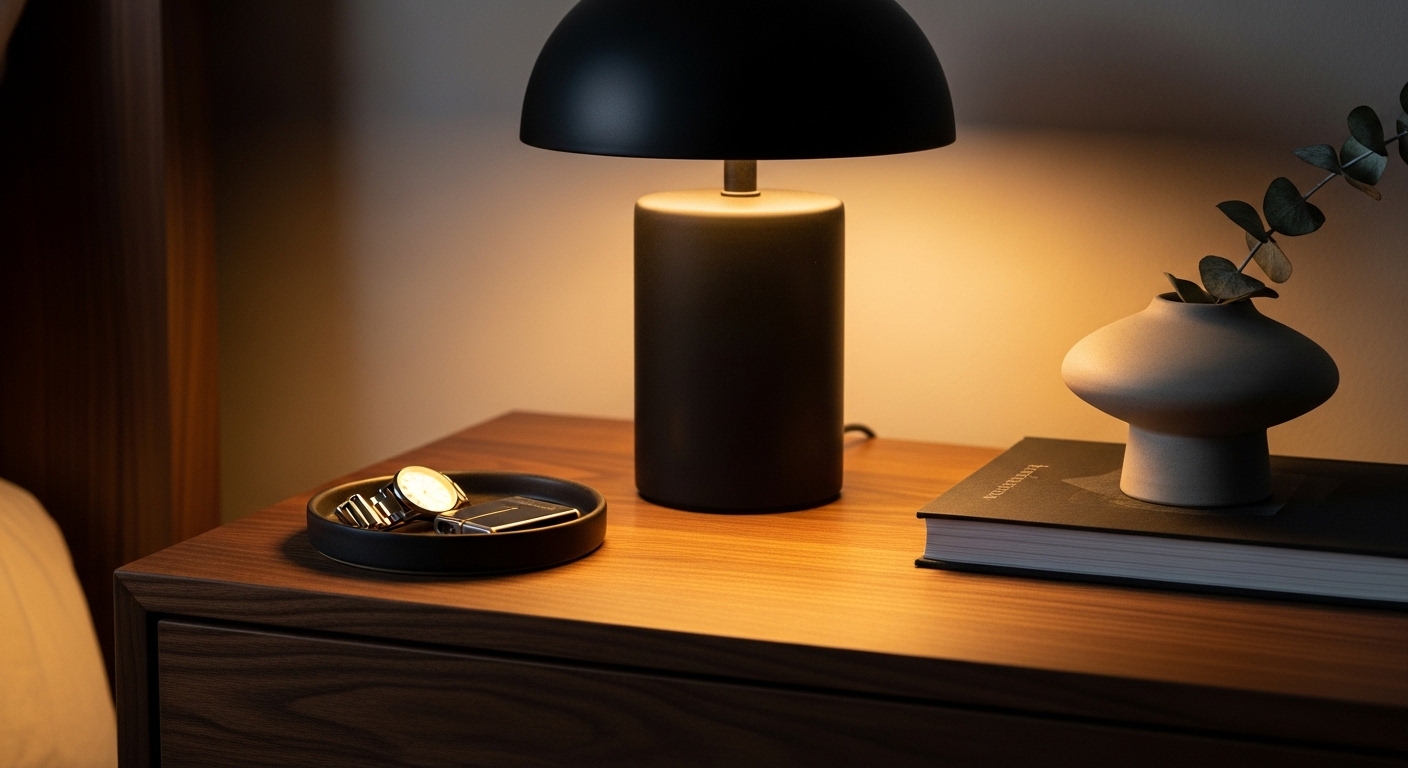
- Objects: A tray on the nightstand to corral small items, a ceramic or stone object with interesting form, a watch stand, or a single candle in a matte vessel.
- Books: A small stack of hardcovers on the nightstand or a floating shelf with a curated selection. Spines facing out, not hidden.
Lighting and Atmosphere
Lighting is the element most men overlook — and it is the one that transforms a room from functional to genuinely atmospheric. A masculine bedroom should have layered lighting: ambient, task, and accent. Relying on a single overhead light makes any room feel flat and uninviting.
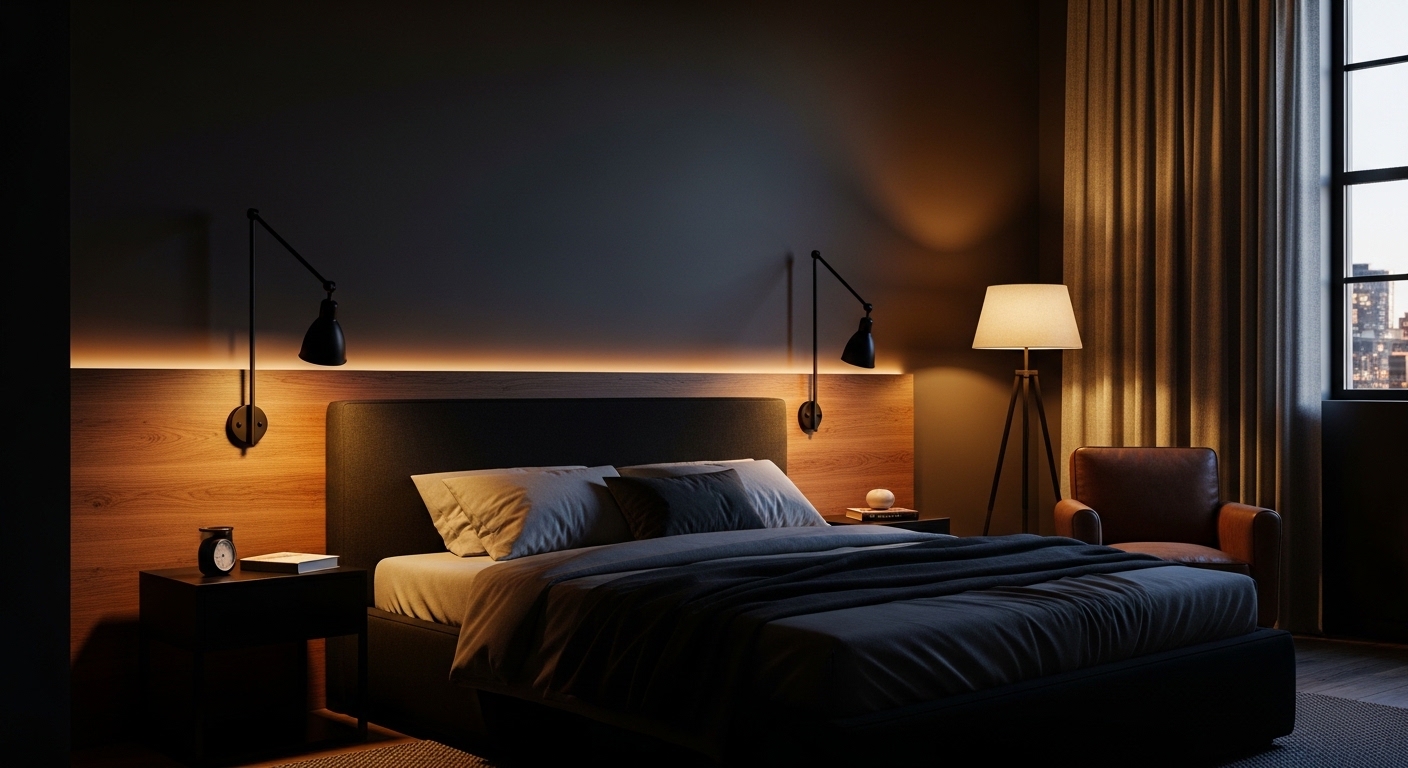
Build your lighting plan around these layers:
- Ambient: Recessed ceiling lights on a dimmer, or a simple flush-mount fixture in matte black or brushed nickel. Dimmable is non-negotiable.
- Task: Wall-mounted sconces on either side of the bed free up nightstand space and provide focused reading light. Choose adjustable arm styles in black or brass.
- Accent: A floor lamp in a reading corner, or LED strip lighting behind the headboard or under the bed frame for a subtle warm glow at night.
- Natural light: Keep window treatments simple — linen or cotton blackout curtains in a neutral tone. Floor-length panels make ceilings feel taller.
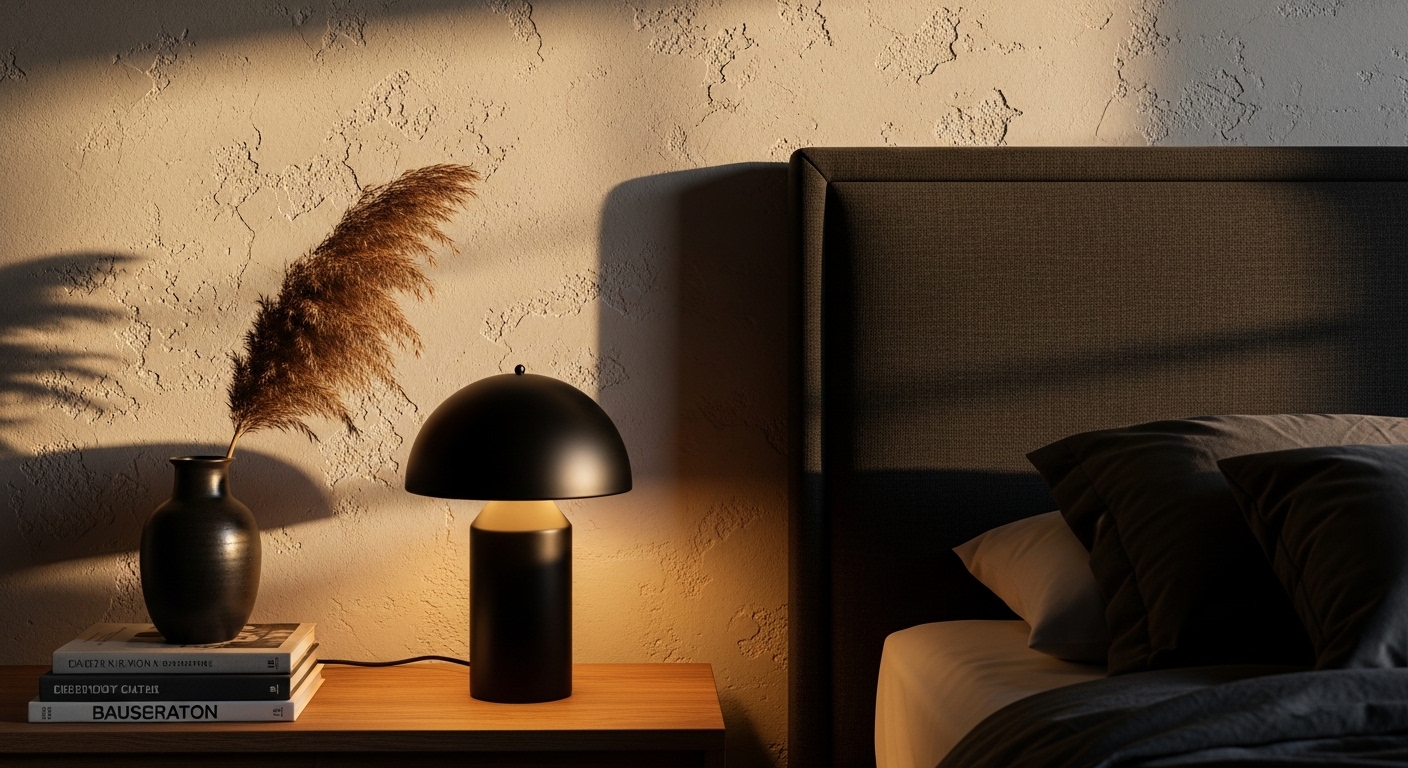
Warm white bulbs (approximately 2700K–3000K) are the standard for bedroom lighting. They make skin tones look good, textures read beautifully, and the room feel genuinely relaxing rather than clinical.
Common Mistakes to Avoid
Even with the best intentions, certain missteps consistently undermine the masculine minimalist look. Knowing what to avoid is just as important as knowing what to include.
- Ignoring scale: Furniture that is too small for the room makes the space feel sparse rather than minimal. Always choose pieces proportional to your room size, especially the bed and rug.
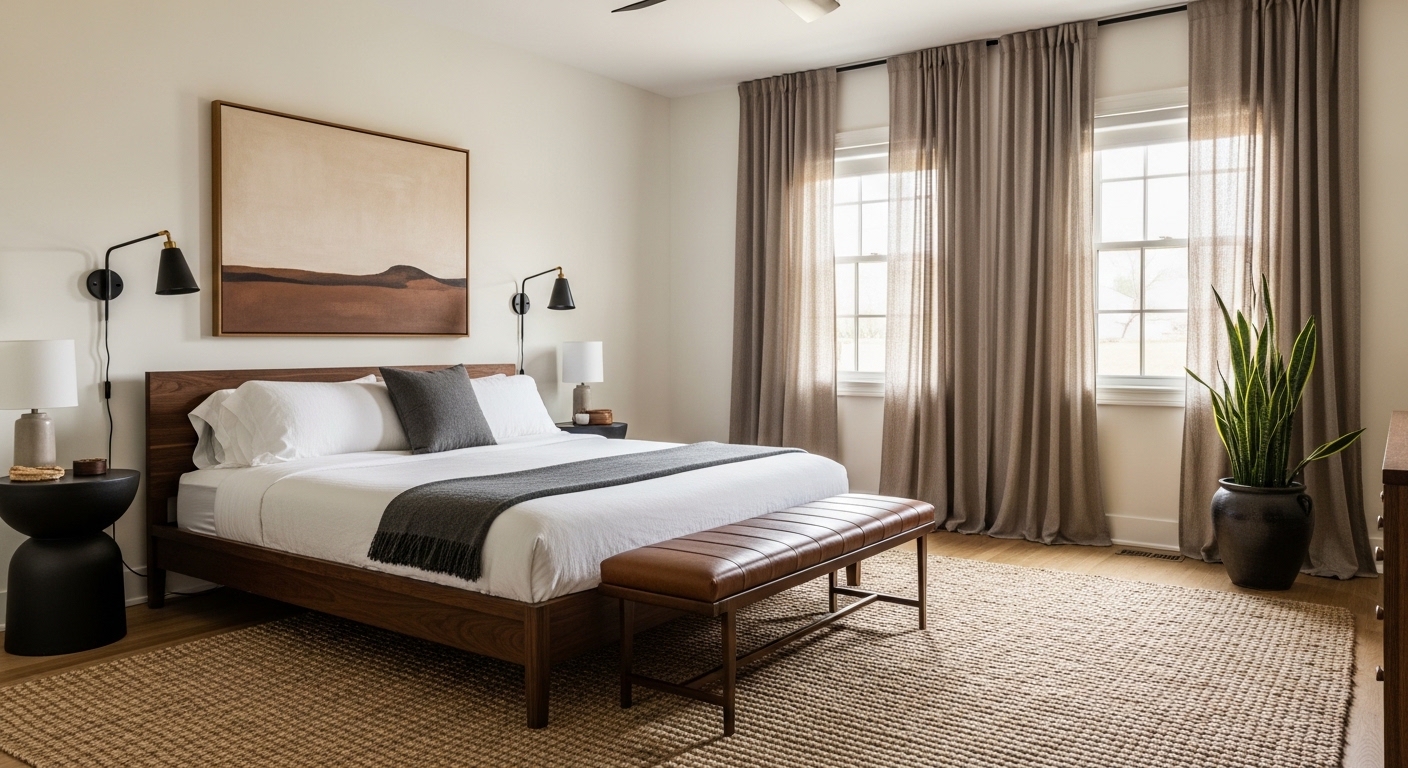
- Skipping the rug: A bare floor in a bedroom feels cold and unfinished. A large area rug — ideally extending at least 60cm beyond each side of the bed — grounds the entire room.
- Using too many accent colors: Stick to one or two accent tones maximum. More than that and the palette starts to feel scattered rather than intentional.
- Overhead lighting only: A single ceiling light creates flat, unflattering illumination. Layer your lighting as described above for a room that actually feels good to be in.
- Neglecting window treatments: Bare windows look unfinished and offer no privacy or light control. Simple, well-hung curtains are one of the highest-impact changes you can make.
- Buying cheap bedding: The bed is the focal point of the room. Investing in quality linen or cotton bedding in a solid neutral pays off visually and practically every single day.
Closing: Build a Room That Reflects Who You Are
A masculine bedroom done well is one of the most satisfying spaces to come home to. It does not need to follow every trend or impress anyone other than you. Start with a clear palette, invest in a few quality anchor pieces, layer your lighting, and edit ruthlessly. The result is a room that feels calm, confident, and completely intentional — a space that genuinely supports rest and focus. Take it one step at a time, and let the room evolve with you.
Comments
Post a Comment