At some point, almost every home cook stares at their upper cabinets and wonders if those doors are doing more harm than good. Open kitchen shelving has become one of the most debated swaps in modern home design — and for good reason. It changes not just how a kitchen looks, but how it feels to move through it. This guide breaks down the real pros, cons, and styling strategies so you can decide what actually works for your space, your habits, and your aesthetic.
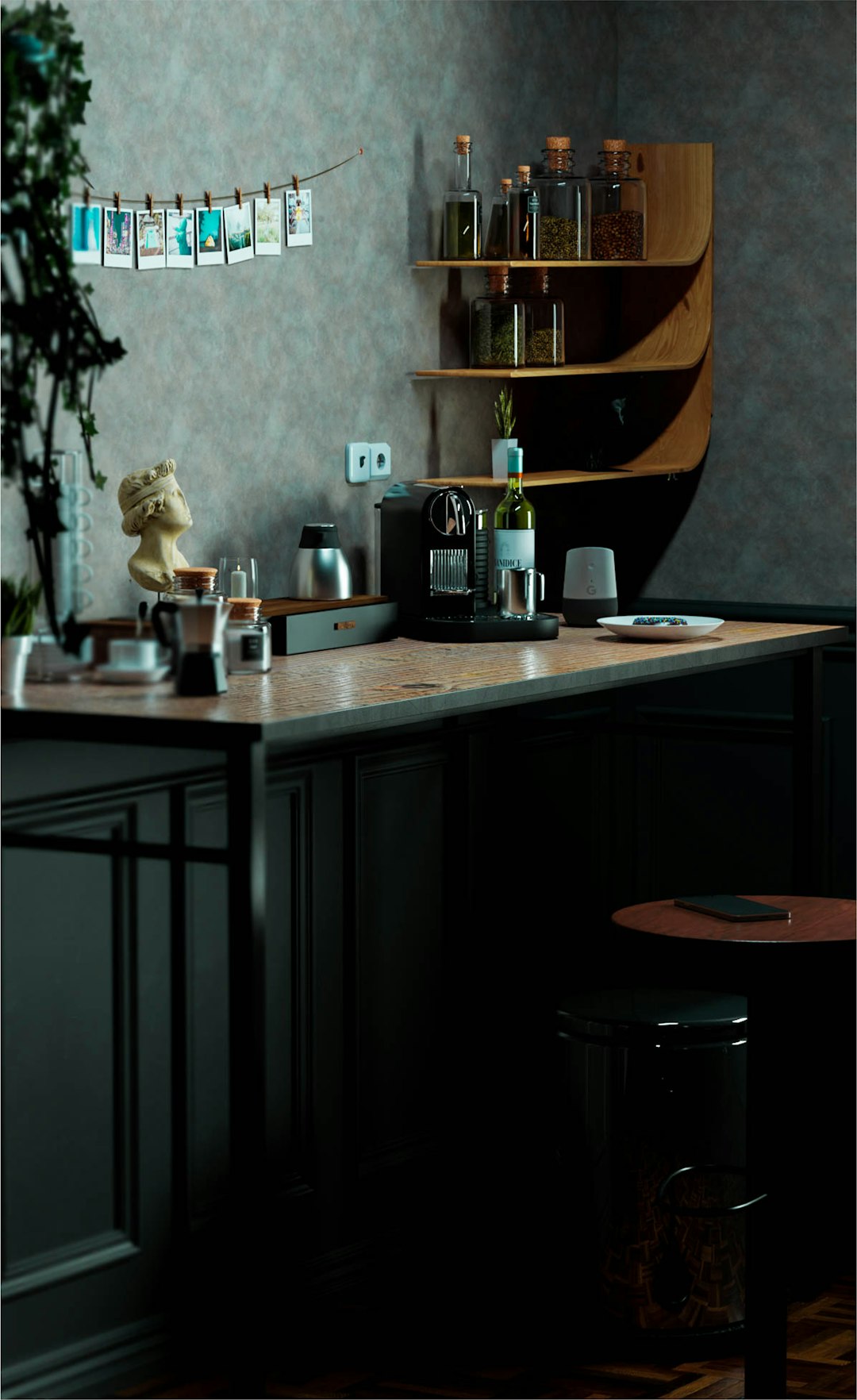
At-a-Glance Comparison Table
Before diving deep, here is a side-by-side look at how open shelving and upper cabinets stack up across the factors that matter most in a real kitchen.
| Factor | Open Shelving | Upper Cabinets |
|---|---|---|
| Visual openness | High — makes rooms feel larger | Low — can close off a small kitchen |
| Storage capacity | Moderate — limited by display logic | High — maximizes hidden storage |
| Maintenance effort | High — dust and grease collect visibly | Low — doors protect contents |
| Styling flexibility | High — changes with seasons or mood | Low — fixed once installed |
| Renter-friendly options | Yes — floating shelf brackets, tension systems | Rarely — typically permanent fixtures |
| Budget to install | Lower — approximately $50–$300 DIY | Higher — approximately $200–$800+ per cabinet |
| Clutter visibility | Everything is on display | Clutter hidden behind doors |
| Resale appeal | Mixed — polarizing to buyers | Broadly appealing |
Neither option is universally better. The right choice depends on how you actually use your kitchen — not just how you want it to look on a Saturday morning.
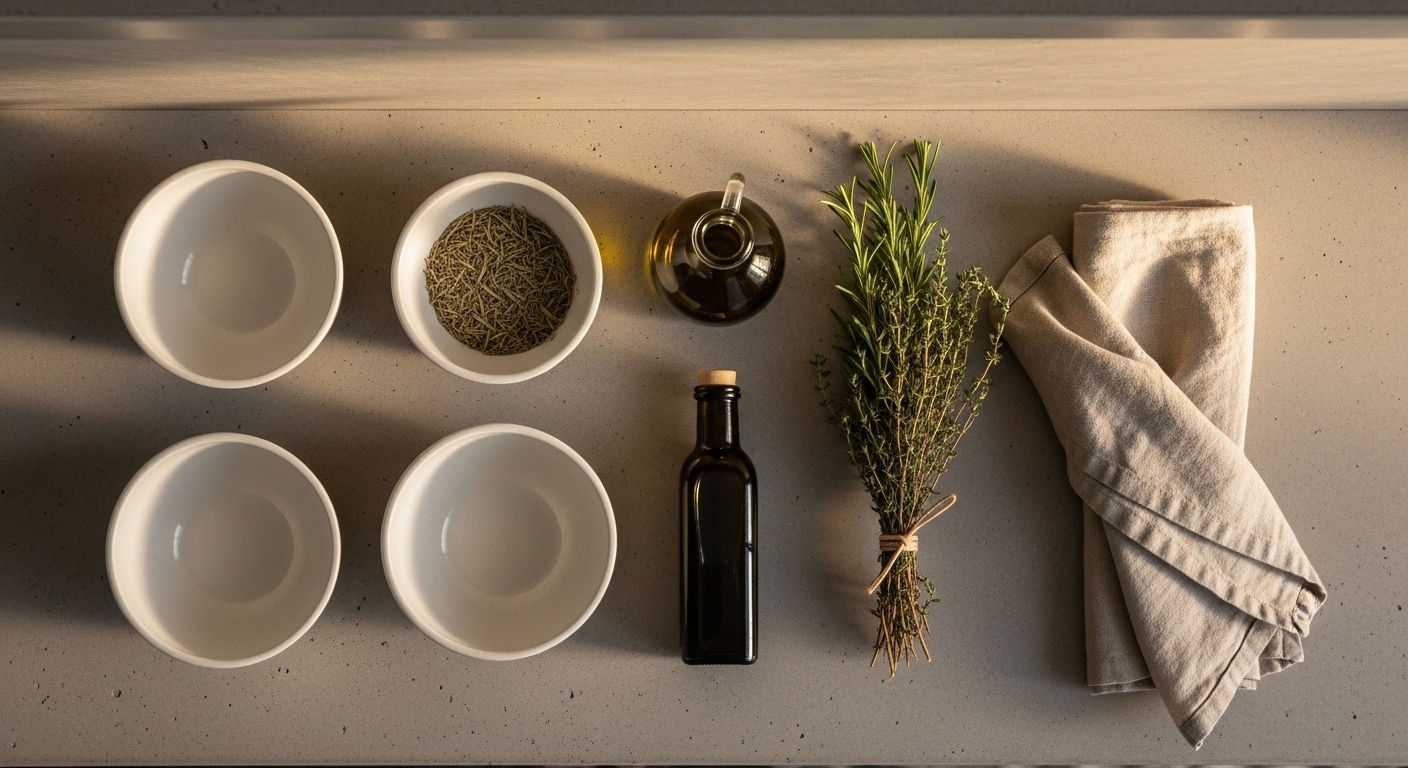
Open Shelving — The Full Picture
Open shelves do something cabinets simply cannot: they invite the kitchen into the room. In smaller apartments especially, removing upper cabinet doors can make a galley kitchen feel twice as wide. The visual breathing room is immediate and real.
But there is a side to open shelving that lifestyle content rarely shows. Grease from cooking settles on everything within a few weeks. Dust finds its way into stacked bowls. If your everyday dishes are mismatched or your pantry staples come in loud packaging, the shelves will reflect that honestly — and not always flatteringly.
The people who thrive with open shelving tend to share a few habits:
- They own a cohesive set of everyday dishes, not a mix of random pieces
- They decant dry goods into matching glass or ceramic containers
- They wipe down shelves at least once a week without it feeling like a chore
- They genuinely enjoy the ritual of keeping things visually arranged
Oddly enough, some people find that open shelving makes them more intentional about what they own. When everything is visible, there is less temptation to accumulate.
"Open shelves are not a storage solution — they are a display philosophy. Style them like a shop, not a pantry." — interior stylist perspective
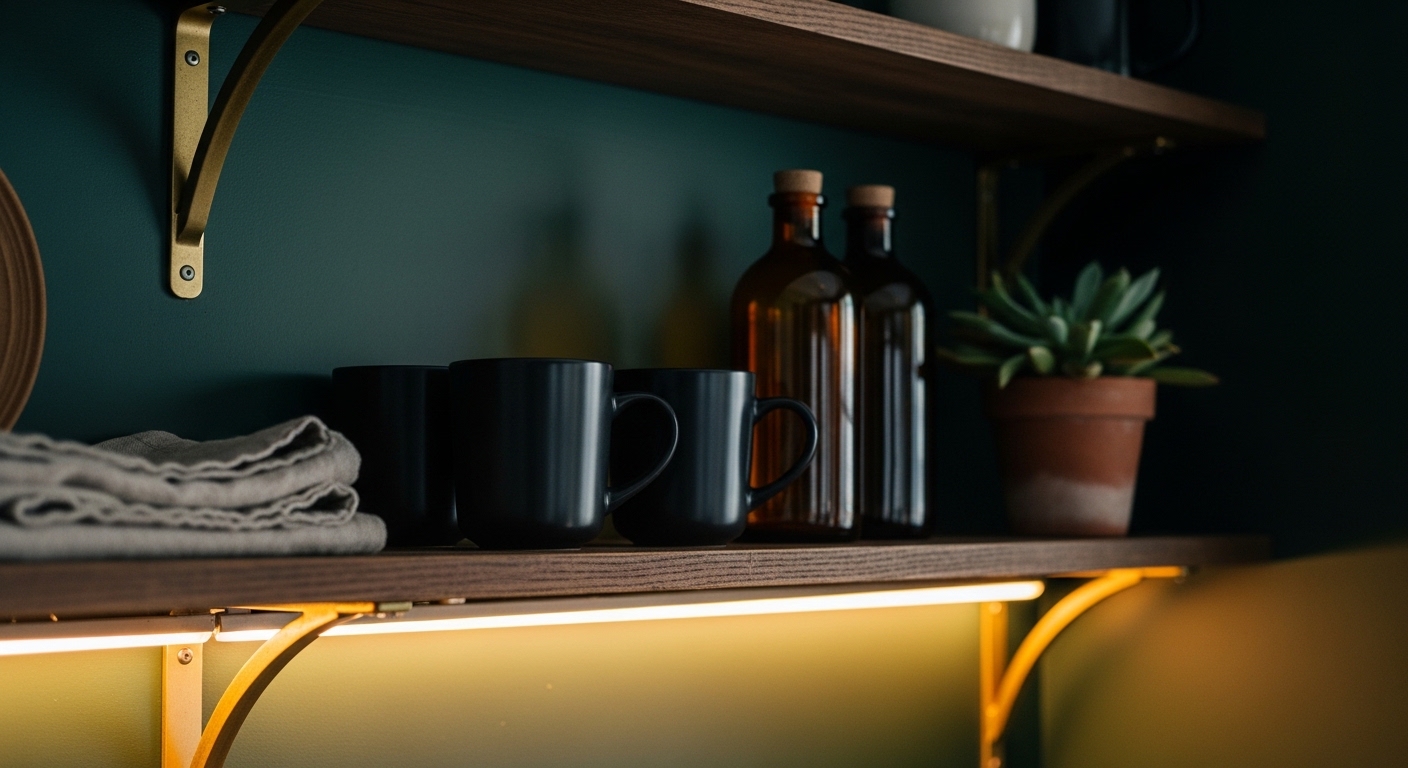
Upper Cabinets — The Full Picture
Upper cabinets are not the enemy of style. They are just misunderstood. In a busy household — families with young children, people who cook daily and heavily, anyone who values a quick grab-and-go kitchen — cabinets offer something open shelves cannot replicate: the ability to close the door and move on.
From a practical standpoint, cabinets protect dishes from cooking vapors, keep glassware dust-free, and allow you to store things that are genuinely ugly without apology. There is real comfort in that.
Stylistically, cabinets have evolved. Glass-front doors offer a middle ground — you get the visual softness of display without full exposure. Fluted glass in particular has become a popular choice for adding texture while keeping contents slightly obscured.
Cabinet doors can also be updated without full replacement:
- Painting existing doors in a deep, saturated color (navy, forest green, charcoal)
- Swapping standard hardware for oversized pulls or knurled knobs
- Removing doors entirely from just one or two cabinets for a hybrid look
- Adding peel-and-stick wallpaper inside cabinet interiors for a surprise detail
At first, the idea of refreshing rather than replacing feels like a compromise. It rarely is.
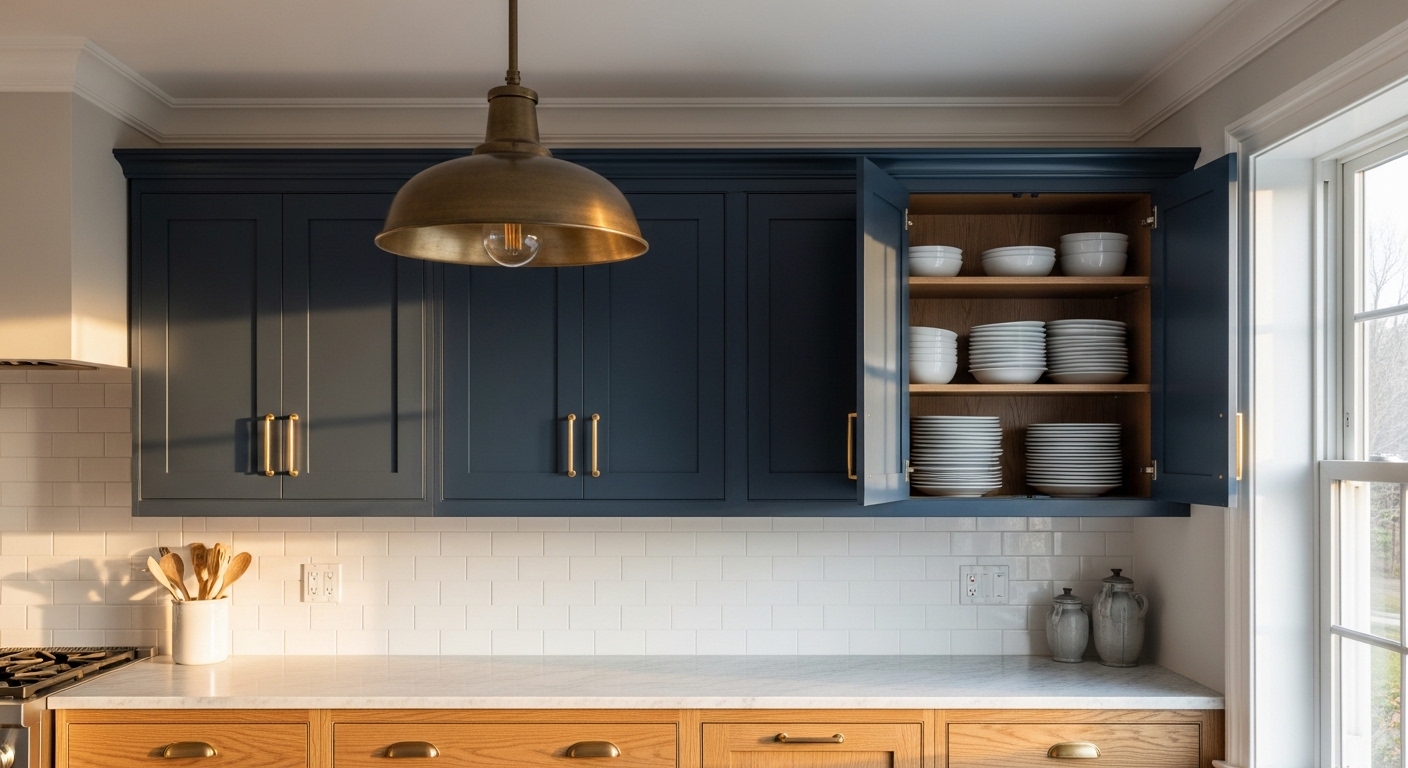
How to Decide What Is Right for Your Space
The honest answer is that most people do not need to choose one or the other completely. But if you are leaning toward open shelving, a few real-world questions will clarify things quickly.
Ask yourself:
- Do you cook with oil, spices, or anything that creates steam or splatter regularly?
- Is your current dish collection something you would be comfortable displaying every day?
- Do you have enough lower cabinet and pantry storage to compensate for lost upper storage?
- Are you renting, and if so, what mounting options are actually permitted?
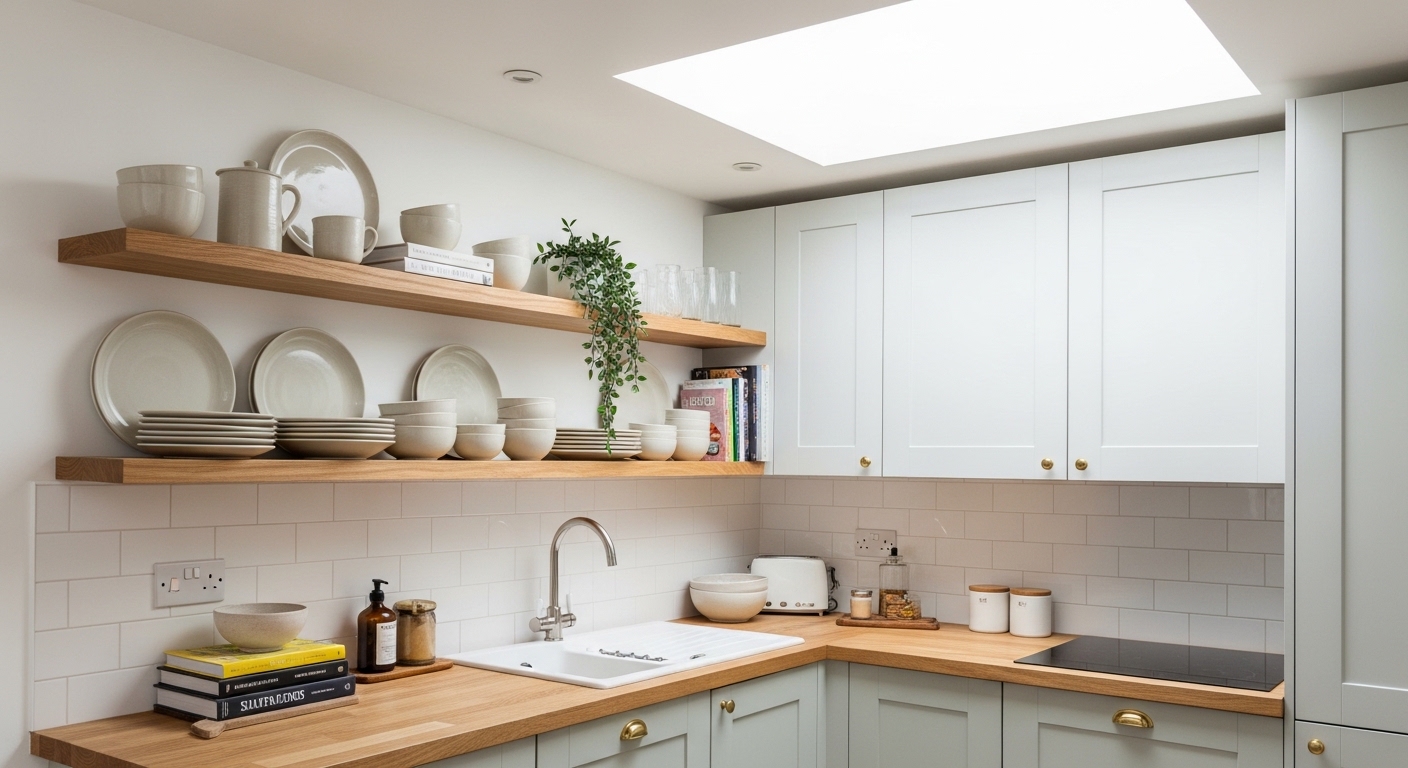
Small apartments with limited natural light almost always benefit from open shelving on at least one wall — the visual lightness it creates is significant. Kitchens that face north or have low ceilings especially gain from the openness.
On the other hand, if your kitchen is already bright and spacious, the argument for open shelves becomes more about aesthetics than function. In that case, the maintenance trade-off deserves more weight in your decision.
Mix and Match — Can You Have Both?
Yes, and this is often the most livable outcome. Removing only the upper cabinets on one wall — typically the one most visible from the living area — gives you the aesthetic openness without sacrificing total storage. The remaining closed cabinets handle the practical, less photogenic items.
A few hybrid arrangements that work particularly well:
- Shelves above the sink, cabinets flanking the stove: The sink wall is usually the most visible and benefits most from visual lightness.
- Open shelves in the corner, cabinets along the main run: Corner shelves are naturally awkward for cabinet storage anyway.
- Glass-front upper cabinets paired with one open floating shelf: Adds display interest without full commitment.
- Shelves only in the dining-adjacent area: Creates a natural transition between kitchen and living space.
Removing one side table from a room often improves the flow immediately — the same logic applies here. Sometimes less cabinetry, not more, is what a kitchen actually needs to breathe.
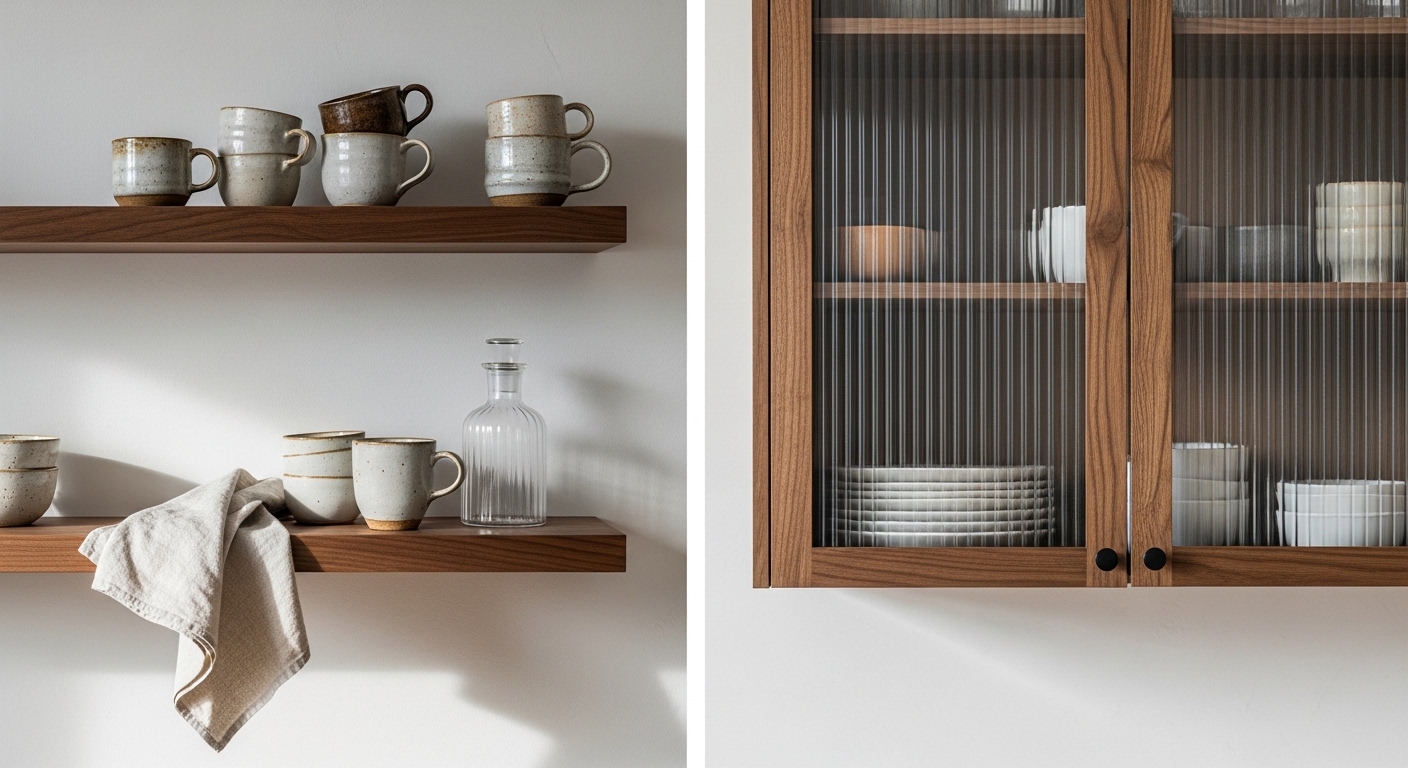
Whichever direction you go, the styling choices you make on those shelves will define the entire kitchen's personality. A few final thoughts worth keeping in mind: group items in odd numbers, leave deliberate empty space between groupings, and resist the urge to fill every inch. The restraint is the point.
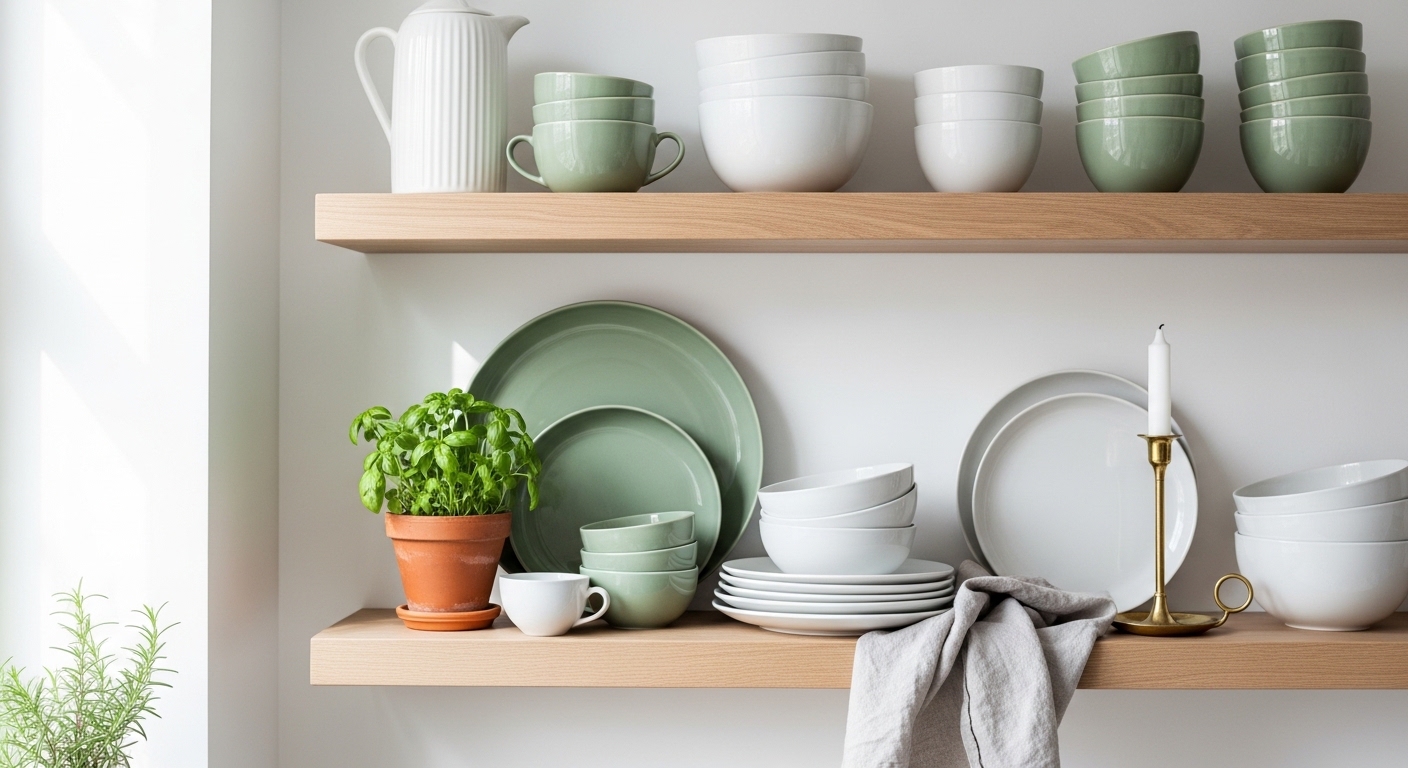
Open shelving and upper cabinets are not rivals — they are tools, and the best kitchens use them thoughtfully. If you love the look of curated shelves but dread the upkeep, start with one wall. If you rely on hidden storage but want more visual interest, update your cabinet fronts before removing anything. The kitchen that works best is the one that fits your actual life, not just the one that photographs well on a quiet Sunday morning.
Comments
Post a Comment