Renting doesn't mean settling. With a little creativity and a realistic budget, a living room can feel genuinely curated — layered, warm, and completely yours. The catch? No drilling, no painting, no permanent changes. These living room ideas for renters prove that stylish upgrades don't require owning the walls. Whether you're working with a boxy studio layout or a dated apartment with beige carpets and overhead lighting that belongs in a hospital, there's a path forward. And it starts with a clear plan.
Before You Start Planning
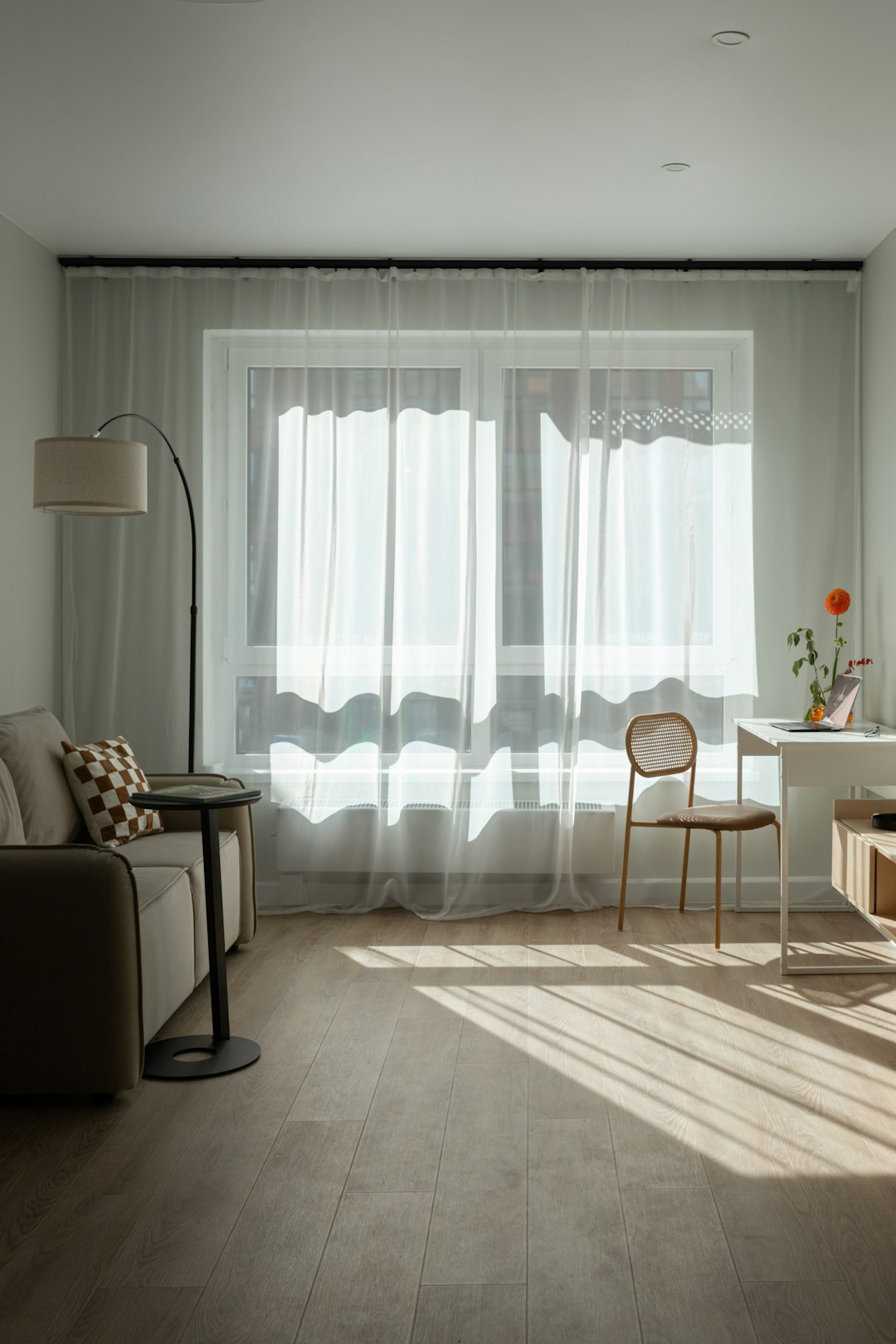
The most common mistake renters make is buying things before understanding the space. Spend a few days living in the room before purchasing a single item. Notice where the light falls in the morning versus the evening. Figure out which wall feels like the natural focal point. Identify what's genuinely bothering you — is it the lack of warmth, the awkward furniture placement, or just the emptiness?
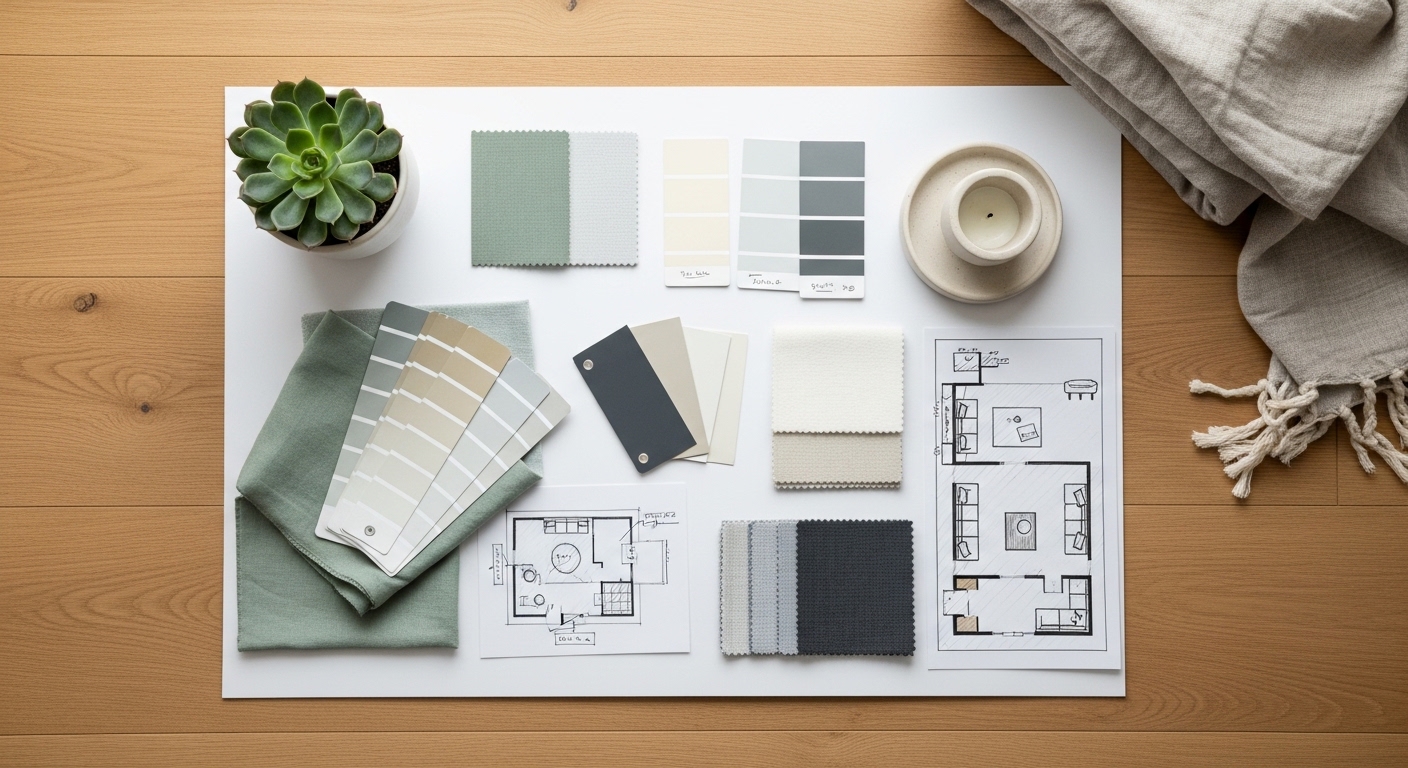
Once you have a clear picture, set a realistic budget. Approximately $150–$400 can genuinely change a living room when spent intentionally. Prices vary by region and retailer, but the principle holds: fewer, better choices beat a cart full of impulse buys every time.
Before shopping, also audit what you already own. A throw blanket from the bedroom, a plant from the kitchen windowsill, a stack of books — these are free styling tools. Oddly enough, most renters already have more than they think.
Affordable Furniture Picks
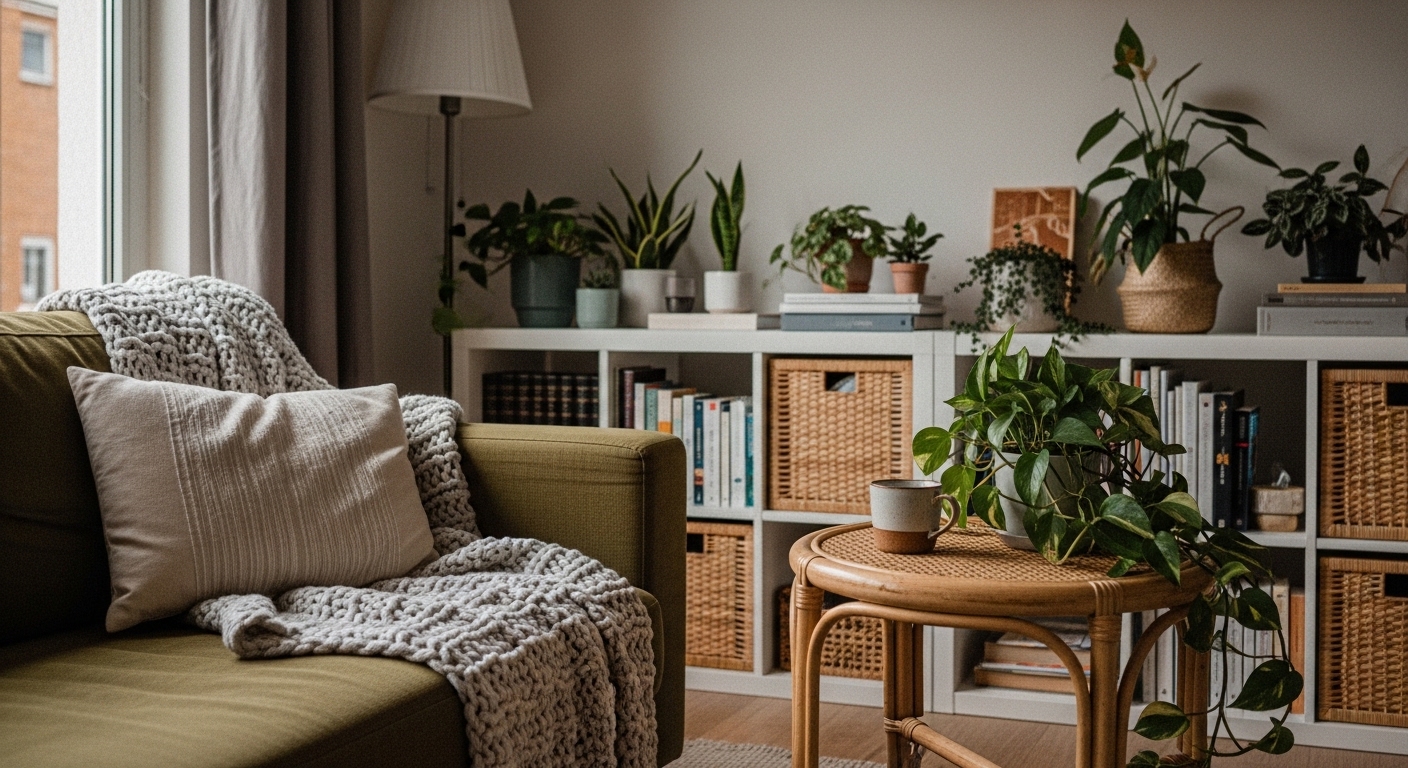
The sofa is the room's anchor, and it doesn't need to be new. Facebook Marketplace, thrift stores, and end-of-season sales from retailers like IKEA or Wayfair regularly offer solid options at a fraction of retail price. A neutral-toned sofa — think warm grey, deep olive, or muted camel — gives you flexibility to shift the look seasonally with cushions alone.
For the rest of the room, focus on pieces that do double duty:
- Storage ottomans — serve as a coffee table, extra seating, and hidden storage. Approximately $40–$120.
- Folding side tables — easy to move, renter-safe, and available in rattan or metal finishes. Approximately $25–$70.
- Bookcases used as room dividers — KALLAX-style shelving units can define zones in open-plan apartments without touching the walls. Approximately $60–$150.
- Floor cushions or poufs — add flexible seating for guests without committing to a second sofa. Approximately $30–$80.
Avoid oversized furniture in smaller rooms. A sofa that's even 10 inches too wide can make a space feel permanently cramped. Measure twice.
DIY Decor Ideas
Some of the most visually striking living rooms are built almost entirely from DIY elements. The key isn't crafting skill — it's restraint and intentionality.
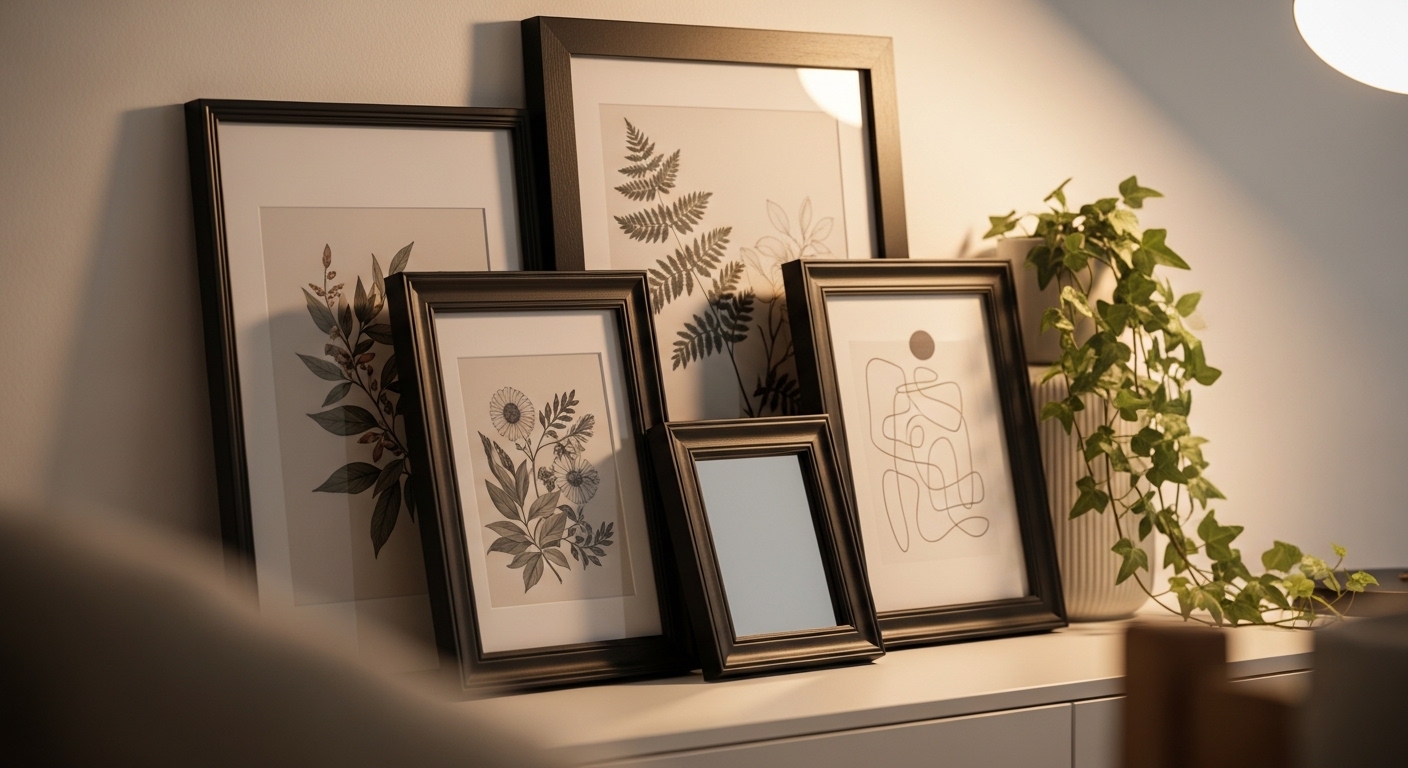
A gallery wall made from thrifted frames (painted the same color for cohesion) leaned against the wall rather than hung creates a curated, editorial look with zero damage. Large-format art prints from Etsy or Society6 can be ordered inexpensively and placed in a single oversized frame for a high-impact focal point.
Other DIY ideas worth trying:
- Fabric wall hangings — a piece of linen or textured fabric stretched over a wooden dowel adds warmth and texture instantly.
- Painted terracotta pots — group three sizes together for a sculptural plant display that costs under $15 total.
- Stacked vintage suitcases — used as a side table or storage unit with genuine character.
- Washi tape or removable wallpaper panels — create a faux accent wall without risking your deposit.
At first, a DIY gallery wall can feel chaotic to assemble. Laying everything out on the floor first — exactly as you'd hang it — removes most of the guesswork.
Lighting & Ambience
Overhead lighting is the fastest way to make a room feel flat and uninviting. Most rental apartments come with a single ceiling fixture that does exactly that. The fix costs very little.
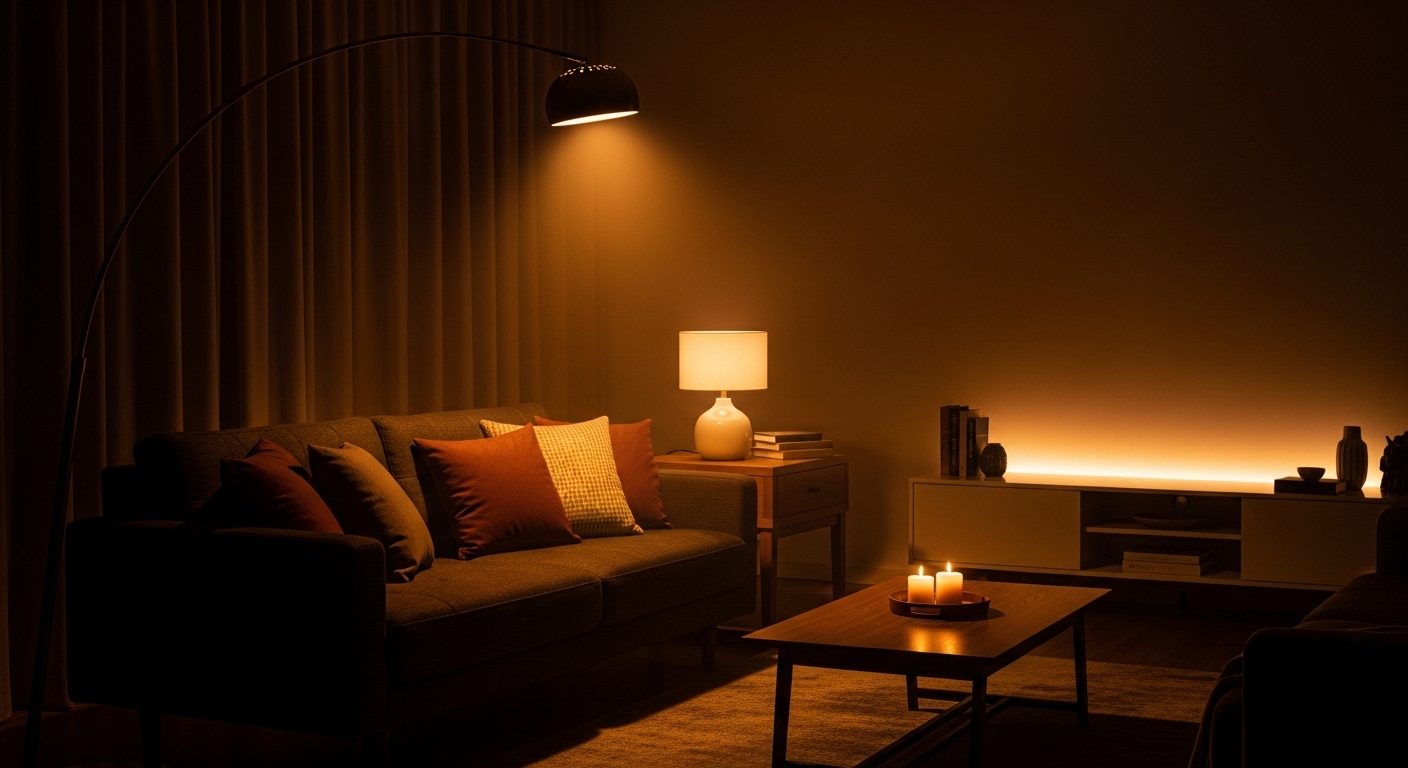
Layer your lighting with at least three sources at different heights:
- A floor lamp in a corner to create ambient warmth
- A table lamp on a side table or shelf for mid-level glow
- String lights or LED strip lights (renter-safe, adhesive-backed) tucked behind furniture or along shelving for a soft backlit effect
Warm-toned bulbs (approximately 2700K–3000K) make an enormous difference. Swap out any cool white bulbs in existing fixtures — this is reversible, free to undo, and immediately changes how the room feels after dark.
Candles and wax warmers also add a sensory layer that no overhead light can replicate. Small apartments usually benefit from fewer light sources than you'd expect — three well-placed lamps often outperform six mediocre ones.
Where to Save vs Splurge
Budget decisions get easier once you know which elements carry the most visual weight in a room.
"Spend on what you touch every day and save on what you only look at." — a principle worth keeping in your back pocket every time you open a shopping cart.
Worth splurging on (relatively speaking):
- A quality rug — this single item changes the entire feel of a room. A well-sized rug in a rich texture (wool, jute, or a flatweave) is worth investing approximately $80–$200 in.
- Good lighting — a well-designed floor lamp will outlast three cheap ones and photograph beautifully.
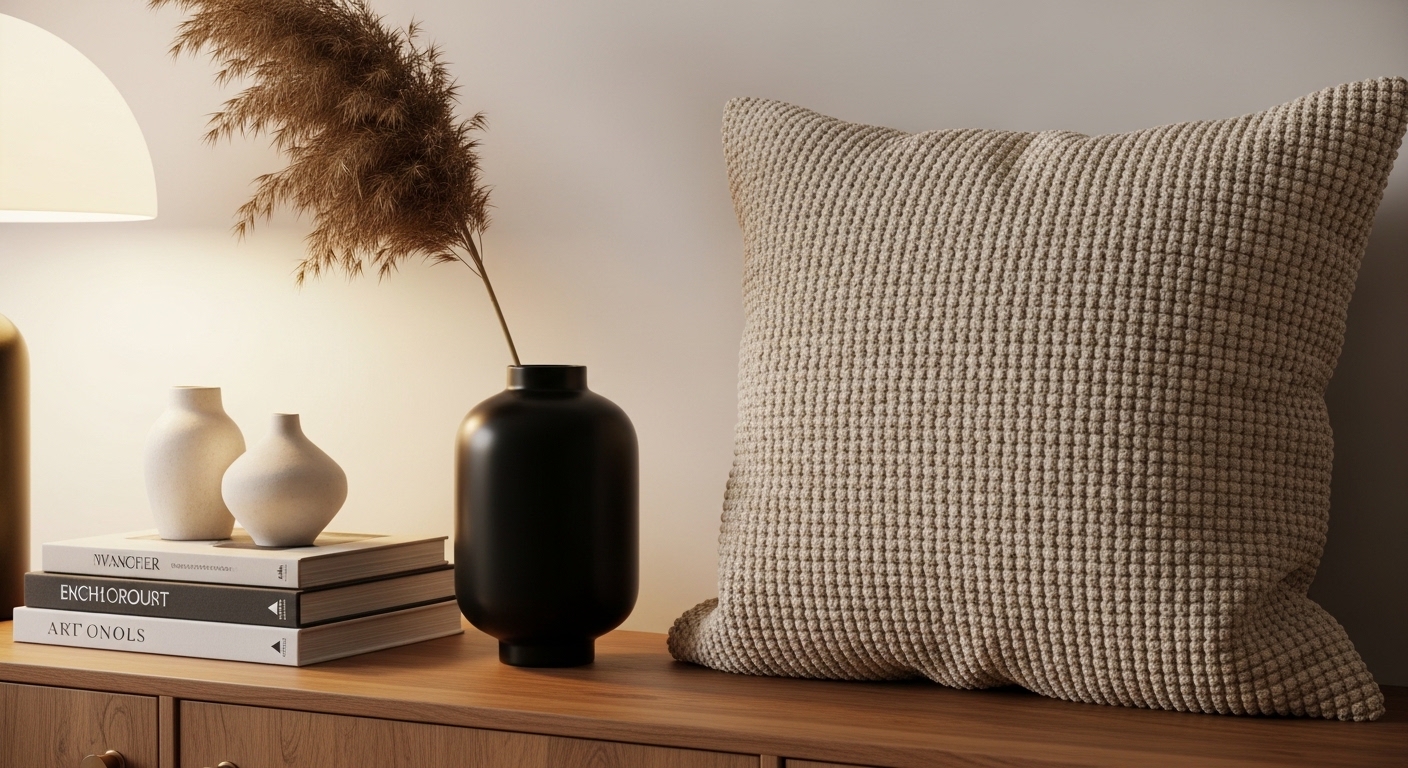
- Throw cushions in quality fabrics — velvet, boucle, or linen hold their shape and look far more expensive than polyester alternatives.
Easy places to save:
- Wall art (thrift stores, print-at-home options, Etsy digital downloads)
- Side tables and accent furniture (secondhand finds are often sturdier than budget-new)
- Decorative objects and vases (charity shops, dollar stores, and your own kitchen)
- Curtains (IKEA's LILL or HILJA panels are renter-friendly and cost approximately $10–$20 per pair)
Final Styling Checklist
Before calling the room done, walk through this checklist. It catches the small things that make a big difference in how a space reads.
- Rug placement — at minimum, the front legs of all seating should sit on the rug. A rug that floats in the middle of the room with furniture around it looks disconnected.
- Cord management — visible cords from lamps and electronics immediately undercut a styled room. Use adhesive cable clips or tuck cords behind furniture.
- Plant placement — at least one living plant adds life that no object can replicate. A trailing pothos or a snake plant works in almost any light condition.
- Edit the surfaces — coffee tables and shelves tend to accumulate clutter. Remove one item from every surface and see if the room breathes better.
- Curtain height — hang curtain rods (using removable adhesive hooks rated for the weight) as high as possible, even if the window is small. It draws the eye upward and makes ceilings feel taller.
- Scent — a candle, diffuser, or linen spray is the finishing layer most people forget. It makes a room feel genuinely lived-in rather than staged.
Removing one side table that felt necessary at first was, unexpectedly, what finally made the room feel open. Sometimes the last step is subtraction, not addition.
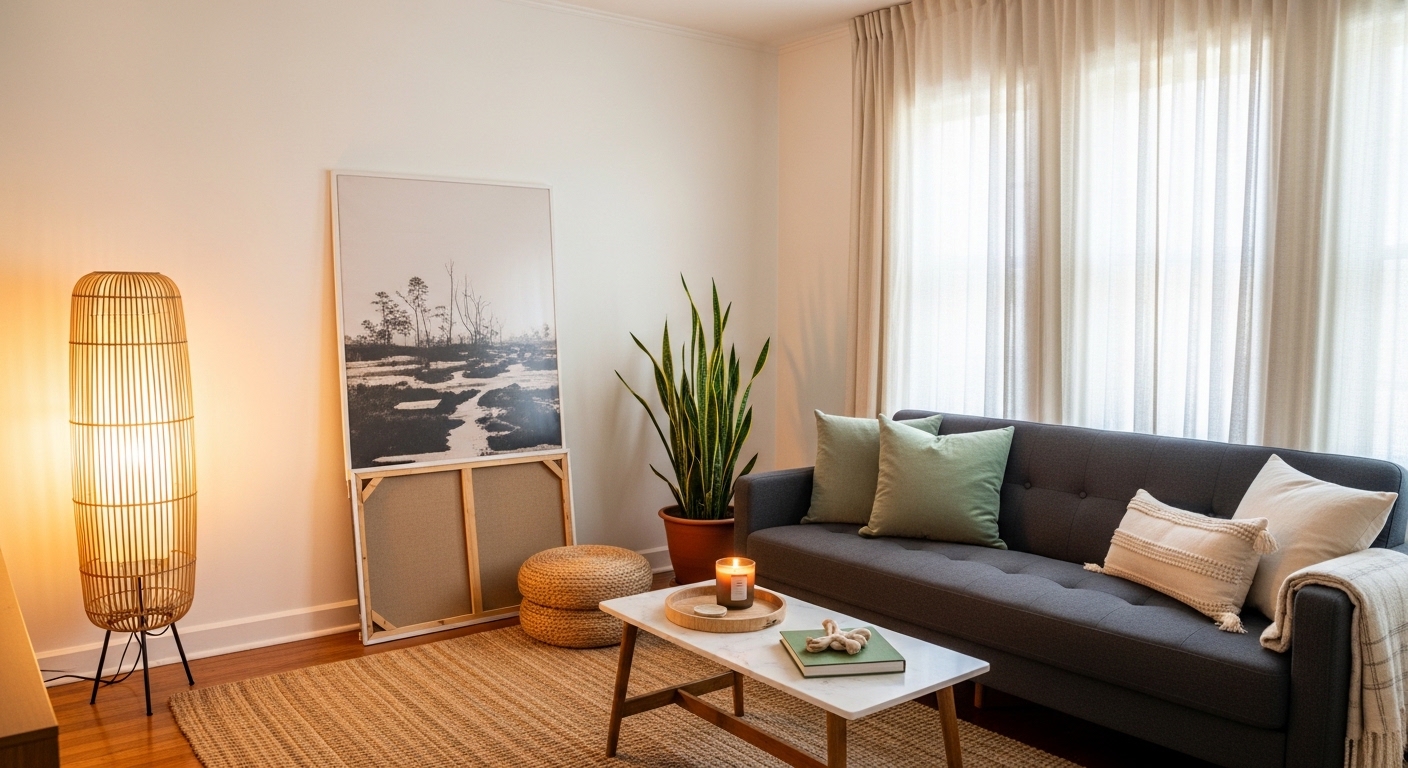
A rental living room can feel like a real home — not a temporary stop. The upgrades don't need to be permanent to be meaningful. With a thoughtful layout, layered lighting, and a few well-chosen pieces, the space starts to reflect you rather than the landlord's last tenant. Start with one corner. Get that right. Then let the rest follow naturally.
Comments
Post a Comment